
By Bosphorus News Geopolitics Desk
The European Union has warned Türkiye that excluding the Republic of Cyprus from COP31 preparations is unacceptable, turning a climate summit dispute into a wider Cyprus file that now reaches Gaza diplomacy, United Nations talks and the island's defence build-up.
The warning followed complaints by the Republic of Cyprus government that it had not been invited to preparatory meetings linked to COP31, which Türkiye is set to host in November. Turkish officials said the official invitation process for the COP31 Leaders' Summit had not begun and that the disputed meetings were national-level events organized by Türkiye rather than sessions of the United Nations Framework Convention on Climate Change.
EU Climate Commissioner Wopke Hoekstra said the bloc would not accept unequal treatment of a member state, according to Reuters. The dispute is sensitive because Türkiye does not recognize the Republic of Cyprus government and recognizes the Turkish Republic of Northern Cyprus (TRNC) as the Turkish Cypriot state.
The COP31 row extends a file Bosphorus News examined in May, when the Republic of Cyprus first raised concerns that Türkiye's host role could collide with EU participation rules. The issue now carries a sharper diplomatic cost because COP31 is not only a climate summit. Türkiye is using the event to promote side initiatives, including a global electricity target, while the EU prepares its own negotiating line for the conference.
Cyprus is also being drawn into Gaza diplomacy. Republic of Cyprus government spokesman Konstantinos Letymbiotis confirmed that the Gaza Board of Peace would meet on the island on June 30 and July 1, but said the government was neither the organizer nor co-organizer of the event.
The distinction limits the government's institutional responsibility while still giving the island visibility in postwar Gaza discussions. The Republic of Cyprus has tried to present itself as a humanitarian and logistics node in the eastern Mediterranean, especially through aid and evacuation channels linked to Gaza and Lebanon.
The United Nations track is also moving toward a July test. UN Secretary-General António Guterres is expected to submit reports on his Good Offices Mission and the United Nations Peacekeeping Force in Cyprus (UNFICYP) in early July, ahead of closed UN Security Council consultations scheduled for July 16.
The July calendar follows renewed diplomacy around the Cyprus problem and the enlarged meeting format. Bosphorus News previously tracked the Security Council and UNFICYP track as diplomats prepared for another round of pressure on the two sides to define whether the next phase can produce concrete results.
Turkish Cypriot leader Tufan Erhürman has said the Turkish Cypriots' will for a solution is clear, but he has rejected media reports suggesting a "looser" settlement formula. He said no idea could move forward without the consent of the Turkish Cypriot side and Türkiye, keeping the Turkish Cypriot side inside the UN process while rejecting any impression that a plan can be shaped over its head.
The Republic of Cyprus government is also advancing its defence agenda. Defence Minister Vasilis Palmas has defended plans for closer defence partnerships, base upgrades and a long-term NATO aspiration. The European Commission said in June that Cyprus would receive pre-financing under the Security Action for Europe (SAFE) defence funding instrument, with the money intended to support defence investment, resilience and military capability upgrades.
The defence file gives the Cyprus dispute a second EU layer beyond climate diplomacy. The Republic of Cyprus is using EU tools, French and U.S. defence contacts and infrastructure upgrades to present the island as a security hub. Türkiye and the Turkish Cypriot side view the island's militarization and external defence partnerships through the unresolved Cyprus dispute.
That track connects with a wider pattern Bosphorus News has followed: Cyprus is outside NATO, but the island's geography, British bases, EU defence planning, U.S. access arrangements and eastern Mediterranean crises keep pulling it into NATO-adjacent security debates.
Migration adds a smaller but visible layer. Cyprus police said more than 4,000 people had been returned or deported since the start of 2026, while the European Union's migration commissioner said in Nicosia that any third-country return hub agreements would have to meet human rights and international-law safeguards.
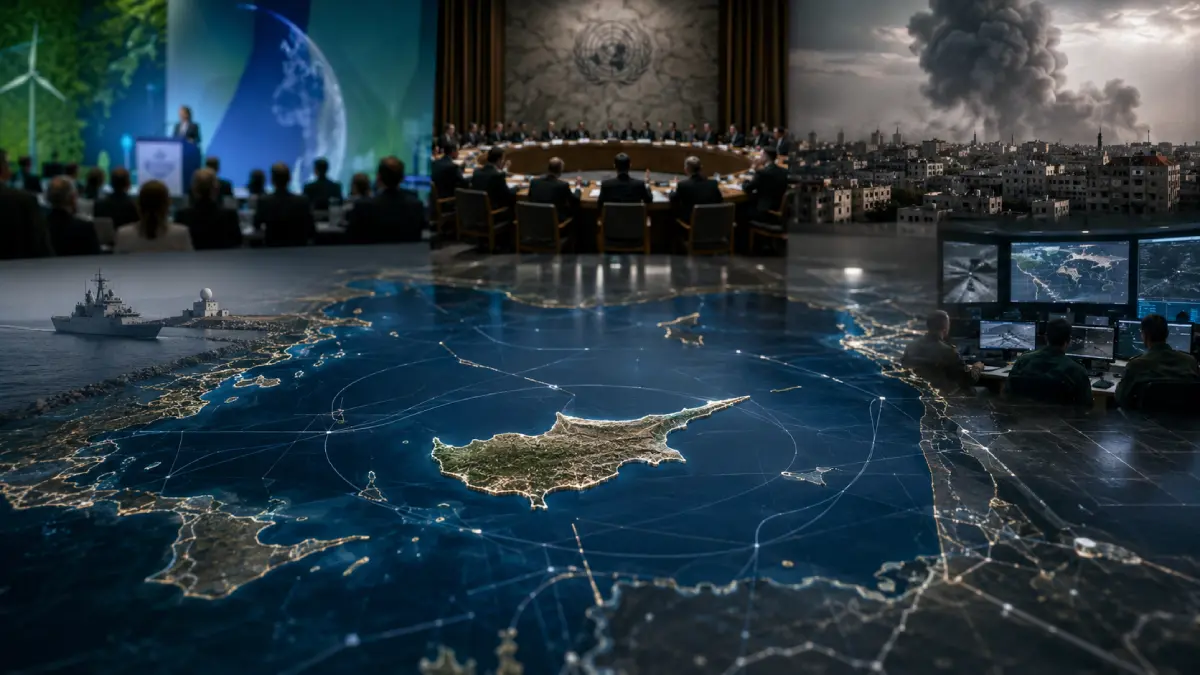
The Cyprus file is now moving through several channels at once. COP31 has turned recognition into a climate diplomacy problem; Gaza has put the island inside a contested reconstruction forum; the UN calendar is bringing the political process back to the Security Council; and EU defence funding is reinforcing the island's security role.
Türkiye faces the clearest diplomatic problem on COP31: a host-country dispute over Cypriot participation could harden into an EU solidarity test. The Republic of Cyprus government gains visibility across climate, Gaza, security and migration files, while the Turkish Cypriot side must stay inside the diplomatic process without allowing outside actors to define settlement terms before July's UN calendar opens.
Sources: Reuters, Cyprus Mail, Cyprus News Agency, Politis, Associated Press, European Commission, Republic of Cyprus government, Bosphorus News review and reporting.