
By Bosphorus News Geopolitics Desk
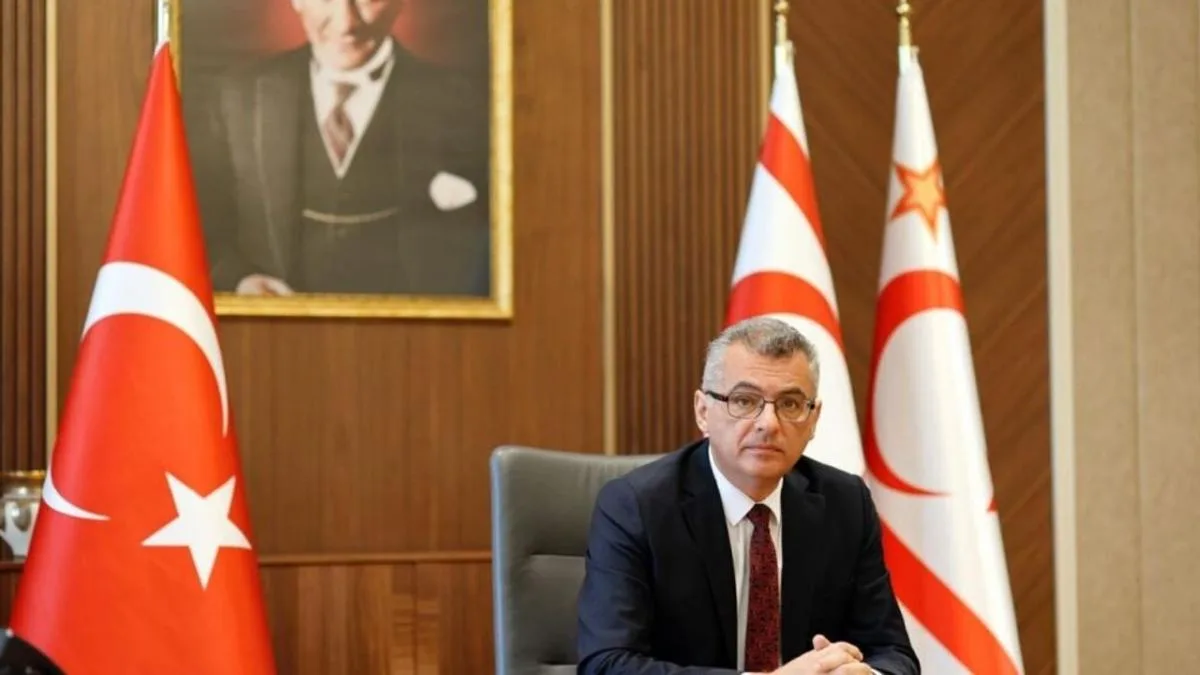
Turkish Cypriot leader Tufan Erhürman says Republic of Cyprus President Nikos Christodoulides rejected a proposal by United Nations Secretary-General António Guterres to extend mine-clearing operations beyond the buffer zone and across Cyprus, citing security concerns.
Erhürman said the Turkish Cypriot side accepted a proposal under which clearance would begin in the United Nations buffer zone before moving to other parts of the island, while Christodoulides rejected the wider plan for "security reasons." He made the claim in an interview with journalist Nazar Erişkin following Guterres' July visit to Cyprus, but Bosphorus News found no public response from Christodoulides or his office directly addressing that account, and the United Nations has not publicly confirmed the exchange.
The dispute concerns the scope of demining rather than whether mine clearance should take place at all. The two sides accepted demining as a confidence-building measure under the UN process in 2025, leaving the extent of the operation and its remaining technical arrangements as the unresolved questions.
Demining was already agreed under the UN process
After the March 2025 informal meeting in Geneva, Guterres announced that the Greek Cypriot and Turkish Cypriot leaders had agreed on six confidence-building initiatives, including demining, new crossing points, solar energy in the buffer zone and cemetery restoration.
When the sides met again in New York four months later, Guterres said the demining agreement would be completed once the remaining technical details had been settled. Those issues were still unresolved in early 2026, with the Secretary-General's January good offices report recording that implementation continued to depend on agreement over the final technical arrangements.
Erhürman's account therefore does not describe a new proposal to begin mine clearance from scratch. It concerns how far an initiative already accepted in principle should extend and whether areas outside the buffer zone should form part of the same process.
UN records four active minefields in the buffer zone
The January 2026 report of the United Nations Peacekeeping Force in Cyprus (UNFICYP) says 29 suspected hazardous areas remain across the island, including four active minefields inside the buffer zone, three under National Guard control and one under Turkish Forces control.
The United Nations Security Council repeated the 29-area figure later that month in Resolution 2815, urging the two community leaders to continue work toward a "mine-free Cyprus" and overcome the obstacles preventing further clearance. The United Nations Mine Action Service also currently lists 29 suspected hazardous areas that may contain mines or other explosive remnants of war, covering approximately 1.52 million square metres.
Taken against those records, the current UN benchmark is 29 suspected hazardous areas rather than older figures that remain visible in some earlier UN material.
Greek Cypriot side previously cited defense requirements
Erhürman's account that the wider proposal was rejected on security grounds has not been independently confirmed, although an earlier Republic of Cyprus position provides context for such an objection.
Government sources told the Cyprus News Agency in June 2024 that the Greek Cypriot side considered its mine-clearance work inside the buffer zone completed and regarded the remaining anti-tank minefields in Republic-controlled territory as part of its defense arrangements. Those sources also argued that the demining understanding did not require the removal of every minefield on the island and said the remaining anti-tank mines served defensive purposes.
That position does not fully align with the latest UN assessment, which still records three active National Guard minefields and one Turkish Forces minefield inside the buffer zone. The difference between the 2024 Greek Cypriot account and the 2026 UN record remains unresolved publicly.
Demining returns to preparations for the next 5+1
The issue has resurfaced as Guterres prepares the ground for another meeting in the 5+1 format involving the Greek Cypriot and Turkish Cypriot sides, guarantor powers Türkiye, Greece and the United Kingdom, and the United Nations.
After meeting Erhürman and Christodoulides on July 29, Guterres said he had decided to convene another 5+1 after adequate preparation on confidence-building measures, methodology and substance, taking into account convergences already achieved, but he did not set a date.
That places unresolved confidence-building measures, including demining, back inside the preparations for the next stage of the UN process. Erhürman's account narrows the disagreement to whether clearance should remain concentrated on the buffer zone or extend to mined areas elsewhere on the island, where security considerations become more sensitive for both sides.
Until Christodoulides or the United Nations publicly addresses the July exchange, the claim that the wider proposal was rejected remains Erhürman's account rather than an independently confirmed description of the talks.
Sources: United Nations Secretary-General reports and statements, United Nations Security Council Resolution 2815, UNFICYP, United Nations Mine Action Service, Cyprus News Agency, Cyprus Mail, Bosphorus News review and reporting.