
By Bosphorus News Geopolitics Desk
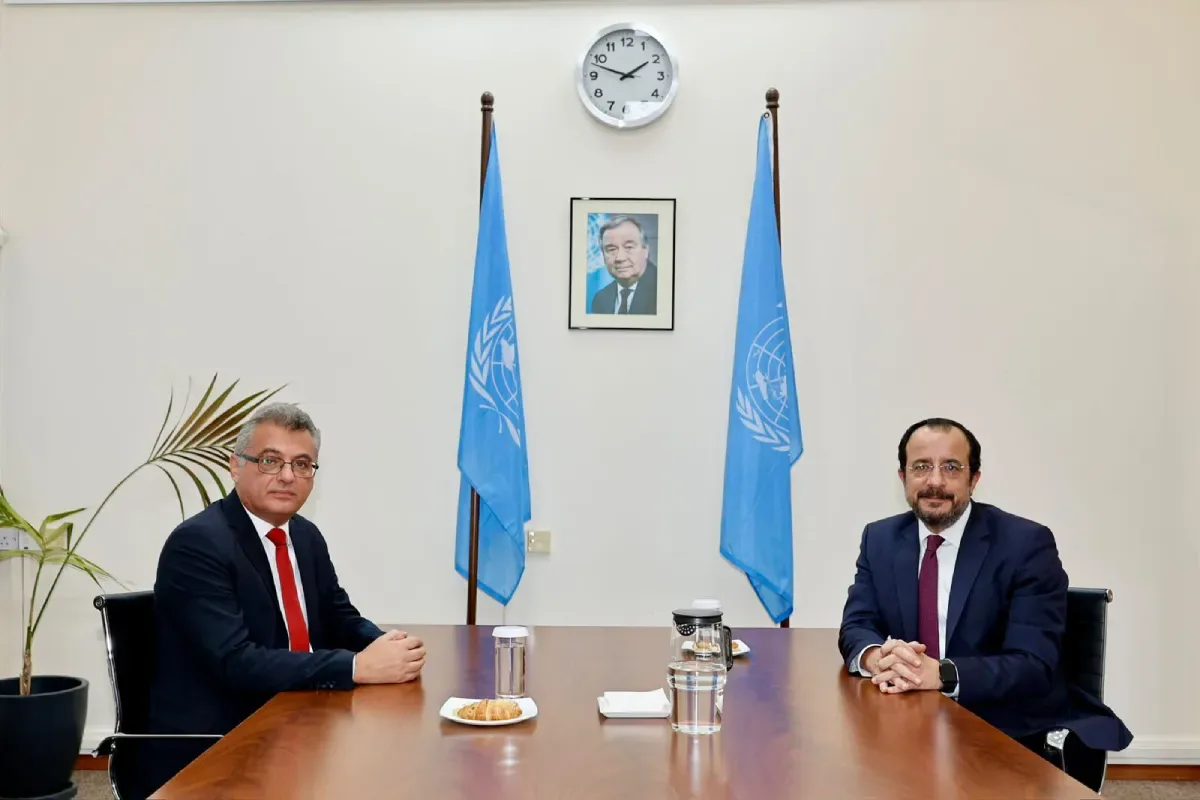
Turkish Cypriot leader Tufan Erhürman said no agreement was reached on new confidence-building measures during Wednesday's meeting with Greek Cypriot leader Nikos Christodoulides. They will meet again on Sept. 17, giving the two sides one more round on the island before their United Nations contacts in New York.
The United Nations (UN) Good Offices Mission issued a brief readout after the meeting. It announced no agreement and offered no assessment of progress. Instead, it returned to Secretary-General António Guterres' three areas for further preparation: confidence building, methodology and substance, with previous convergences also to be taken into account.
The two leaders described the meeting differently. Erhürman focused on the failure to agree new measures and on political and security steps that he says are eroding trust. Christodoulides said there was common understanding on some issues and disagreement on others, and said the Greek Cypriot side was ready to resume negotiations from where they ended at Crans-Montana in 2017.
Erhürman puts trust at the center
Erhürman said the hour-long meeting concentrated largely on confidence-building measures and methodology.
A substantial part of the discussion was devoted to new measures, but the two sides did not agree on them. Erhürman also raised internal and external actions that, in his view, were eating into what trust remained between the two communities.
He returned to Guterres' call for a "conducive climate." His argument was straightforward: confidence-building measures would have limited value if political and security decisions elsewhere continued to create new mistrust.
His concerns go beyond the long-running dispute over crossing points. Erhürman has pointed to agreements involving Greece and Israel that he says disregard Turkish Cypriots, as well as property disputes, European Parliament decisions and moves affecting international cultural and sporting events in the north.
Christodoulides confirmed after Wednesday's meeting that defense-related initiatives and actions concerning events in the north had been discussed.
Those issues are now inside the leaders' conversation. The dispute is over how much weight they should carry before negotiations move further into substance.
Christodoulides points back to Crans-Montana
Christodoulides called the meeting short but substantive. He said the sides had found common ground on some issues while different approaches remained on others across methodology, substance and confidence-building measures.
He also said the Greek Cypriot side was ready, under current conditions, to resume negotiations from where the process ended at Crans-Montana in 2017.
He did not say that Erhürman had accepted the same starting point.
Christodoulides wants the process to move toward substantive negotiations using the body of previous convergences. Erhürman is insisting that the political environment surrounding the talks also has to be dealt with.
Later Wednesday, Christodoulides said the two sides did not have the "luxury of not working together." In the same speech, he defended stronger defense capabilities, a clear Western orientation and closer regional ties as priorities of his government.
The Turkish Cypriot side has now brought some of those policies directly into the discussion over trust.
Convergences document moves closer
A document compiling points of convergence from previous Cyprus negotiations is becoming more important as the sides prepare for New York.
Christodoulides said he had been informed that the document was in its final stage and could be completed within days. He also raised the possibility of a joint meeting in New York involving the two sides and either Guterres or his personal envoy María Angela Holguín Cuéllar.
The UN has announced neither development.
Its own readout stayed with the formula Guterres set out in July: preparation on confidence building, methodology and substance, while taking account of convergences already achieved.
Holguín has been unable to travel for health reasons and will not be on the island for the Sept. 17 meeting.
Sept. 17 meeting fixed before New York
Erhürman and Christodoulides will meet again at 11 a.m. on Thursday, Sept. 17. Their representatives are expected to hold another preparatory meeting beforehand.
That leaves one more leaders' meeting on the island before the UN General Assembly high-level week.
There is still no agreement on new confidence-building measures. The sides remain apart over the political environment around the talks, and previous convergences have yet to be turned into an agreed route back to substantive negotiations.
The calendar is also tighter than Christodoulides suggested earlier, when he said he hoped for two or three meetings before New York.
Herzog visit puts security ties beside the talks
Israeli President Isaac Herzog is visiting Cyprus on Thursday at Christodoulides' invitation, with bilateral relations and regional security cooperation among the subjects on the program.
The visit comes one day after Erhürman raised external political and security relationships that he says are damaging trust between the two Cypriot sides.
Security measures were tightened in Larnaca and Nicosia for Herzog's arrival. The Cyprus Peace Council and other groups called a protest outside the presidential palace for Thursday evening.
The Republic of Cyprus has acquired the Israeli-made Barak MX air defense system. Greece and Israel are separately moving ahead with a multibillion-euro layered air defense program.
Christodoulides had already referred to Herzog's visit in his Wednesday evening remarks while defending his government's Western orientation and stronger defense policy.
Erhürman no longer treats those regional security relationships as background. They have entered the discussion over the political atmosphere surrounding the Cyprus talks.
Greek 'show of power' remarks sharpen the argument
Greek Foreign Minister Giorgos Gerapetritis added another element on Wednesday when he described Greece's recent military presence in Cyprus, including a frigate and upgraded F-16 fighter jets, as a "show of power in Cyprus."
He also presented Greece as a provider of security and defended the expansion of defense cooperation with Israel, saying Athens would choose its alliances according to its own interests rather than the preferences of other countries.
There is no indication that Gerapetritis was responding to Erhürman. His remarks were made outside the Cyprus negotiating process.
The timing was nevertheless striking. On the same day, Erhürman said external security steps were affecting trust, Christodoulides acknowledged that defense-related initiatives had been discussed, and Gerapetritis publicly defended Greece's military presence and Israeli partnership.
Herzog arrived the following morning.
One meeting, two political readings
Wednesday's meeting produced neither a breakdown nor a new confidence-building package.
Christodoulides came out talking about areas of common understanding, the nearing completion of the convergences document and the Greek Cypriot side's readiness to return to negotiations from Crans-Montana.
Erhürman emphasized the measures that could not be agreed and the political and security decisions he says continue to reduce trust outside the negotiating room.
The UN adopted neither reading. Its statement kept the process on confidence building, methodology and substance, with Sept. 17 now set as the next leaders' meeting.
By then, the security relationships Erhürman raised will have become even more visible. Herzog's visit is taking place, Greece has publicly defended its military presence in Cyprus, and Christodoulides has reaffirmed stronger defense capabilities and Western alignment as part of his government's policy.
Sources: Mission of the Secretary-General's Good Offices in Cyprus, Turkish Cypriot Presidency, Republic of Cyprus Presidency, Hellenic Ministry of Foreign Affairs, Cyprus News Agency, RIK, Cyprus Mail, Bosphorus News review and reporting.