
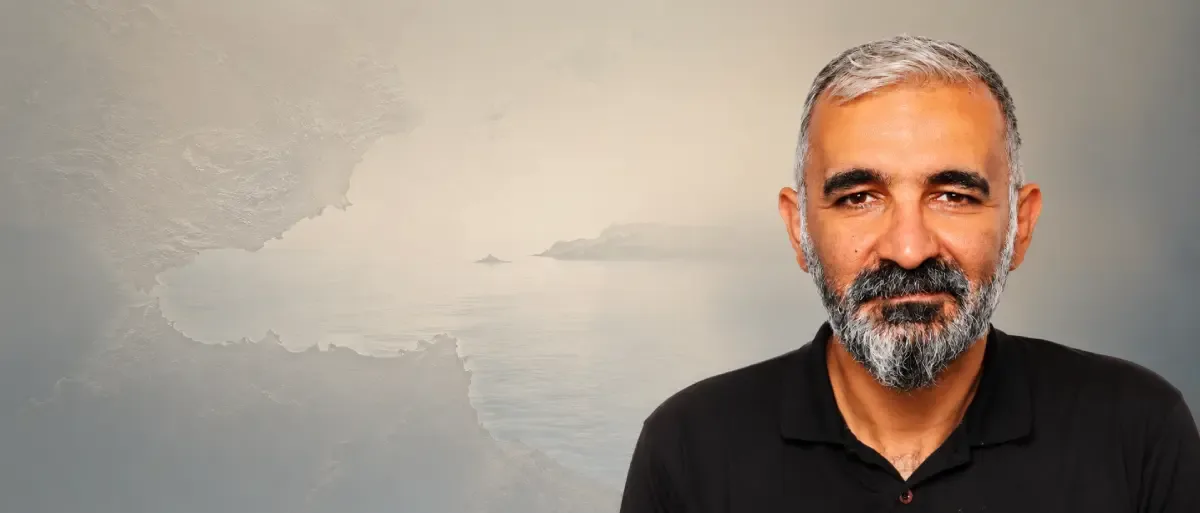
By Reza Talebi | Guest Commentary
Reza Talebi is a researcher at Leipzig University's Department of Oriental Studies and Religious Studies. He has 17 years of journalism experience across Iran, Azerbaijan, Türkiye and Germany, and holds a PhD in International Law and an MA in International Relations. A former Air Force captain and engineer with flight experience, his research focuses on security, international relations, Iranian politics and Islamic political thought.
He is the author and translator of 28 books in Turkish, Persian, English and Arabic.
Written for Bosphorus News XTRA.
The views expressed are those of the author and do not necessarily reflect the editorial position of Bosphorus News.
●●●
It might easily be assumed that the hijab controversy and the opposition to it caused the recent friction between Azerbaijan and Türkiye: specifically, that Azerbaijan amended school dress rules that effectively restricted the wearing of hijab by students, which sparked backlash from certain Turkish journalists and members of the Turkish government, after which control over the situation suddenly slipped away. However, I believe this hijab issue is merely a pretext, and the underlying matters run far deeper. The statements made by the President of Azerbaijan and the publication of articles accusing Türkiye of involvement in coups in Azerbaijan, coming precisely during the visit of Israeli President Isaac Herzog to Baku, point toward a subtle policy of detachment from Türkiye.
Claims of coups and subsequent arrests are not new in Azerbaijani politics. In the past, both during and after the Nagorno-Karabakh war, figures like Ramiz Mehdiyev and Najmeddin Sadikov experienced similar rumors, leading to surveillance and their removal from political and military posts. Even during the era of Heydar Aliyev, the famous coup attempt by Rovshan Javadov and the rebellion of Surat Huseynov were actions that certain Azerbaijani circles tried to attribute to Türkiye. This was despite the fact that, during those years, Süleyman Demirel maintained excellent relations with Heydar Aliyev and had personally alerted him to these matters. Although these disputes were largely forgotten following the liberation of occupied Karabakh by Azerbaijan, they have now suddenly re-emerged against Türkiye in Azerbaijani newspapers. Historically, a similar coup was carried out in Türkiye itself, where the FETÖ group (Fethullah Gülen network), which also had deep infiltration within Azerbaijan, spearheaded the attempt.
Why have discussions about coups, Gülen, and Israel surfaced at this specific juncture? Unlike the prevailing view in Turkish media, where people feel, due to the political atmosphere in Türkiye, that supporting Azerbaijan's secular policies in this domain might constrain political Islam, I hold a different perspective. I write these observations with full respect for Azerbaijan's independence, as well as the right to individual choice of clothing and personal freedom for all. If one follows recent police operations aimed at uncovering illicit financial networks and funding issues, and looks at the new judicial cases being opened in Türkiye (regardless of their political legitimacy or lack thereof), one encounters a case centered on Enver Altaylı. Altaylı, who was already imprisoned due to his ties to the FETÖ group, was recently summoned again to provide testimony regarding the suspicious death of Kaşif Kozinoğlu. In my view, Altaylı's history in intelligence and political networks is relevant to understanding the controversies surrounding Azerbaijan's earlier coup allegations. He was a longtime associate of former CIA officer Ruzi Nazar (the same Ruzi Nazar who was active in Iran during the revolution under Khomeini, though whether we call that revolution a coup or not is a separate debate). Altaylı was directly connected to Fethullah Gülen, the very same system that took control of various schools and media outlets across Azerbaijan. It was this same system where Kemal Öksüz, acting as an operative for the group, sought to facilitate relations between the United States and Azerbaijan, allegedly receiving financial sums from SOCAR until his arrest in Armenia in 2018.
Alongside these cases, widespread arrests in Türkiye concerning financial transparency, ranging from the defense contractor ASELSAN to media sectors, non-governmental organizations, the Mehmet Ağar case, and the acquisitions of Yalıkavak Marina and the Mandarin Oriental Bosphorus hotel, have brought Azerbaijan's soft influence in Turkish politics, backed by nearly $20 billion in energy investments, under intense scrutiny. What began over a seemingly ordinary issue has rapidly deteriorated.
Although one would have expected Iran to react far more forcefully to the hijab issue due to its efforts at ideological penetration in Azerbaijan and its inherent sensitivities, the actual backlash originated from within Türkiye. Even though this response was balanced, it provoked Azerbaijan's anger. Herzog's journey to Baku on a scheduled commercial flight through Turkish airspace became another point of controversy. Turkish officials said they had not known he was on board.
As internal judicial cases expanded within Türkiye, coupled with Azerbaijan's deepening ties with Israel and Türkiye's ongoing friction with Tel Aviv in Syria leading up to the conflict with Iran, Tel Aviv gradually implemented a mechanism for a grander design in the Caucasus and Iran. This strategy increasingly positioned Azerbaijan at its center while marginalizing Türkiye's role. The active presence of Israeli companies, massive Israeli investments, advisors in Central Asia, the non-recognition of Northern Cyprus, and Marco Rubio's visit to Central Asia all indicated that Israel is progressively seeking to dilute Türkiye's power in both the Caucasus and Central Asia.
Furthermore, India, acting as a primary partner of Israel (and a rival to Pakistan while maintaining friendly relations with Azerbaijan), has been expanding its security and energy footprint in the region using the influence of the United Arab Emirates. As a result, Türkiye and Pakistan, the two primary supporters of Azerbaijan during the Karabakh conflict, are being progressively marginalized. This comes despite Türkiye's unmatched popularity among the Azerbaijani public. Because of this high public esteem, creating a divide required an opportunity for religious-secular polarization, which has been a deeply sensitive topic in Türkiye since the February 28 postmodern coup era.
Baku is leveraging this religious sensitivity (which Iran might also intervene in down the road) alongside its internal networks in Azerbaijan to intensify crackdowns on dissidents. This resembles the political trap that Iran fell into in Syria, which ultimately led to a crisis of legitimacy and widespread public hostility, a problem that will bear consequences for the future.
Under current conditions, Baku is gradually consolidating an independent policy: not in the traditional sense of sovereignty, but in terms of operational independence alongside Tel Aviv's strategy for a post-Islamic Republic era. Principally, despite their deep social and cultural proximity, the grand strategies of Azerbaijan and Türkiye are coming into direct opposition. Pushing Türkiye away in such a tangible and rapid manner reveals that the geopolitical timeline is moving extremely fast, and these divergent axes will only widen.
Rather than relying on clichés or slogans claiming that these friction points will dissolve and that critics are merely enemies of both nations, strategic reality demonstrates that Israel is actively pursuing these objectives to isolate Türkiye. Encirclement across multiple fronts (Greece in the West, Iran in the East, Syria and Iraq in the South, and now the Caucasus) could throw Türkiye's foreign policy into a major crisis.
With the prospect of renewed U.S. military confrontation with the Islamic Republic becoming a hot-button issue, Ankara's opposition to deep military involvement in the Iran crisis could allow Tel Aviv to detach Baku from Ankara. Otherwise, the hijab issue was already a major crisis in Kazakhstan, Uzbekistan, Afghanistan, and even Northern Cyprus long before Azerbaijan, yet no similar process of strategic alienation emerged against them. This clearly proves that the underlying reality extends far beyond headscarves, political Islam, or regional influence.