
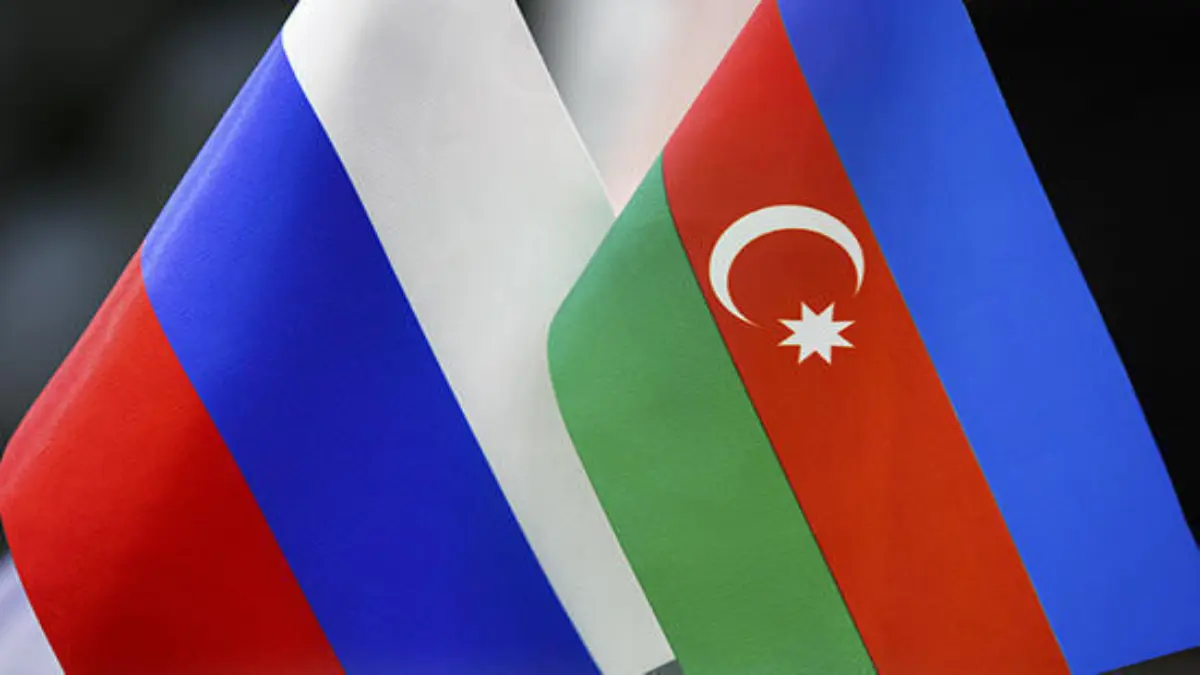
By Bosphorus News Geopolitics Desk
Azerbaijan has declared its relations with Russia fully normalised as the two countries signed a new diplomatic consultation plan and announced the restoration of direct flights on several routes.
Azerbaijani Foreign Minister Jeyhun Bayramov made the announcement in Moscow on Friday following talks with Russian Foreign Minister Sergey Lavrov.
"We have managed to turn the page and fully normalise the entire spectrum of our relations," Bayramov said, attributing the improvement to the involvement of Azerbaijani President Ilham Aliyev and Russian President Vladimir Putin.
The foreign ministries signed a consultation plan covering 2026 and 2027. Bayramov also said flights between Azerbaijan and Russia would soon resume on several routes, although he did not identify the services or provide a timetable.
The announcements provide the clearest institutional indication that Baku and Moscow are moving beyond the crisis that strained relations following the Azerbaijan Airlines disaster and a later dispute over arrests and deaths involving Azerbaijani and Russian nationals.
From crisis to diplomatic repair
Relations deteriorated sharply after an Azerbaijan Airlines passenger aircraft crashed near Aktau, Kazakhstan, on December 25, 2024.
The Embraer 190 had been flying from Baku to Grozny when it was damaged while approaching Russian airspace. It later crashed during an attempted emergency landing in Kazakhstan, killing 38 of the 67 people aboard.
Azerbaijan said Russian air defences had unintentionally damaged the aircraft and accused Moscow of failing to provide an immediate and transparent account of what happened.
Baku demanded an acknowledgment of responsibility, compensation and legal action against those responsible.
The dispute deepened in June 2025 after two ethnic Azerbaijanis died following Russian police raids in Yekaterinburg. Azerbaijan condemned the treatment of its nationals and subsequently detained employees of the Russian state media organisation Sputnik Azerbaijan and several Russian citizens.
Both governments summoned diplomats and exchanged accusations as political, media and cultural contacts were disrupted.
The first major breakthrough came during talks between Aliyev and Putin in Dushanbe on October 9, 2025.
Putin acknowledged that Russian air defence missiles had exploded close to the Azerbaijani aircraft as Russian forces responded to Ukrainian drones. He said fragments from the missiles had most likely damaged the plane and pledged compensation and a legal assessment of the actions of those involved.
The meeting helped begin a gradual restoration of political contacts. Bayramov said Friday that engagement between the two presidents had enabled the countries to overcome what he described as a difficult period.
Flights provide a practical signal
The planned return of direct flights on several routes adds a practical dimension to the diplomatic reset.
Bayramov did not say which routes would resume. Direct air services between the two countries continued on other connections during the crisis, meaning the announcement represents a partial restoration rather than the reopening of all bilateral aviation links.
The decision remains politically significant because aviation safety was at the centre of the rupture.
Azerbaijani airlines suspended or restricted services to a number of Russian destinations after the AZAL crash amid concerns over airspace security and Ukrainian drone operations near Russian airports.
Restoring the routes would indicate that the relevant governments, airlines and aviation authorities believe conditions now permit at least some suspended services to return.
However, the continuing Russia–Ukraine war means security assessments could change rapidly, particularly around airports exposed to drone attacks or air defence operations.
Two-year consultation plan
The consultation plan signed in Moscow establishes a working schedule between the Azerbaijani and Russian foreign ministries for 2026 and 2027.
Lavrov described the talks as useful and conducted in an atmosphere of trust.
He said the two sides had noted the steady development of relations in the spirit of friendship, good-neighbourliness and the 2022 Declaration on Allied Interaction, as well as regular dialogue between Baku and Moscow at the highest level.
The new document is not a fresh alliance treaty. Its importance lies in restoring structured ministry-level contacts after a period in which bilateral cooperation was repeatedly disrupted by political disputes.
The ministers also discussed trade, transport links and regional affairs.
Bayramov said economic relations were showing positive momentum, while the two governments are preparing deputy prime minister-level talks on trade and the next meeting of their intergovernmental commission.
Azerbaijan also reaffirmed its commitment to the International North–South Transport Corridor, which connects Russia with Iran through Azerbaijani territory.
The route has gained greater importance for Moscow as sanctions and the war in Ukraine have redirected parts of Russian trade away from traditional European markets.
Normalisation now faces an implementation test
The repair of relations serves practical interests on both sides.
Russia needs stable ties with Azerbaijan, an important neighbour and transport partner on its southern flank. Azerbaijan benefits from reduced tension along its northern border, functioning commercial links and continued access to the Russian market.
But normalisation does not mean that the relationship has returned to its earlier form.
Azerbaijan has strengthened its strategic partnership with Türkiye, expanded energy ties with Europe and pursued a more independent regional policy since regaining full control of Karabakh in 2023.
Baku can therefore restore working relations with Moscow without reversing its broader diplomatic diversification.
Friday's announcements show that both governments have chosen to institutionalise the political repair. The consultation plan, resumed routes and planned economic meetings turn presidential reconciliation into a working bilateral agenda.
Whether relations are fully normalised in practice will depend on the durability of those contacts, the safe operation of restored flights and the completion of the legal and compensation processes arising from the AZAL crash.
Sources: Caliber.Az, News.Az, Reuters, Associated Press, Bosphorus News reporting and review