
By Murat YILDIZ
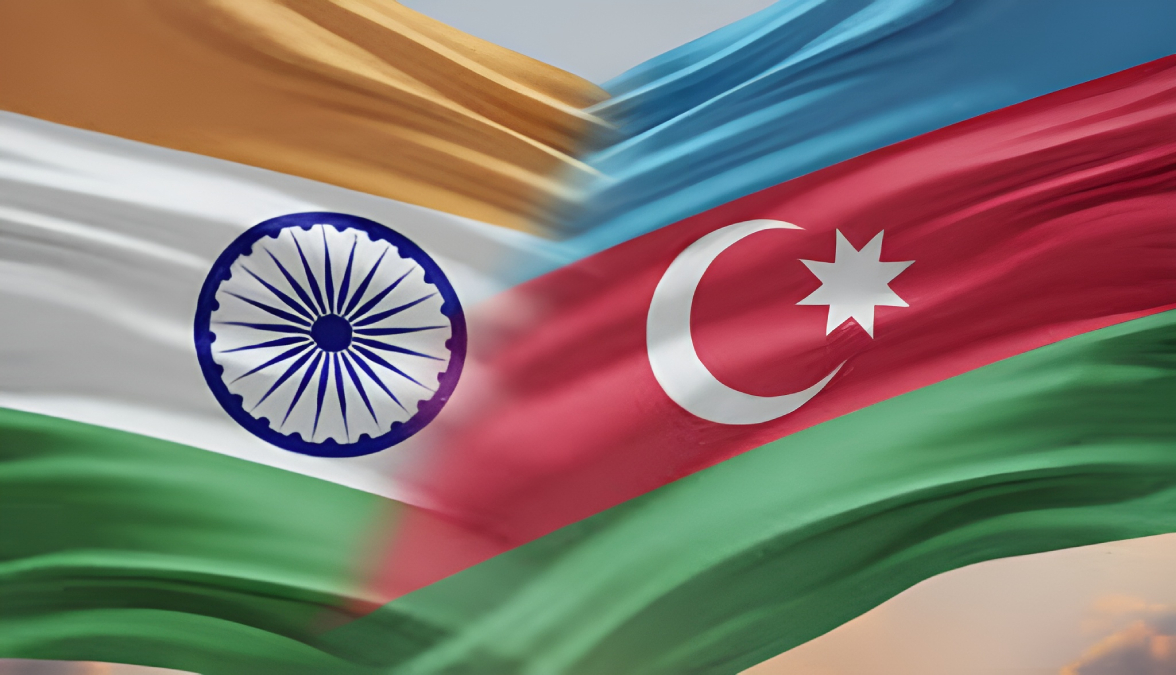
Azerbaijan has moved to reopen diplomatic channels with India, reviving a relationship that had come under strain and opening a debate that is likely to resonate far beyond Baku.
India's Ministry of External Affairs said on April 3 that Secretary West Sibi George met Azerbaijani Foreign Minister Jeyhun Bayramov in Baku and that the sixth round of India–Azerbaijan Foreign Office Consultations was also held there. According to the Indian readout, the two sides reviewed bilateral ties and discussed trade, technology, tourism, pharmaceuticals, energy, culture, people to people exchanges and cross-border terrorism, while agreeing to hold the next round of consultations in New Delhi. Azerbaijan's Foreign Ministry described the same contact as a discussion not only on bilateral prospects but also on issues that had created disagreement between the two countries, making clear that this was a repair effort, not a routine ceremonial meeting.
That diplomatic step matters in Türkiye because it touches a relationship that both Baku and Ankara officially define through the "one nation, two states" formula. Azerbaijan's Foreign Ministry says relations with Türkiye are based on that philosophy and describes the relationship as a comprehensive strategic alliance. Türkiye has used the same language in its own official statements, underlining that this is not a one-sided slogan but a shared political doctrine.
For years, Ankara translated that doctrine into policy. Türkiye tied one of its most difficult regional files, Armenia, directly to Azerbaijani interests. The Turkish Foreign Ministry says the land border with Armenia was closed in 1993 after the occupation of Kelbecer, and Turkish officials have repeatedly linked progress with Yerevan to the resolution of Armenia's conflict with Azerbaijan. That line was not limited to rhetoric. Türkiye also backed Azerbaijan politically and militarily during the wars that restored Azerbaijani control over territories internationally recognized as Azerbaijani, while maintaining formal support for Baku across diplomatic platforms.
This is why the issue is not that Azerbaijan is talking to India. The issue is that Azerbaijan is doing so with India at a time when India is deepening strategic cooperation with Greece and the Greek Cypriot administration, two actors at the center of Türkiye's disputes in the Aegean and the Eastern Mediterranean. As Bosphorus News previously reported on the inaugural India–Greece Maritime Security Dialogue, New Delhi and Athens formalized cooperation on maritime security, naval coordination and the wider Mediterranean environment in December 2025. Bosphorus News also examined the wider regional picture in its earlier analysis, The New Axis: How India, Greece, and Cyprus are Remapping the Mediterranean Power Balance. India's official readout of the Athens dialogue confirms that maritime security, maritime domain awareness, shipping and regional developments were all part of the agenda.
That context gives the Baku talks a meaning they would not otherwise carry. In Ankara, India is not viewed as a neutral Asian power operating at a distance. It is increasingly seen through the lens of its expanding alignment with Greece and the Greek Cypriot administration, especially in naval and strategic terms. Once Azerbaijan begins repairing ties with India under those conditions, the move is no longer just bilateral diplomacy. It becomes part of a wider strategic argument inside Türkiye.
There is also a public dimension to that argument. As Bosphorus News reported earlier, anti-Türkiye sentiment in India after Operation Sindoor spilled beyond official channels and into public space, including the cancellation of a Turkish singer's concert after student protests. That episode gave the political dispute a human and symbolic dimension. It showed that the fallout was not confined to ministries and diplomats.
The ground in Türkiye is already sensitive. In March 2026, Türkiye's Center for Countering Disinformation responded publicly to online criticism, disinformation and provocation targeting Azerbaijan and bilateral relations, a sign that tensions around Baku's foreign policy choices had already become visible enough to trigger an official response.
That matters because Azerbaijan's ties with Israel were already generating unease in parts of Turkish public debate. India is likely to prove even more politically difficult. Israel does not sit at the center of Türkiye's immediate maritime dispute map in the way Greece and the Greek Cypriot administration do. India, by contrast, is moving deeper into that space.
This is where the contradiction becomes harder to ignore. Türkiye has carried, and continues to carry, real diplomatic, political and strategic cost for Azerbaijan. It did so in its Armenia policy. It did so in war. It did so in international diplomacy. If Azerbaijan now opens diplomatic space toward India while India is expanding cooperation with Greece and the Greek Cypriot administration, many in Türkiye will ask a blunt question: is this the return for that support?
That is what gives the Baku talks their real significance. They are not just about India and Azerbaijan. They touch the political credibility of the "one nation, two states" formula itself.