
By Bosphorus News Geopolitics Desk
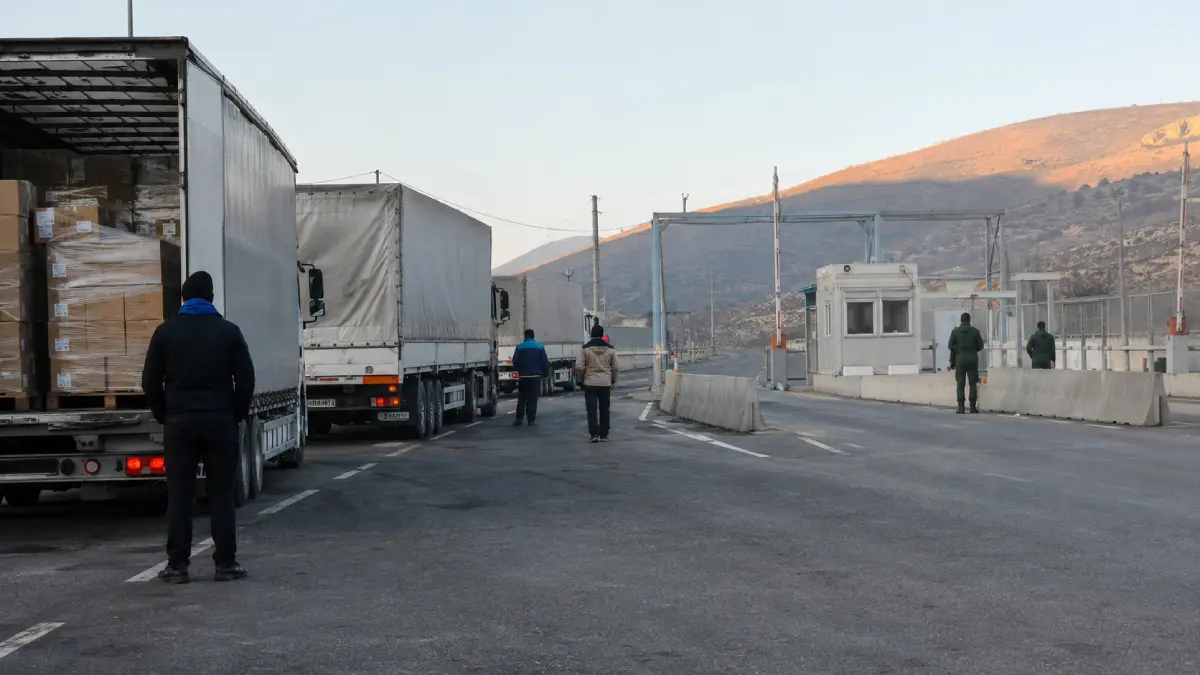
Armenia will temporarily use the Margara/Alican crossing to send humanitarian aid to Lebanon through Türkiye, creating another limited transit case on a land border that remains closed to regular traffic.
The Armenian government decision opens the Margara crossing from June 12 to 22 for cargo bound for Lebanon. Armenian public broadcaster Public Radio of Armenia said the route through Türkiye was chosen because it would allow the aid to reach Lebanon faster and at lower cost.
The move is narrow in legal scope but politically notable. The Armenia-Türkiye land border has remained closed to normal movement for decades, yet the same crossing has now become available on a case-by-case basis for humanitarian cargo when both sides allow the transit.
Limited crossing, not full reopening
The Armenian decision covers humanitarian cargo, not passenger movement or regular trade through the shared border.
Armenian outlets said the government approved a special decision because existing arrangements do not allow ordinary people, vehicles or cargo to cross the Armenia-Türkiye border in the normal way. News.am said the aid was intended for Lebanon's population and the local Armenian community affected by Israeli attacks.
That distinction is central to the story. The Margara/Alican route is being used as a negotiated humanitarian corridor, while the border itself remains politically closed.
Türkiye had not issued a public statement on the transit at the time of writing. The movement would require Turkish-side facilitation, but the public record so far comes from Armenian official and state-linked channels.
A repeated humanitarian model
This is not the first limited use of the crossing.
The Margara/Alican route was opened after the 2023 Türkiye-Syria earthquakes for Armenian humanitarian aid to Türkiye. It was also used in March 2025 for Armenian humanitarian aid sent to Syria through Turkish territory.
The Lebanon shipment therefore fits an emerging pattern: the border stays closed for ordinary traffic, but humanitarian cases can move through a controlled channel when the route is faster or more practical than alternatives.
That makes the latest decision more than a logistics note. It shows how a closed border can still be used in tightly defined cases without turning the step into a full political opening.

Technical normalization continues
The aid transit comes after a series of technical steps between Türkiye and Armenia that have kept the normalization process active without reopening the land border.
Bosphorus News reported in May that Türkiye had completed formal procedures allowing goods moving between Türkiye and Armenia through third countries to list Türkiye or Armenia directly as the final destination or point of origin. That change did not open the common border, but it adjusted trade documentation and gave the normalization track a practical customs dimension.
The Lebanon aid movement sits inside the same limited space. It is humanitarian rather than commercial, temporary rather than permanent and dependent on political clearance rather than routine border management.
A modest but useful signal
The Margara/Alican crossing carries symbolic weight because it is one of the few physical points where Türkiye-Armenia normalization can be tested in practice.
The latest use does not change the legal status of the border. It does not create regular trade, regular passenger traffic or a standing transport corridor. It does, however, show that the infrastructure can be activated when a narrowly defined case is approved.
That is why the wording matters. This is not a border reopening. It is a controlled humanitarian transit through a closed border.
The decision gives Armenia a faster route to Lebanon, gives Türkiye a role in the delivery chain and adds another practical example to a normalization process that is still advancing through small technical steps rather than a single political breakthrough.
***Sources: Public Radio of Armenia, Armenpress, News.am, PanARMENIAN, OC Media and Bosphorus News Reporting.