
By Bosphorus News Life Desk
Ankara is entering 2026 with two international spotlights: the title of Tourism Capital of the Turkic World and the role of host city for the NATO Summit on July 7-8.
The pairing gives Türkiye's capital a wider story than a standard tourism campaign. The Organization of Turkic States designated Ankara as the 2026 Tourism Capital of the Turkic World, while NATO has confirmed that allied leaders will meet at the Beştepe Presidential Compound in July. The two calendars place Ankara inside cultural travel, summit diplomacy and capital-city visibility in the same year.
The tourism title was agreed at the Organization of Turkic States tourism ministers' meeting in Ankara in July 2025, where officials pointed to the city's historical legacy, infrastructure and symbolic role. The designation gives the capital a yearlong platform for heritage, cultural cooperation and travel promotion across the Turkic world.
Ankara is often seen behind Istanbul in international tourism visibility, but it remains Türkiye's political heart and the city where many of the country's defining decisions are made. It is now Türkiye's second-largest city after Istanbul, yet its modern scale can obscure how dramatic its transformation has been since the early Republican period.
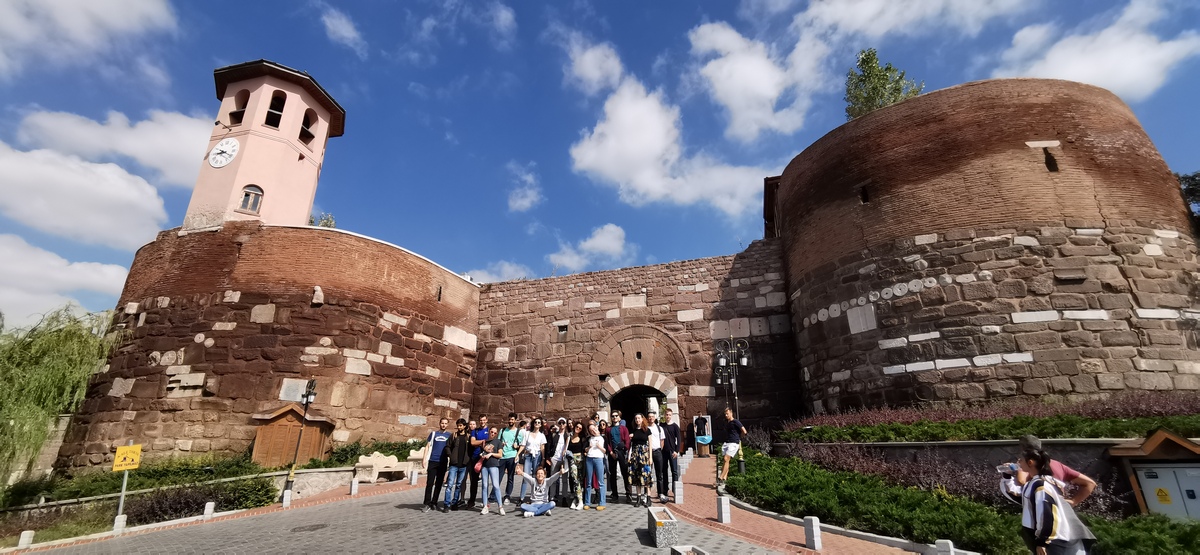
Its travel identity is deeper than many visitors realize. The capital is home to Roman-era remains, including the Temple of Augustus, the Roman Baths and the Column of Julian, while its wider regional map opens toward the world of the Hittites, one of Anatolia's oldest civilizations.
The Museum of Anatolian Civilizations is central to that story. One of Türkiye's most important museums, it holds exceptional Hittite, Phrygian and earlier Anatolian collections that cannot be understood through coastal tourism or Istanbul city breaks alone. Euronews Travel has also placed the museum and Ankara's archaeological depth at the center of the city's 2026 cultural profile.
Ankara is also the symbolic city of the modern Republic. It carries the institutional memory of modern Türkiye, the authority of the state and Anıtkabir, the mausoleum of Mustafa Kemal Atatürk, the founder of the Republic.
Atatürk is widely quoted as saying that by making Ankara the seat of government he wanted to show the world once again "the power of the Turk to make the impossible possible." The line still explains why Ankara matters. Before the Republic, it was a modest Anatolian town on the dry central plateau; a century later, it stands as one of Türkiye's largest and most modern urban centers. Its transformation into a capital was part of the Republic's founding message: the new state would not inherit a ready-made imperial city, but build its own center of power in Anatolia.
The NATO Summit adds a second layer to that visibility. NATO Secretary General Mark Rutte announced that the 2026 summit will be held in Ankara on July 7-8, bringing allied leaders, delegations, media teams and security planning to the Turkish capital. Türkiye has also moved to reopen Ankara's long-idle airport capacity ahead of the summit, a step Bosphorus News previously covered as part of the capital's NATO Summit logistics build-up. The summit will not be a tourism event, but it will place Ankara's hotels, transport network, venues and international media profile under direct global attention.
Ankara's 2026 visibility also has a gastronomy layer. The capital has a strong dining culture for an inland city, including seafood restaurants long associated with political, diplomatic and business dining, despite having no coastline. Its own culinary identity is more distinct than many visitors expect. Ankara döneri, the city's version of Türkiye's famous döner, Ankara tava, a rich local meat dish, and Ankara simidi, a darker, thinner and more deeply molasses-flavored version of the Turkish sesame bread ring, all give the capital a local table beyond official receptions and summit hotels.
That table also extends into wine culture. Kalecik Karası, one of Türkiye's best-known indigenous red grape varieties, takes its name from Kalecik, a district of Ankara, giving the capital a local wine note in its 2026 travel story.
The city has an opportunity to widen its image abroad. Ankara is not trying to replace Istanbul in Türkiye's travel map. Its 2026 role is different: to show the capital as a political, cultural and historical destination where Republican memory, Anatolian archaeology, local food culture and modern diplomacy meet.
The Turkic World Tourism Capital program also gives Ankara a regional cultural frame. The Organization of Turkic States says the initiative is designed to strengthen tourism cooperation, promote shared heritage and increase the international visibility of destinations across the Turkic world. In Ankara, that means concerts, exhibitions, cultural programming, museum routes and city promotion can sit inside a wider Turkic network rather than a purely domestic calendar.
That wider story fits into the Anatolian cultural themes Bosphorus News has previously covered in its reporting on Anatolian mosaic and Anatolian tolerance. Ankara's 2026 year gives those themes a capital-city setting, linking ancient civilizations, Republican symbolism and contemporary diplomacy in one travel narrative.
Ankara's real 2026 pitch is not to become another postcard city. Türkiye's capital is entering a year when visitors, diplomats and international media will have reason to look again at a city often reduced to government buildings, official meetings and winter bureaucracy.
Ankara's test will be whether the tourism title becomes more than a ceremonial label. If the city connects its museums, old quarters, Roman remains, Phrygian routes, Hittite heritage, gastronomy, local wine culture and summit-year visibility into a coherent visitor experience, 2026 could give Türkiye's capital a more durable place in the country's cultural travel map.
Sources: Organization of Turkic States, NATO, Euronews Travel, Turkish Historical Society, Ankara Provincial Directorate of Culture and Tourism, Bosphorus News review and reporting.