
By Bosphorus News Energy Desk
Russian natural gas exports to Europe via the TurkStream pipeline rose 22 percent in March from a year earlier, reaching an average of 55 million cubic metres per day, according to Reuters calculations based on data from the European Network of Transmission System Operators for Gas.
The increase reflects a structural shift that has been in place since January 2025, when Ukraine declined to renew its gas transit agreement with Russia. With that route closed, TurkStream has become Russia's last direct pipeline link to European markets.
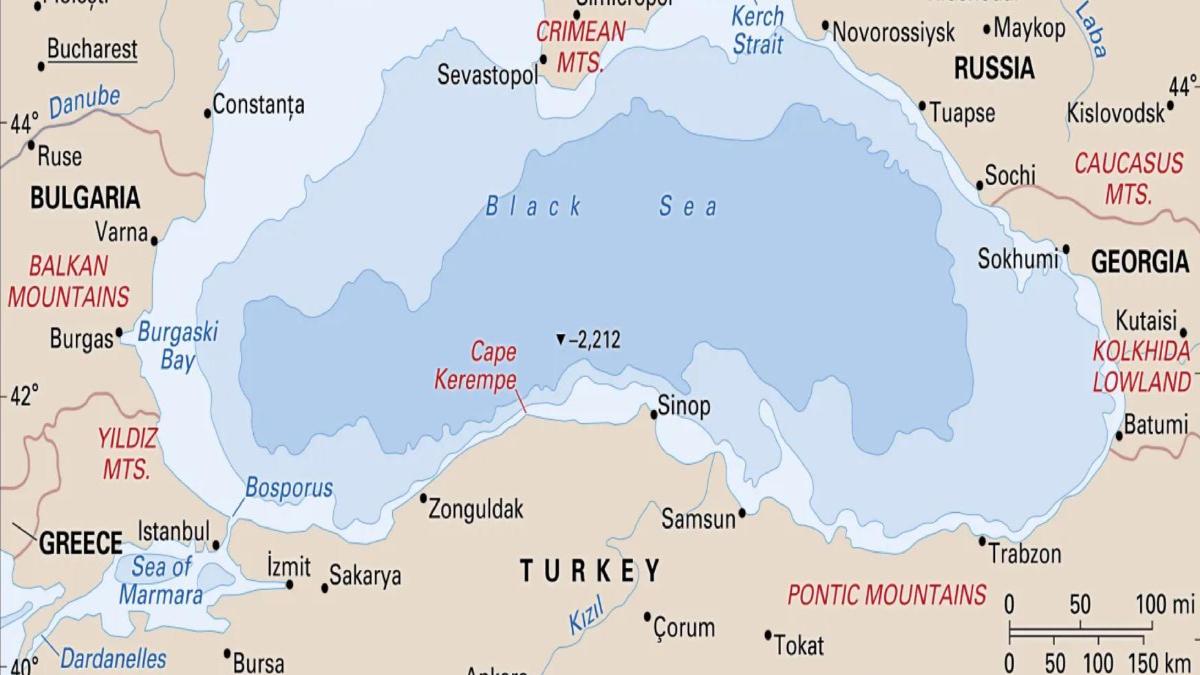
Running under the Black Sea to Türkiye and onward into southeastern Europe, the pipeline now supplies key regional buyers including Hungary, Serbia and Slovakia. These countries have maintained Russian gas imports for cost, infrastructure and political reasons. Türkiye is not the supplier. It is the corridor.
A Corridor Türkiye Did Not Initially Design
Türkiye did not initially design this role as Europe's primary Russian gas transit route. TurkStream entered operation in 2020 to serve southeastern European markets. Its strategic weight expanded after the Ukrainian route shut down, elevating Türkiye's position by default rather than deliberate policy.
That distinction matters in Brussels, where the European Union has moved to eliminate Russian energy imports. A regulation adopted in January 2026 sets a deadline to phase out Russian pipeline gas by autumn 2027, directly targeting the remaining flows moving through TurkStream.
For southeastern European states that still depend on the pipeline, the timeline creates immediate constraints. Hungary and Slovakia have signalled little urgency to diversify away from Russian supply, prolonging friction with EU policy.
Türkiye's exposure is different. The current transit role generates revenue and gives Ankara indirect leverage over regional energy flows. When those flows decline under EU rules, that leverage will fade.
Türkiye's Parallel Gas Strategy
Türkiye is not operating as a passive transit state. As detailed in Bosphorus News reporting on its evolving gas hub strategy. Ankara has been building a parallel architecture since 2017, expanding LNG capacity, developing Black Sea production and opening export channels into Europe.
That trajectory points toward Türkiye as a regional gas trading hub rather than a corridor defined by Russian transit.
Regasification capacity has expanded significantly in recent years, while the Sakarya gas field in the Black Sea is expected to scale up in the second half of the decade. BOTAŞ has also signed export agreements with European buyers, including Bulgaria, Hungary, Romania and Moldova.
The direction is clear. Türkiye is building a post-Russian gas model while still profiting from Russian transit.
Recent disruption around Hormuz has added urgency to that transition. As reported by Bosphorus News the Southern Gas Corridor, running from Azerbaijan through TANAP and TAP to southern Europe, is now the only major overland route delivering non-Russian, non-Gulf gas into European Union territory.
Every cubic metre moving through that corridor also crosses Türkiye. That makes Ankara central not only to Russia's remaining gas route into Europe, but also to one of the few realistic alternatives Brussels can still expand.
The Russian Dependency Beneath the Transit Role
The rise in TurkStream flows sits alongside a broader collapse in Russia's energy footprint in Europe. Russian pipeline gas exports to Europe fell sharply in 2025 to their lowest level in decades, after the loss of multiple transit routes.
Türkiye's own exposure to Russia, however, does not end with TurkStream. As previously reported by Bosphorus News on the Akkuyu nuclear project the project ties Türkiye's critical energy infrastructure to Russian financing, technology and long-term operational involvement.
The result is a dual relationship. TurkStream makes Türkiye indispensable to Russia's remaining European gas revenues. Akkuyu embeds Russia inside Türkiye's nuclear energy future.
That contradiction sits at the centre of Ankara's energy strategy. Türkiye is trying to turn geography into leverage while reducing the Russian dependency that gives part of that leverage its current value.
A Narrow Window
The current configuration is temporary. TurkStream flows are rising at the same time that EU policy is designed to eliminate them.
That leaves Türkiye navigating a narrow window. Its leverage as a transit corridor is near its peak, but the underlying model is set to change before the end of 2027.
The decision point is no longer theoretical. Türkiye can use the remaining TurkStream window to accelerate its shift toward a supply-driven gas hub, or watch a temporary transit advantage decline before its replacement model is fully ready.
The March flow data shows the corridor is still growing. The EU deadline shows why that role cannot be treated as permanent.