
By Bosphorus News Energy Desk
The closure of the Strait of Hormuz has pushed Europe back toward pipelines, with Türkiye emerging as the central transit route at a moment when LNG flows are disrupted and alternative supply options are narrowing.
Since late February, the shock has shown up in both prices and supply signals. Qatar halted production at key LNG facilities and declared force majeure on contracts in early March, while European gas prices jumped in the first week of the war. Those lost volumes have not been replaced. What followed instead was a scramble to redistribute what gas remained available.
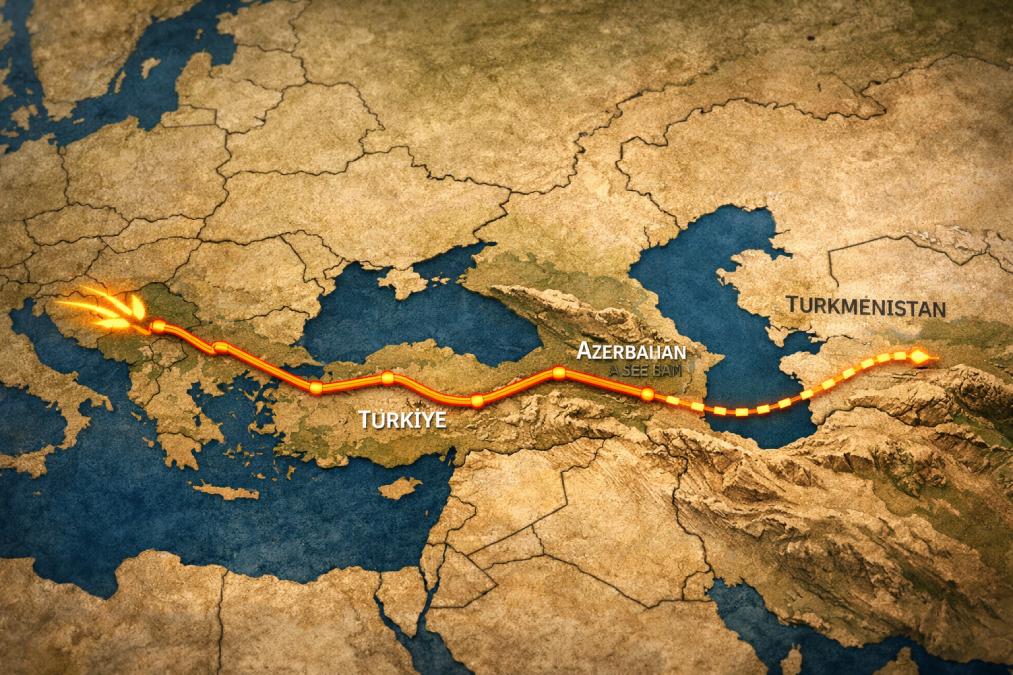
That has raised the profile of the Southern Gas Corridor. Carrying Azerbaijani gas through Georgia and Türkiye into Europe, it is now the only major overland route supplying European Union markets with non-Russian and non-Gulf gas. As Bosphorus News reported, the corridor gained strategic weight as Hormuz-linked disruption removed competing supply options.
Azerbaijan's Supply Constraint Is Now the Bottleneck
Capacity upgrades are moving ahead and new European buyers are being added, but export volumes still rely heavily on Azerbaijan's Shah Deniz field. Other sources, including Absheron, have yet to deliver enough output to shift that balance. Europe's drive to cut Russian gas had already tightened demand for alternative pipeline supply. The Hormuz disruption intensified that pressure, leaving a widening gap between corridor expansion plans and the gas available to fill them.
That is putting Turkmen gas back on the agenda. Turkmenistan holds some of the world's largest gas reserves, but its export structure has long been shaped by a single dominant customer. China remains the main buyer through established Central Asian pipeline routes, and rising Chinese demand directly narrows the volumes that could be redirected elsewhere.
The Same Gas Is Drawing Europe and China
Europe and China are now looking at the same reserve base for different reasons. Europe needs additional pipeline gas as LNG flows remain disrupted. China wants to secure long-term supply for its own consumption growth. Türkiye sits between those pressures as both a transit state and a market exposed to regional supply shifts.
Getting Turkmen gas westward remains difficult. A direct pipeline across the Caspian Sea has still not been built. Legal and political obstacles remain unresolved. Existing flows toward Türkiye depend largely on swap arrangements, often involving Iran, which adds another layer of risk under current conditions. Any meaningful expansion toward Europe would require new infrastructure and political coordination across the Caspian basin.
The pressure is now visible across the whole system. European demand is rising as supply options narrow, while producer volumes remain constrained by contracts, infrastructure limits and rival buyers. The market is moving into a phase where the central question is no longer simply how much gas exists, but which routes can be made to work, under what political conditions, and fast enough to matter.
Türkiye's place in that equation is structural. Every cubic metre of Azerbaijani gas bound for Europe crosses Turkish territory, and any future expansion involving Central Asian supply would do the same. Ankara is also exposed on the demand side, especially where Iranian gas flows are concerned.
That makes energy geography harder to separate from regional security. The same space that carries pipelines also hosts military deployments, maritime surveillance and critical export infrastructure. Developments around Ceyhan and the Eastern Mediterranean are reinforcing that overlap as alternative routes gain value under Gulf disruption.
A broader reordering is already underway in how gas moves across the region, and as maritime transport remains under pressure, the future role of Turkmen supply will depend less on the scale of reserves and more on whether a viable route can be built, politically sustained and brought online in time to compete in a market that is tightening faster than the infrastructure meant to serve it.