
By Bosphorus News Geopolitics Desk
A Turkish missile boat challenged the Panama-flagged cable-laying vessel Ocean Link by radio on May 13 while the ship was working between the Greek islands of Astypalaia and Kos, according to Greek media reports citing Hellenic Navy sources, pulling a civilian telecommunications project into the Aegean's wider maritime jurisdiction dispute.
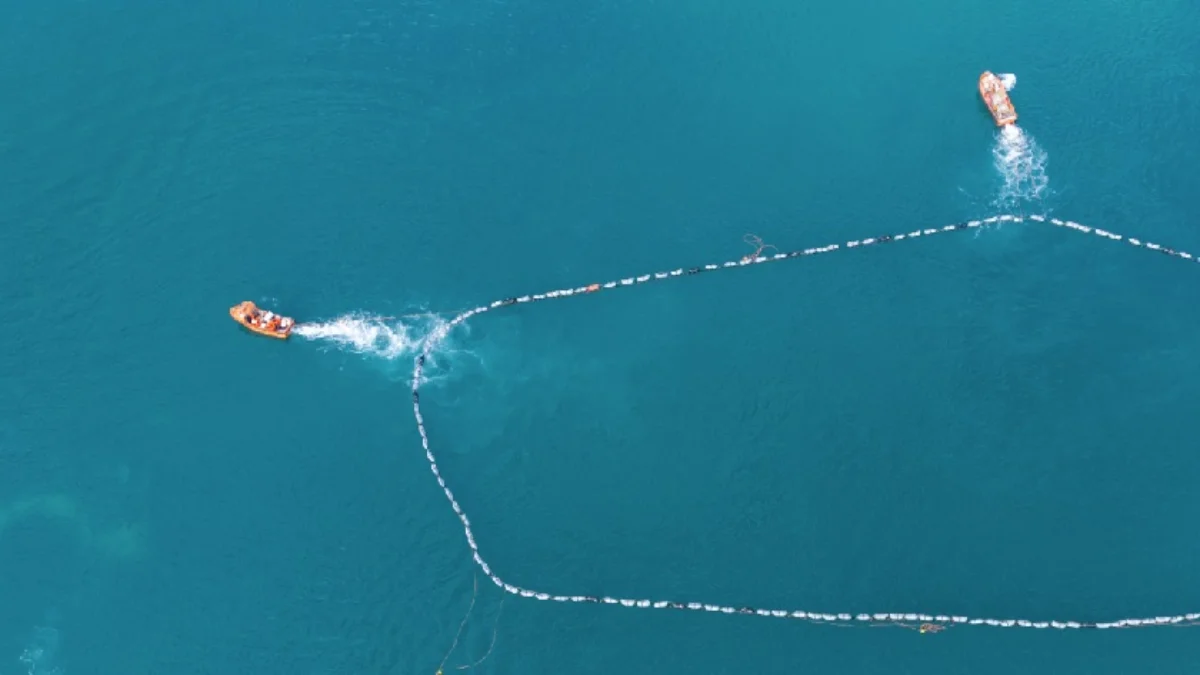
Ocean Link was operating about seven nautical miles northeast of Astypalaia for OTE, the Hellenic Telecommunications Organization and Greece's main telecom operator, as part of SEA-SPINE, short for "High Speed Submarine Backbone for Islands in the Aegean Sea," an EU-funded submarine fiber-optic infrastructure project designed to improve high-speed telecommunications links between Aegean islands.
The vessel had permits issued by Greek authorities, while the work had also been announced through a Greek maritime warning issued by Irakleio Radio, notifying ships that Ocean Link would conduct subsea operations and that nearby vessels should keep a one-nautical-mile safety distance.
According to Greek reports, the Turkish vessel told Ocean Link by radio that the area required Turkish navigational authorization rather than a Greek notice. The claim fits Ankara's long-running view that the Aegean's island geography cannot generate maritime jurisdiction in the way Athens argues under the United Nations Convention on the Law of the Sea. Greece rejects that reading and treats the waters between Astypalaia and Kos as falling within Greek maritime responsibility.
The Greek Navy frigate HS Adrias, which was patrolling nearby, responded by radio and said the cable operation was taking place outside Turkish jurisdiction, according to the same reports. Ocean Link continued its work without further interruption, while the Turkish vessel later withdrew from the area.
No shots were fired and no physical contact occurred between the vessels.
Greek media, citing defence sources, described the May 13 episode as part of a series of similar incidents involving vessels working on cables or research activity in disputed Aegean settings. In March 2026, the cable vessel Ocean Connector reportedly faced a comparable Turkish radio intervention while working between Amorgos and Astypalaia, while earlier incidents involving Italian and Greek research vessels near Kassos were reported in late 2024 and early 2025.
The significance of the Ocean Link episode lies in the type of work being challenged. The ship was not conducting energy exploration or a military survey; it was laying fiber-optic infrastructure for a telecommunications backbone linking Aegean islands, which places digital connectivity inside the same field of pressure as maritime claims, navigation warnings and naval radio exchanges.
That infrastructure layer connects the episode to a wider regional pattern. Submarine cables and cross-sea links are becoming harder to separate from jurisdiction disputes, a trend visible beyond telecoms in the Eastern Mediterranean energy cable debate, including the Greece-Cyprus-Israel electricity link examined by Bosphorus News in the Great Sea Interconnector file.
The same day, Greece's Hellenic National Defence General Staff reported renewed Turkish air activity in the southeastern Aegean, saying Turkish F-16s and an ATR-72 maritime surveillance aircraft were recorded in five Athens Flight Information Region infringements and two alleged violations of Greek national airspace. The Athens FIR is an air traffic coordination zone, not sovereign airspace, a distinction that has long sat at the centre of Türkiye-Greece air disputes. The Greek general staff said the aircraft were identified and intercepted by the Hellenic Air Force.
The maritime episode also came as Ankara's Blue Homeland draft returned Türkiye's maritime jurisdiction claims to the legal agenda, a process Bosphorus News examined through Türkiye's proposed Aegean and EastMed framework. The timing does not prove that the Ocean Link challenge was tied to the draft law, but it gives the incident a sharper legal and political setting.
Turkish Ministry of National Defence spokesman Rear Admiral Zeki Aktürk addressed the draft at the ministry's weekly briefing on May 14, saying the proposed Law on Maritime Jurisdiction Areas would define authorities within Türkiye's maritime jurisdiction areas and address gaps in domestic legislation. Turkish reporting has said the bill is expected to be submitted to the Turkish Grand National Assembly after the Kurban Bayramı holiday, placing the parliamentary debate in June.
Türkiye is not a party to the United Nations Convention on the Law of the Sea, known as UNCLOS, the main treaty setting rules for territorial waters, continental shelves and exclusive economic zones. Ankara argues that UNCLOS provisions on island-generated maritime rights do not apply equitably in the Aegean, where Greek islands sit close to the Turkish coastline. Greece and Cyprus have ratified UNCLOS and reject Türkiye's maritime claims as legally unfounded.
Greece reinforced that position at the United Nations in March 2026, when its Permanent Representative submitted letters reaffirming Athens' UNCLOS-based positions and dismissing Ankara's assertions as legally without consequence.
The Ocean Link case is therefore more than another Aegean radio exchange. It shows how the dispute is moving into the working layer of infrastructure, where a cable ship, a maritime warning, a Turkish jurisdiction challenge and a Greek frigate's response can turn a telecoms project into a sovereignty test. The same arguments that have shaped energy, airspace and naval disputes are now being carried into the fiber-optic map of the Aegean, where connectivity itself has become part of the contest over authority at sea.