
By Bosphorus News Defense Desk
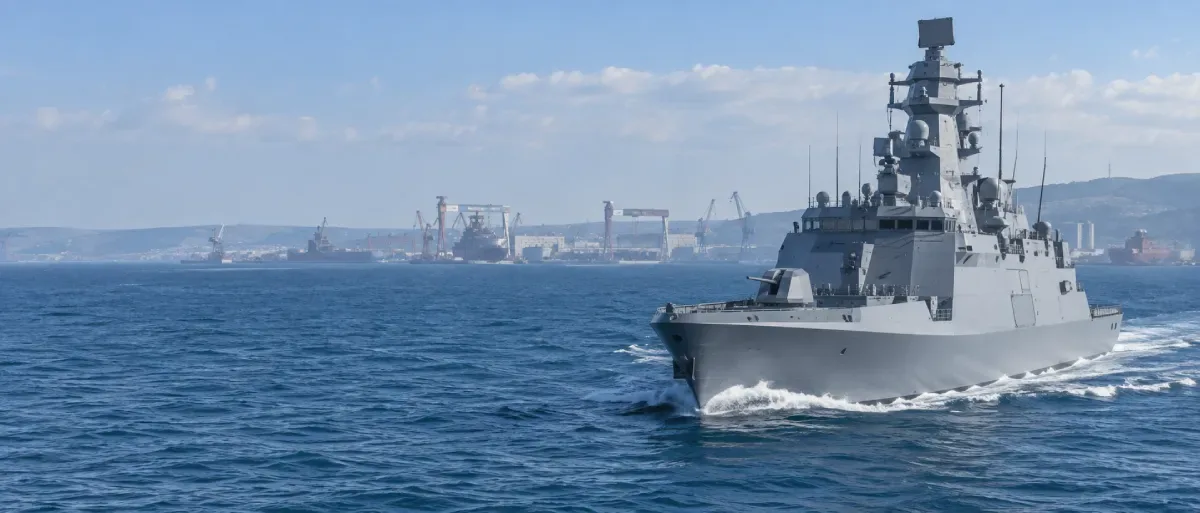
Türkiye has joined Japan and South Korea in a U.S. Navy review of foreign frigate designs, putting the Istanbul class into a procurement discussion that could allow the first ships to be built in allied yards before production shifts to the United States.
The Turkish design brings an active production line, an existing export customer and access to a shipbuilding base already working across several naval programs, but any U.S. contract would also have to navigate sanctions on Türkiye's defense procurement authority, export licensing, technology transfer and congressional opposition to American warships being built overseas.
USNI News reported on September 1 that the White House and U.S. Navy are examining three allied designs: the export version of Mitsubishi Heavy Industries' Mogami class, South Korea's Chungnam class and Türkiye's Istanbul class, also known as the İstif or I class.
Three industry sources confirmed the review, while two told USNI that the Istanbul class entered the discussions after Turkish leaders raised shipbuilding with U.S. President Donald Trump during the NATO summit in Ankara on July 7 and 8. President Recep Tayyip Erdoğan confirmed after the summit that he and Trump had discussed cooperation on frigates, corvettes and submarines that Türkiye could build in its own shipyards.
The Navy has not announced a three-country tender or published a formal shortlist. Acting Secretary of the Navy Hung Cao ordered an assessment of international combatants after the White House opened the route to foreign designs in August, with USNI reporting that the work is due on November 12.
Funding appeared before the Turkish design entered the discussion, with USNI reporting that the fiscal 2027 budget proposal contained $1.85 billion for a foreign warship design effort initially centered on Japan and South Korea.
President Trump then signed an August 13 memorandum titled "Rebuilding the United States Navy and America's Shipbuilding Industrial Base," directing the Pentagon to prepare a competitive acquisition approach for surface combatants capable of anti-submarine warfare, surface warfare and convoy escort.
The memorandum permits proposals based on what the administration calls the Finland Model, adapted from the Coast Guard's Arctic Security Cutter program, under which a foreign supplier could construct the first two ships at its home yard before subsequent production moves to the United States.
Any builder using that route would have to establish a new American shipyard or take ownership or a majority stake in an existing one, train a U.S. workforce, license proprietary shipbuilding technologies to the American operation and create a domestic supply chain for construction and maintenance.
Washington's August memorandum therefore places existing shipyard capacity near the center of the procurement model, alongside the performance of the ship being offered.
Türkiye brings an active production line
The Istanbul class is the smallest of the three designs reported to be under consideration. Published figures put the Turkish frigate at about 3,000 tons and 113.2 meters, compared with roughly 4,300 tons and 129 meters for the Chungnam class and about 5,500 tons full load and 133 meters for the Mogami class.
The Turkish frigate carries a 16-cell MİDLAS vertical launch system, but the eventual U.S. requirement cannot be read directly from the current weapons fit because Washington has not published the configuration it would expect from a foreign design.
What the White House has published is a warning against extensive redesign. Its August memorandum tells the Navy not to impose iterative changes on mature parent designs and requires senior approval for departures from those designs, reflecting Washington's effort to avoid the cost and schedule problems that have affected previous naval programs.
Türkiye enters that process with ships already moving through production rather than a design awaiting its first hull. TCG İstanbul entered Turkish Naval Forces service in January 2024, and follow-on frigates are being built at Anadolu, Sedef and Sefine shipyards under industrial arrangements involving TAIS and STM.
The class has also moved into the export market. Indonesia signed a contract with TAIS for two I-class frigates at IDEF in July 2025, followed in January 2026 by a roughly $1 billion agreement between TAIS and Qatar's Barzan Holding connected to the Indonesian requirement.
Naval News later reported that two hulls from the Turkish production program would be allocated to Indonesia and replaced by additional ships for the Turkish Navy. Public primary documents reviewed by Bosphorus News confirm the Indonesian procurement and the $1 billion TAIS-Barzan agreement but do not provide the same level of detail on individual hull allocation, so that part of the production plan remains based on specialist reporting.
The wider Turkish shipbuilding base is considerably larger than the Istanbul-class line. Naval Forces Commander Admiral Ercüment Tatlıoğlu said in April that 41 military vessels were being built simultaneously in Turkish shipyards and that nine more would soon enter production. Bosphorus News tracked that expansion as Türkiye expanded construction across frigates, submarines, support vessels and unmanned naval systems.
Washington's memorandum explicitly seeks foreign builders able to deliver mature ships quickly and then reproduce part of that industrial capacity inside the United States, which gives Türkiye's parallel production experience direct relevance to the review.
CAATSA complicates the licensing route
The political opening created by the July talks has not removed the U.S. sanctions imposed after Türkiye purchased Russia's S-400 air defense system.
Washington sanctioned SSB in December 2020 under Section 231 of the Countering America's Adversaries Through Sanctions Act (CAATSA), including a prohibition on specific U.S. export licenses and authorizations for goods or technology transferred to the Turkish procurement authority.
The restriction applies to SSB rather than every Turkish defense company, so a proposal led by TAIS or another private Turkish company would not be automatically excluded simply because it came from Türkiye. The contractual structure would determine when, and to what extent, the existing measures entered the transaction.
That question is difficult to separate from the Istanbul-class program because the frigate is a Turkish state defense project involving SSB alongside shipyards and several domestic systems suppliers, while a U.S. Navy version could require American weapons, electronics, technical data or other controlled technology.
Any transaction requiring a U.S. export authorization directly to SSB would encounter the existing CAATSA restriction, and the Finland Model introduces an additional licensing question because the foreign supplier must transfer proprietary shipbuilding techniques and technologies into its American operation.
No public Turkish proposal has yet identified which companies would lead such a U.S. structure, which entity would hold the relevant intellectual property or how SSB's role would be separated from controlled American technology.
Trump told reporters in Ankara on July 7 that his administration intended to remove the sanctions and was working with senior U.S. officials on the issue, but the presidential statement did not itself alter their legal status.
The Treasury Department's Office of Foreign Assets Control still listed SSB under the CAATSA-Russia program in its current sanctions search this week, including the export restriction originally imposed in 2020.
A Congressional Research Service report updated on August 20 also described Türkiye as seeking removal of the CAATSA measures and explained that U.S. law provides several routes for waiver or termination. A waiver or termination under Section 236 would trigger a congressional review period, while a separate national-security waiver under Section 231 requires presidential certifications.
Until one of those routes is used, a Turkish frigate proposal would have to be structured while the licensing restrictions on SSB remain legally in force.
Congress could narrow the foreign-yard model
The administration's plan faces a separate challenge on Capitol Hill that applies to Japanese and South Korean candidates as well as Türkiye.
The White House memorandum uses national-security authority to permit the first vessels in a qualifying program to be constructed abroad, followed by a 30-day notification period to Congress before a contract relying on that waiver can be signed.
USNI reported that the Senate Armed Services Committee removed the relevant foreign-construction waiver in its draft fiscal 2027 defense policy legislation, while the House Armed Services Committee included language preventing authorized funds from being used to purchase an American warship constructed in a foreign yard.
Neither provision is final law, although either could narrow the model that currently allows an allied builder to produce the first two ships outside the United States.
South Korea already has an industrial position that fits part of the White House formula. Hanwha Ocean and Hanwha Systems completed their acquisition of Philly Shipyard in December 2024, and Hanwha has since invested in expanding the yard while moving into U.S. Navy-related work.
No Turkish shipbuilding group has publicly announced a comparable U.S. shipyard acquisition.
Türkiye therefore enters the review with a frigate already in service, parallel production capability and a large naval construction base, but without a declared American yard strategy and with the U.S. export restrictions on SSB still in place.
The November assessment will show whether the Istanbul class remains under consideration. If Washington proceeds to a formal competition, Türkiye will need to pair its shipbuilding capacity with a credible U.S. industrial plan and a licensing structure capable of operating within CAATSA and whatever shipbuilding restrictions emerge from Congress.
Sources: White House, U.S. Navy, USNI News, U.S. Department of State, U.S. Treasury Office of Foreign Assets Control, Congressional Research Service, Naval News, Anadolu Agency, Bosphorus News review and reporting.