
By Bosphorus News Geopolitics Desk
Türkiye and Saudi Arabia signed new railway and logistics cooperation agreements in Riyadh on Tuesday, adding a fresh institutional layer to efforts to reconnect overland trade routes from the Gulf to Europe through the Levant.
The memorandums of understanding were signed after talks between Turkish Transport and Infrastructure Minister Abdulkadir Uraloğlu and Saudi Minister of Transport and Logistic Services Saleh bin Nasser Al-Jasser. Turkish and regional reports said the agreements cover railway cooperation and transport-logistics ties, including steps designed to strengthen regional connectivity and trade links.
The development does not mean that a new railway line between Türkiye and Saudi Arabia has entered construction. It gives the two governments a formal cooperation channel while Ankara, Riyadh, Amman and Damascus examine how land routes between the Arabian Peninsula, Türkiye and Europe could be rebuilt, modernized or expanded.
Uraloğlu has placed the file inside a wider transport map. In early June, he said Türkiye wants to modernize the historic Hejaz Railway and extend the route toward Oman, presenting the line as a possible alternative trade route linked to Gulf markets and global supply chains. Saudi officials have also said joint studies for a railway link to Türkiye through Jordan and Syria are expected to be completed before the end of 2026.
The Riyadh signatures therefore matter less as a single infrastructure announcement than as another piece in a corridor file moving through several capitals. Türkiye, Jordan and Syria signed a separate transport cooperation memorandum in April to improve regional connectivity, passenger and freight movement, supply chain efficiency and multimodal links. That agreement created a Levantine layer for a possible north-south route, while the Saudi-Türkiye MoUs now add a Gulf-side track to the same discussion.
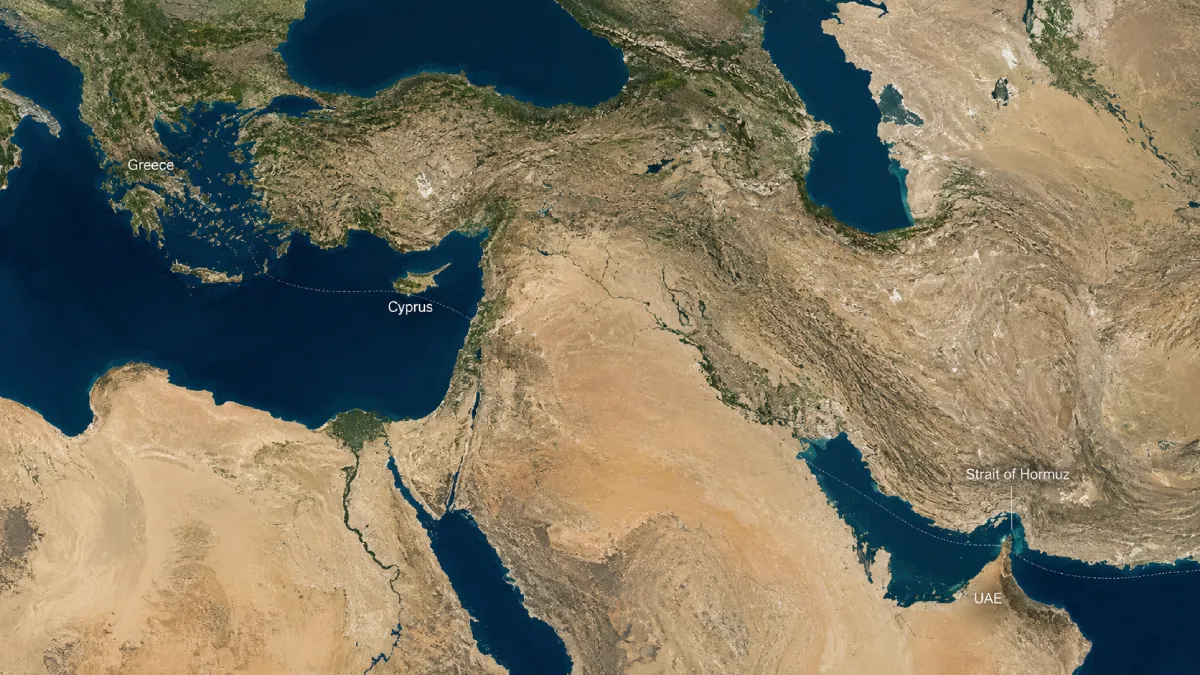
The political geography is sensitive. Any serious railway connection between Saudi Arabia and Türkiye would need to pass through Jordan and Syria, making the project dependent on security conditions, infrastructure repair, financing and diplomatic coordination across states still emerging from years of conflict, rupture or limited cooperation. The corridor also sits next to other regional route debates, including the Iraq-centered Development Road, the Middle Corridor through the South Caucasus and Central Asia, and maritime pressure around the Strait of Hormuz.
Türkiye has spent recent months trying to position itself as a bridge between the Gulf, the Levant, the South Caucasus and Europe, using railway, road, port and logistics agreements to turn geography into commercial depth. Saudi Arabia's deeper transport ties with Türkiye also fit Riyadh's effort to expand logistics capacity, diversify trade routes and connect Vision 2030 infrastructure planning with wider regional corridors.
The cautious reading remains the strongest one. The Riyadh MoUs do not by themselves build a railway from Medina to Istanbul. They show that the idea of a Gulf-Europe land corridor through Saudi Arabia, Jordan, Syria and Türkiye has moved from political language into a more structured transport file.
***Sources:
Anadolu Agency, June 2026, reported the Riyadh signing of railway and transport memorandums of understanding between Türkiye and Saudi Arabia.
Daily Sabah, June 2026, reported that the two memorandums cover railway and logistics cooperation.
Anadolu Agency, April 2026, reported that Saudi-Türkiye railway link studies through Jordan and Syria are expected to be completed before the end of 2026.
Türkiye's Directorate of Communications, April 2026, reported the Türkiye-Jordan-Syria regional transport cooperation memorandum.