
By Bosphorus News Geopolitics Desk
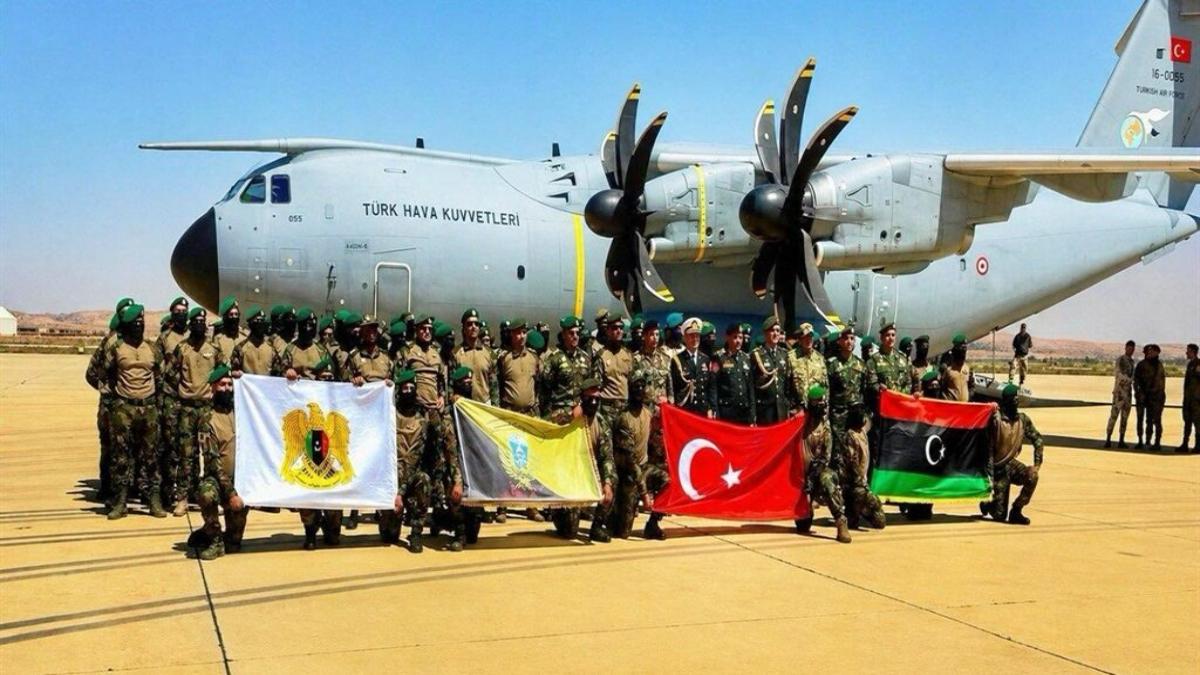
Türkiye has brought military formations linked to western and eastern Libya into the same exercise framework for the first time, placing rival forces under EFES-2026, Türkiye's largest combined joint military exercise coordinated by the Aegean Army Command, as Greece moves to reopen the maritime file in Tripoli.
This is not a unification of Libya's divided security structures. Ankara has created a military setting in which both sides operate under the same external framework without first resolving Libya's political split. That gives Türkiye a role that goes beyond its long-standing relationship with the Tripoli-based Government of National Unity (GNU).
Libyan sources provide the clearest chronology. GNU-linked units reached İzmir on April 21 under instructions from Chief of Staff Lt. Gen. Salah al-Namroush. The participating formations included land forces, naval units, coast guard elements, the 111th Brigade, naval special forces, logistics and military engineering units, according to the Libyan News Agency (LANA). Eastern Libyan forces arrived separately from Benghazi on April 28 aboard Turkish military aircraft, according to the Libya Observer. The two sides arrived separately and answer to different command structures inside Libya, but the Turkish-hosted exercise put them inside the same military frame.
That approach is backed by a growing Türkiye-Libya cooperation record. As Bosphorus News reported, Libya's Military Industrialisation Organisation signed a strategic production and maintenance agreement with a Turkish defence firm in February 2026, following a visit to Ankara by GNU Deputy Defence Minister Abdulsalam Zubi. The Türkiye-Libya Joint Economic Commission, dormant for 17 years, was revived in January 2026 with defence and energy identified as priority sectors. Contact with both camps can widen Ankara's room for manoeuvre in Libya, but it can also expose Türkiye to the country's unresolved command rivalries.
The timing of EFES-2026 sharpens the picture. Greek Foreign Minister Giorgos Gerapetritis travelled to Tripoli on April 27, securing a commitment to technical talks on Exclusive Economic Zone and continental shelf delimitation. Athens framed those talks under the United Nations Convention on the Law of the Sea (UNCLOS), placing them in direct tension with the 2019 Türkiye-Libya maritime memorandum that Greece considers illegal. Tripoli's engagement with Athens marks a shift in posture, though Libya's internal divisions make a binding agreement a distant prospect.
Ankara's response came the following day. The Turkish Defence Ministry announced that an Akıncı unmanned aerial vehicle, flying under the "One Libya, One Army" framework of the Flintlock-2026 multinational special forces exercise, had reached Libya by following the maritime jurisdiction boundaries defined in the 2019 Türkiye-Libya agreement. The route turned the flight into a map statement.
The maritime dispute runs alongside military training and energy planning. Türkiye's parliamentary mandate in Libya runs to 2028, as Bosphorus News covered when the extension was approved in December 2025. Energy Minister Alparslan Bayraktar said in late April that "interesting developments" would be heard from Libya. Türkiye Petrolleri has identified overseas production growth as a priority, with Libya among the files Ankara is watching closely.
The naval layer was already visible before EFES-2026. A Turkish frigate conducted joint training with Libyan Naval Academy cadets at Al Khums in December 2025, a development Bosphorus News reported alongside Libya's repeated rejection of Greek pressure to abandon the 2019 maritime deal.
EFES-2026 does not settle Libya's internal conflict. It shows that Ankara can move through that conflict rather than wait for it to end, keeping the 2019 maritime map, the military mandate and the energy file alive while Athens tries to pull Tripoli back into a different legal conversation.
Sources: Turkish National Defense Ministry, Libyan News Agency (LANA), Libya Observer, Al-Wasat, Saray Medya, Hürriyet, Memurlar.net, Greek Ministry of Foreign Affairs, ProtoThema, Athens Times, Tovima, Bosphorus News reporting.