
By Bosphorus News Geopolitics Desk
The Warning Was Already on Record
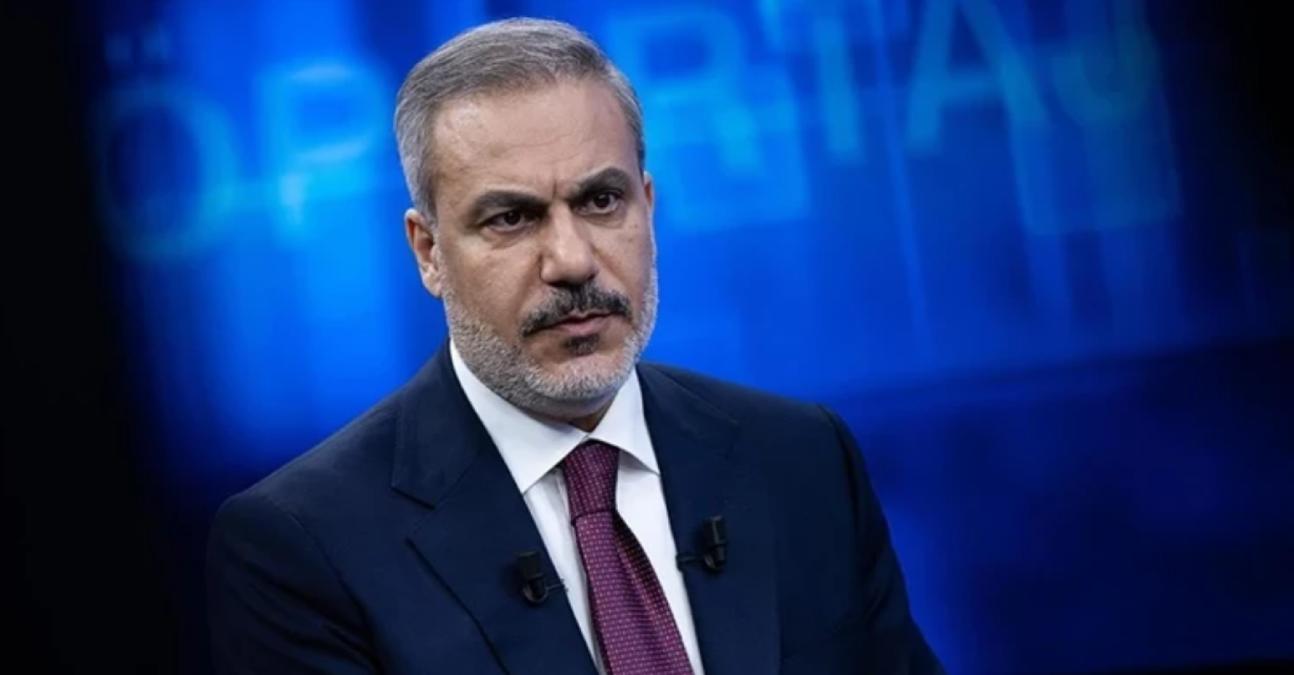
Hakan Fidan delivered the statement on 13 April 2026, during a meeting with editors at the Anadolu Agency headquarters in Ankara. The language was the strongest Türkiye's foreign minister has used publicly on the Greece-Cyprus-Israel defence arrangement, but the argument behind it had been building for months.
In January 2026, Bosphorus News documented an earlier and more measured version of the same position, when Fidan set out the sequencing logic Ankara was operating under:
"There are alliance formations being built in the Mediterranean, in the Eastern Mediterranean, against Türkiye. We see them, and we develop diplomatic measures in response. If you fail to develop diplomatic measures in time on certain issues, the matter is handed over to the military, to the security institutions, and more follows."
That sequence, diplomacy first and harder instruments later, is what his April statement reflects. The escalation in language was not improvised.
The Rupture That Set the Tone
The clearest early trigger came in November 2025, when Lebanon and Cyprus finalised a maritime boundary agreement in Beirut. Ankara's response arrived within 24 hours and came from two ministries simultaneously.
Foreign Ministry Spokesperson Öncü Keçeli stated that the Greek Cypriot Administration "does not have the authority to undertake such steps" on behalf of Cyprus as a whole. The Ministry of National Defence followed: "It is not possible for us to accept any agreement in which the rights of the TRNC are disregarded."
As Bosphorus News reported at the time, the objection was not confined to the maritime terms. It was a direct challenge to Cyprus's standing as a legitimate international actor, a position Türkiye has maintained consistently but chose to reassert with particular force at that moment.
F-16s, Patriot Batteries and a 120-Ship Drill
By March 2026, the dispute had moved into hardware. Türkiye deployed six F-16C fighter jets to Ercan Airport in the occupied north of Cyprus, citing regional instability linked to the Iran conflict. The deployment raised immediate questions over end-use conditions attached to US-manufactured military equipment under ITAR regulations, which restrict how American-origin systems can be based or operated.
Greece responded by sending its own F-16s and two frigates to Cyprus. France repositioned the Charles de Gaulle carrier toward the Eastern Mediterranean. The United Kingdom reinforced its sovereign bases on the island. Athens deployed a Patriot air defence battery, a long-range surface-to-air missile system, to Kerpe Island in the Aegean, whose non-military status under postwar treaty arrangements makes the move legally and politically sensitive in Türkiye's reading.
The Blue Homeland 2026 exercise ran from 3 to 9 April. Türkiye's naval, land, and air forces conducted their largest ever joint drill across the Black Sea, the Aegean, and the Eastern Mediterranean simultaneously, deploying 120 vessels, 50 aircraft, and 15,000 personnel. The exercise included the first live-fire test of the AKYA heavyweight torpedo, Türkiye's domestically developed deep-water weapon, launched from the submarine TCG Sakarya. The simultaneous tri-sea scope and the weapons test were deliberate signals, timed four days before Fidan spoke at Anadolu Agency.
Fidan on 13 April: Four Statements, One Direction
Fidan opened with a direct characterisation of Greek policy:
"We see that Greece is pursuing very dangerous policies here. There are very interesting aspects of Greece trying to pursue policies here on its own, policies that no other country in Europe is pursuing."
He then framed the trilateral arrangement as a containment operation:
"The issue of the triad of Greece, the Greek Cypriot side, Israel being involved, or giving the impression of being involved, in an operation aimed at encircling Turkey in the Eastern Mediterranean is an issue that is under our close monitoring."
He questioned the strategic rationale:
"Neither Greece nor Southern Cyprus needs military cooperation with Israel. Greece is already a member of NATO, and Southern Cyprus has the backing of the EU. What strategic logic could justify seeking this kind of cooperation is something they cannot explain to me either."
He closed with the statement that drew the widest reaction:
"The collaborations they carry out bring more problems, they bring war."
The Greek Foreign Ministry responded the same day:
"Greece formulates its foreign policy independently, does not accept suggestions, nor does it owe explanations to anyone. Dangerous statements and attempts to distort reality are of no use, especially in this period of regional instability and uncertainty."
Egypt Sits on Both Sides
Fidan's encirclement framing leaves one actor without a clean position: Egypt.
In September 2025, Türkiye and Egypt conducted their first joint naval exercise in 13 years. The five-day "Sea of Friendship" drill in the Eastern Mediterranean was widely read as a signal directed at Israel and its regional partners. Israeli analyst Gallia Lindenstrauss described the exercise as reflecting how the regional balance had shifted "as a result of Israel taking sides with Cyprus and Greece."
Egypt's position does not fit a single bloc. On 9 April 2026, four days before Fidan's Anadolu Agency statement, Cyprus formalised a landmark energy agreement with Egypt's state gas company. As reported by the Bosphorus News Energy Desk, the term sheet signed on that date covers the sale of all recoverable gas from the Aphrodite field to Egypt under a 15-year supply structure. Gas will travel via a subsea pipeline from Block 12 in Cyprus's exclusive economic zone to Port Said, where it will be processed and re-exported through Egyptian LNG facilities.
Egypt is conducting naval exercises with Türkiye and finalising a 15-year gas supply deal with Cyprus in the same period. Fidan's encirclement argument may be contested on the energy map. On the naval map, Türkiye has already begun drawing its own lines.