
By Bosphorus News Geopolitics Desk
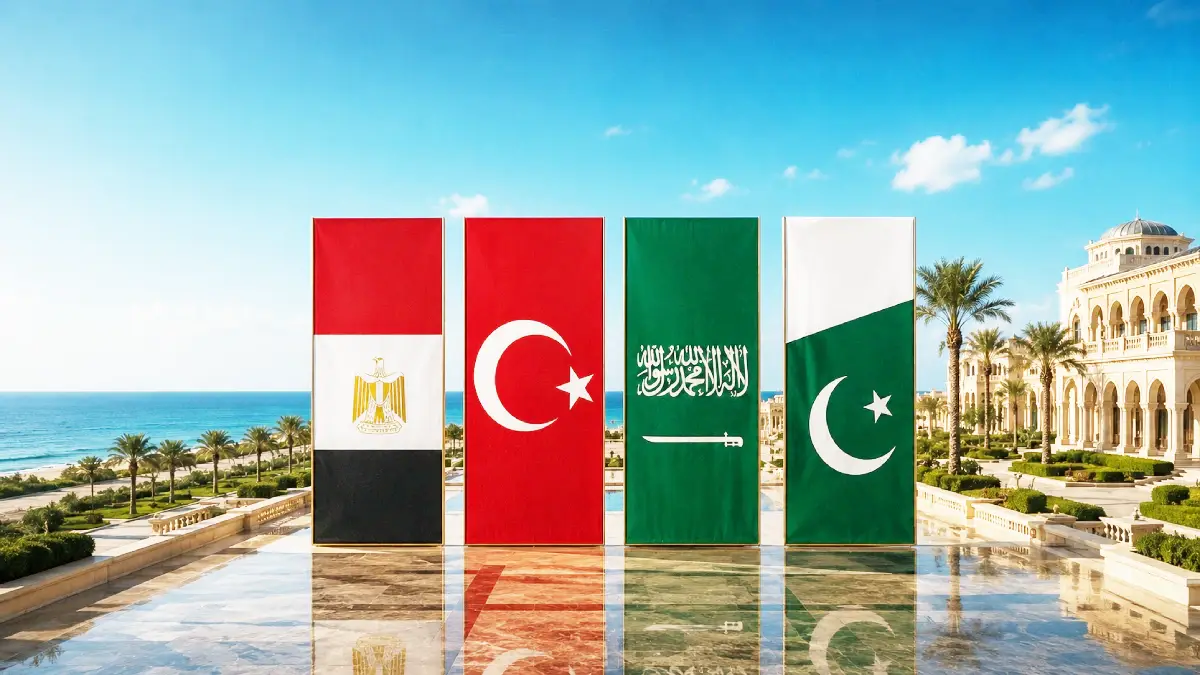
Türkiye, Egypt, Saudi Arabia and Pakistan backed the U.S.-Iran Islamabad Memorandum of Understanding at a June 21 meeting in Cairo, turning their four-country R4 consultation format into a regional support channel for the next phase of Iran diplomacy.
The meeting updated the track Bosphorus News previously reported before the ministers gathered. The earlier file pointed to an El-Alamein meeting, but the formal R4 statement confirmed Cairo as the venue for the fourth consultative meeting.
The joint statement, issued by Türkiye's Foreign Ministry, said the foreign ministers of Türkiye, Egypt, Pakistan and Saudi Arabia discussed regional and international developments. The meeting brought together Foreign Minister Hakan Fidan, Egyptian Foreign Minister Badr Abdelatty, Pakistani Deputy Prime Minister and Foreign Minister Mohammad Ishaq Dar and Saudi Foreign Minister Prince Faisal bin Farhan Al Saud.
The ministers welcomed the June 18 Islamabad Memorandum of Understanding (MoU) between the United States and Iran and described it as a step that could support de-escalation, protect energy markets, reduce risks to maritime routes and limit pressure on supply chains and trade.
That language places the R4 format inside the harder phase of the U.S.-Iran track. The memorandum created a diplomatic opening, but the next stage now runs through nuclear terms, Gulf security demands, missile and drone files, proxy networks, Lebanon and the Strait of Hormuz.
The Associated Press later reported that Pakistan and Qatar led the mediation behind the understanding, while Egypt and Türkiye played supporting roles. AP also reported that Egypt and Türkiye helped prevent Gulf states, including Saudi Arabia, from being drawn into the war.
That detail gives the R4 meeting more weight than a routine consultation. The format links four states with different channels into Tehran, Washington, the Gulf and the wider Islamic world as the U.S.-Iran track tries to hold against regional escalation.
Saudi Arabia's place in the format gives the Cairo statement particular weight. The kingdom did not act as a public mediator in the way Pakistan and Qatar did, but its participation ties the R4 track to Gulf calculations over energy security, missile threats, drone attacks and freedom of navigation.
Those concerns surfaced again during U.S. Secretary of State Marco Rubio's Gulf contacts. Reuters reported that a U.S.-Gulf Cooperation Council statement pressed for Iran's missile, drone and proxy files to be addressed and rejected any attempt to impose tolls, fees or controls on vessels passing through the Strait of Hormuz.
The R4 statement avoided that sharper Gulf language. Instead, it backed the Islamabad framework and placed emphasis on de-escalation, maritime security and economic stability. That difference will shape the next stage of the diplomacy.
Türkiye's role is not that of lead mediator. The Cairo meeting instead keeps Fidan inside a regional file that combines Iran, the Gulf, energy corridors and maritime security, with Pakistan, Qatar, Egypt and Saudi Arabia carrying separate forms of influence.
The June 21 meeting does not settle the U.S.-Iran file. It shows that four regional powers are trying to keep the Islamabad opening alive long enough for nuclear, security and Gulf-navigation terms to move into the next round.
Sources: Türkiye's Foreign Ministry, Associated Press, Reuters, Saudi Gazette, Bosphorus News review and reporting.