

By Murat Yıldız
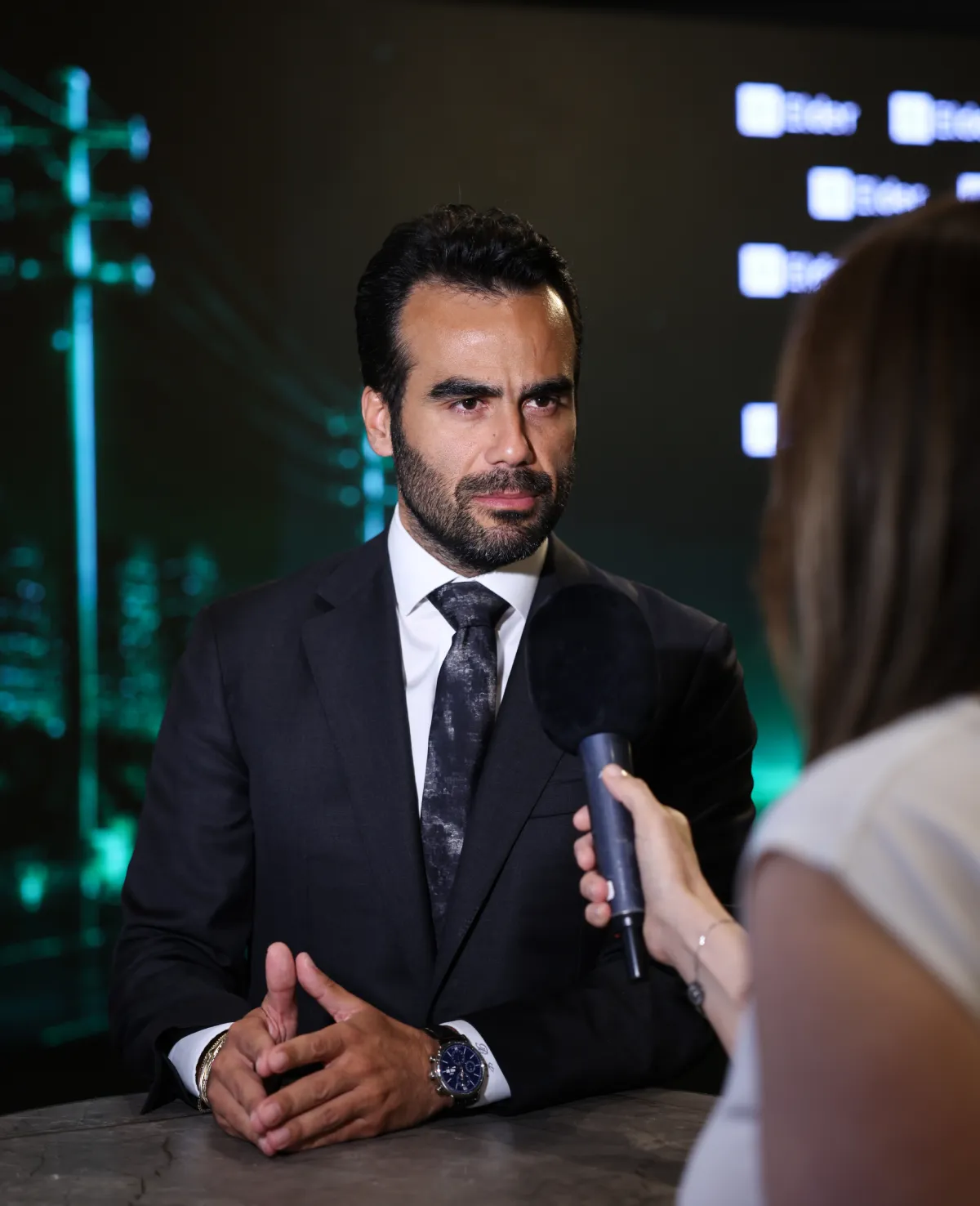
Türkiye's next electricity challenge is moving from power plants to the grid, Elder Chairman Barış Erdeniz told Bosphorus News in an exclusive interview, saying the country will need at least $50 billion in distribution investment over the next decade to manage rising demand, renewable energy, electric vehicles, data centers and artificial intelligence applications.
Erdeniz, who chairs the Electricity Distribution Services Association (Elder), placed distribution networks at the center of the country's energy transition. The next electricity phase, he said, will depend on how effectively Türkiye can manage power flows, data, storage, electric mobility and decentralized generation.
"Energy transition will be measured not only by how much renewable energy we build, but by how strongly, intelligently, flexibly and resiliently we can manage that energy through the grid," Erdeniz said. "Distribution grids are the backbone of the energy transition."
Türkiye's electricity consumption has increased by about 50 percent over the past 12 years, rising from 240 terawatt-hours to 361 terawatt-hours. Under the National Energy Plan, demand is expected to reach 510 terawatt-hours by 2035.
The same growth path would lift installed power capacity from 122.5 gigawatts to 227 gigawatts, adding about 104 gigawatts of new capacity to the system, according to Erdeniz. That expansion will bring more connection requests, more distributed generation and heavier pressure on local networks.
"To manage the increase in electricity consumption, production capacity and connection demand in a healthy way, we need a strong distribution infrastructure," he said. "We estimate that at least $50 billion in investment will be required over the next 10 years to build the distribution architecture required by the transition to the new electricity age."
The 2026-2030 period will open a new investment cycle for distribution companies. Erdeniz put the investment ceiling for the Fifth Implementation Period at $18.5 billion. With third-level planned maintenance expenditures that have investment characteristics, total investment expectations rise to about $22 billion.
That spending cycle will be directed toward stronger infrastructure, smart grids, digitalization, cyber security, resilience against disaster and climate risks, renewable energy integration and faster consumer services.
Erdeniz described the next stage as "Distribution 2.0," a shift away from one-way networks designed around centralized generation and passive consumption. The new structure must handle consumers who can also produce electricity, operate rooftop solar systems, charge vehicles and manage storage.
"Consumers can now also become producers," Erdeniz said. "They can generate electricity on their roofs, charge their vehicles and participate in energy management with storage systems. This new structure turns distribution grids into smart platforms that manage energy and data at the same time."
Electric vehicles, heat pumps, data centers, artificial intelligence applications, industrial electrification and renewable energy integration are creating new capacity and flexibility needs across the grid. Peak charging demand, two-way power flows, localized capacity needs, data-driven load growth and storage integration are pushing distribution companies toward a more active role in system management.
Finance and regulation now sit inside the same investment question. Erdeniz identified long-term access to funding and a predictable regulatory environment as core conditions for preparing the grid for the next stage of electrification.
The sector has already expanded sharply since electricity distribution was privatized. Türkiye's subscriber base has increased from 36 million to 52 million over the past 12 years. Over the same period, line length has risen from 1 million kilometers to 1.6 million kilometers, while the number of transformers has grown from about 350,000 to 570,000.
Erdeniz put the sector's contribution to the Turkish economy over the past 12 years at about $33 billion, including privatization payments. Distribution companies have carried out nearly $20 billion in investment during that period, with investment over the past five years reaching $12 billion.
Loss and theft rates have fallen from about 18.5 percent to below 9 percent, generating more than $1 billion in annual economic contribution, according to Erdeniz. He described the improvement as one of the clearest results of post-privatization investment in the field.
Türkiye now has Europe's second-largest electricity distribution infrastructure by consumer base, Erdeniz said. If the current growth trend continues, the country could reach Europe's largest distribution system by 2027.
The investment case rests on a larger shift in electricity use. Generation capacity is growing, renewable energy is expanding and electricity is taking on a larger role in transport, industry, cooling and digital infrastructure. Erdeniz's argument is that distribution grids have become the point where those pressures meet.
Erdeniz also linked the grid agenda to summer demand management, when cooling pushes electricity use higher. He pointed to the "#24DereceİleMümkün" campaign launched under the leadership of the Ministry of Energy and Natural Resources and coordinated by Elder, saying a 24-degree air-conditioning setting offers a balance between comfort and savings.
Sources: Bosphorus News exclusive interview with Barış Erdeniz, Elder materials, Bosphorus News review and reporting.