
By Bosphorus News Energy Desk
Türkiye's state oil company TPAO has agreed to acquire a 15 percent interest in BP's Kirkuk-based operating company, giving TPAO a direct commercial position in one of Iraq's largest oil redevelopment projects as Ankara and Baghdad negotiate a new energy agreement.
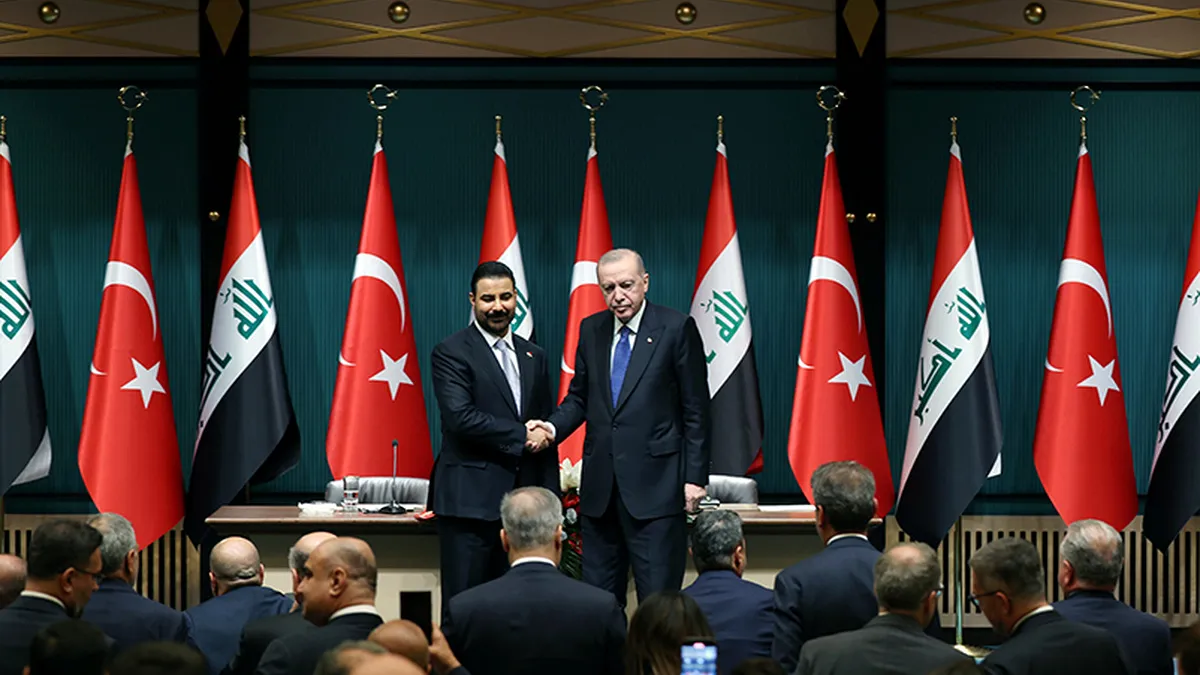
President Recep Tayyip Erdoğan called TPAO's entry into the BP-operated Kirkuk project "a historic step" in bilateral energy cooperation. He said Türkiye and Iraq wanted to replace their expired crude oil pipeline accord with a broader agreement covering oil, gas, electricity and other areas.
"Our goal is to implement a comprehensive new energy cooperation agreement based on mutual benefit," Erdoğan said.
BP said it had agreed terms for TPAO to acquire 15 percent of BP Energy Company of Kirkuk Limited, which participates in the redevelopment of the Baba and Avanah domes and the Bai Hassan, Jambur and Khabbaz fields.
Neither BP nor the Turkish government disclosed the transaction's value, closing timetable or regulatory conditions.
Talks begin on a new pipeline agreement
Ankara and Baghdad are negotiating a replacement for the agreement governing the Kirkuk-Ceyhan crude oil pipeline, which expired on July 27, 2026.
Officials have discussed pipeline operations, higher export capacity and cooperation in oil, natural gas, electricity and petrochemicals.
The negotiations follow a prolonged arbitration dispute over crude exported from the Kurdistan Region through Türkiye without authorization from Iraq's federal Oil Ministry. On March 10, 2026, the Paris Court of Appeal rejected Türkiye's attempt to annul a net $1.47 billion award issued in Iraq's favor.
Bosphorus News reported that the Paris ruling left the award in place shortly before the previous pipeline agreement expired. A second arbitration covering later exports remains unresolved.
The dispute increases the importance of a new legal framework defining federal marketing authority, Kurdish production, loading procedures at Ceyhan and Türkiye's exposure to future claims.
Iraq's Oil Ministry formed a committee to prepare a new draft. Representatives from Baghdad, Erbil and Ankara also joined technical, legal and financial talks. Kurdish reporting said a one-year arrangement was discussed to keep northern exports moving while negotiations continued on a longer-term deal.
Erdoğan said Iraqi Prime Minister Ali Faleh al-Zaidi had indicated that Iraq could supply Türkiye with as much as 1 million barrels of oil per day.
No binding contract, pricing formula, starting date or transport plan was announced. Erdoğan's account therefore remains a reported offer rather than a confirmed supply commitment.
Development Road expands the economic package
The talks also covered the Development Road, Iraq's planned transport corridor linking the Gulf to Türkiye and European markets.
Al-Zaidi said Iraq and Türkiye had "a historic opportunity to transform their geographic location into economic value" and position themselves as a link between the Gulf, Asia and Europe.
"The Development Road is not merely an Iraqi project; it is a regional initiative that redefines the concept of economic connectivity in the Middle East," he said.
The project would connect Iraq's Grand Faw Port with Türkiye through railways, roads, logistics centers and industrial zones. Iraqi officials have also presented plans for industry, housing, energy and digital infrastructure along the route.
Türkiye said the latest package included documents covering railway and road links through the Fişhabur-Ovaköy area and a framework linking Iraqi natural resources to transport infrastructure development. The texts and financing terms were not immediately published.
The Ovaköy route would provide an additional crossing between the two countries and connect the Development Road to Türkiye's transport network.
Kirkuk's Kurdish and Turkmen dimensions
The Kirkuk-Ceyhan corridor carries crude from federal Iraq and the Kurdistan Region. Part of the northern pipeline network also passes through territory administered by the Kurdistan Regional Government.
Kurdish officials have sought a role in talks over future exports and the legal structure governing the route. The arbitration case also showed the cost of leaving federal authority, Kurdish production and Türkiye's transit role insufficiently defined.
Kirkuk remains disputed between Baghdad and Erbil. Kurdish officials have previously called for the regional government to be included in discussions over BP's redevelopment plans, arguing that decisions involving the province's oil fields should not be taken without KRG participation.
Erdoğan also drew attention to the Turkmen presence in the Iraqi delegation.
"I regard it as particularly meaningful that Prime Minister al-Zaidi included Selman Ağaoğlu, chairman of the Iraqi Turkmen Front and governor of Kirkuk, in his delegation," Erdoğan said, describing Iraqi Turkmens as an indispensable part of Iraq's human richness and a central bond between Türkiye and Iraq.
No formal Kurdish or Turkmen objection to TPAO's entry into the Kirkuk project had been announced. KRG representatives have nevertheless taken part in negotiations over the future of northern oil exports through Türkiye.
Sources: Türkiye's Presidency, Iraqi Prime Minister's Media Office, Iraqi News Agency, BP, Türkiye's Ministry of Energy and Natural Resources, Iraqi Oil Ministry, Kurdish regional reporting, Bosphorus News review and reporting.