
By Bosphorus News Economy Desk
Toyota Motor Europe has urged Brussels to include Türkiye among selected critical partners that should be treated in the same way as "Made in EU" under the European Union's new automotive industrial policy.
The call came from Toyota Motor Europe President and CEO Yoshihiro Nakata at the Automotive News Europe Congress, where the company argued that Europe's competitiveness and decarbonisation goals would be harder to reach if EU rules define the bloc's industrial base too narrowly.
"We believe that selected critical partners, for instance the UK, Japan, and Turkiye, should be recognised in the same way as 'Made in EU' under the Industrial Accelerator Act," Nakata said, according to Toyota's European newsroom.
The remark places Türkiye directly inside a larger argument over the EU Industrial Accelerator Act and the bloc's automotive package. Brussels is trying to protect European manufacturing, accelerate clean industrial investment and compete with China and the United States in electric vehicles, batteries and strategic technologies.
Toyota's warning is that a strict EU-only definition could work against the supply chains that already support European production.
Türkiye's place in Toyota's European chain
Toyota's argument carries weight because Türkiye is already part of its European manufacturing system.
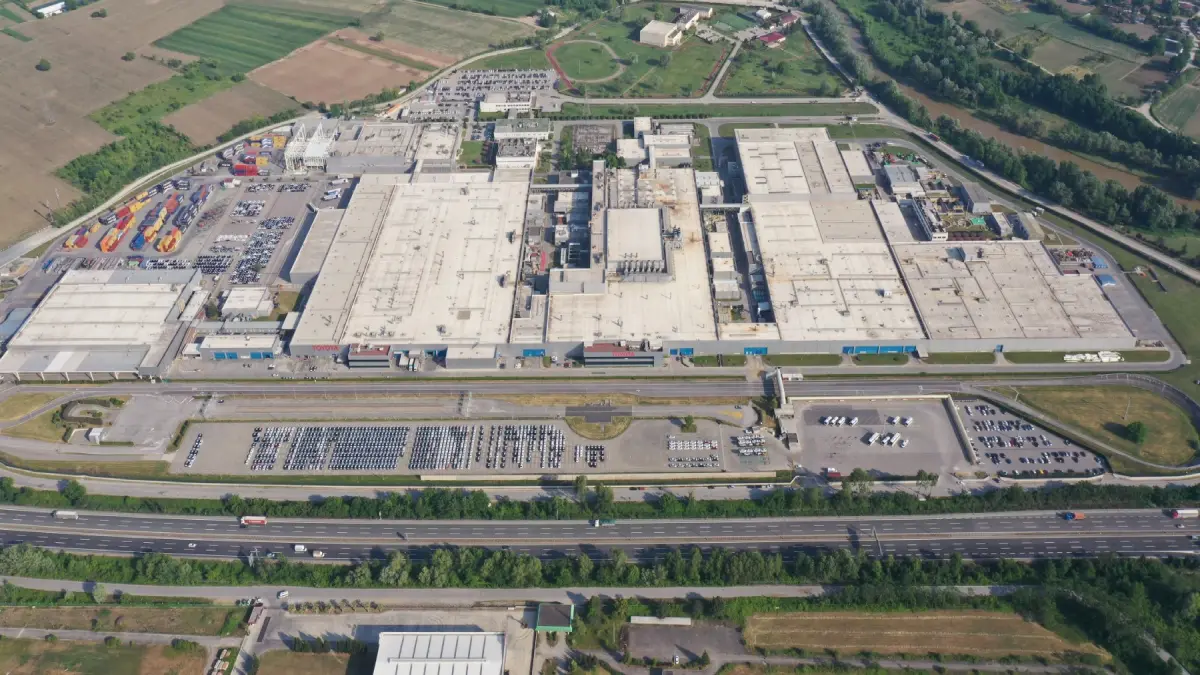
Toyota Motor Manufacturing Türkiye, based in Sakarya, produces the Corolla and Toyota C-HR. The company says most of its production is exported to around 150 countries, while the plant has more than 5,000 employees and total investment of about €2.5 billion.
The Turkish plant has also moved into Toyota's electrification chain. Toyota announced in 2023 that Sakarya would become its first European plant to produce plug-in hybrid vehicles and batteries, giving Türkiye a role in the group's shift from conventional production toward electrified models.
That makes Nakata's message more than a trade request. Toyota is asking the EU to recognise an industrial reality that already exists: European automotive production depends on factories, suppliers and technology flows that extend beyond the EU's legal borders.
A test for EU industry rules
The Industrial Accelerator Act is designed to strengthen manufacturing capacity in strategic sectors and support decarbonisation. In the automotive sector, that means public support, local content, procurement rules and investment incentives will shape where new production is placed.
Toyota is not alone in warning that Europe's policy design must reflect supply-chain realities. The European Automobile Manufacturers' Association has also called for realistic and workable industrial rules that support competitiveness without adding new barriers inside the value chain.
The question for Brussels is how far Europe's industrial perimeter should extend. A narrow reading of "Made in EU" may answer political pressure for local production, but it could also weaken the network of plants and suppliers that European carmakers already use.
Türkiye sits in the middle of that question. It is outside the EU, but it is tied to the European market through the Customs Union, automotive exports, supplier networks and long-running investments by global manufacturers.

BYD uncertainty adds another layer
Toyota's message comes as Türkiye's electric vehicle investment story is already under scrutiny.
Bosphorus News reported this week that BYD's planned $1 billion electric vehicle plant in Manisa remains uncertain, with no confirmed construction timetable and questions over whether the Chinese carmaker is prioritising its Hungary facility first.
The contrast is important. BYD's pause has raised questions about Türkiye's ability to secure the next wave of EV investment, while Toyota is warning that Türkiye should not be pushed outside Europe's own industrial framework.
Those two developments point to the same pressure from different directions. Türkiye wants to remain a production gateway into Europe, but the next phase of automotive investment will depend on how the EU defines eligible production, how global carmakers allocate capital and how quickly Türkiye can keep its role in electrification.
Industrial geography, not a technical label
Toyota's call turns "Made in EU" into a question of industrial geography.
If Türkiye, the UK and Japan are recognised as critical partners, EU automotive rules could preserve a wider production network that already supports jobs, exports and technology transfer. If they are excluded, companies with major non-EU manufacturing links may face a more fragmented investment environment.
Türkiye's stake reaches beyond one carmaker. The country's automotive industry has long been one of its strongest export sectors, and its future place in Europe's electric vehicle transition will depend on whether Brussels treats Türkiye as part of the wider European production system or leaves it outside the new rulebook.
Toyota has now made its position clear: Europe's auto transition needs partners that are already inside the supply chain, even when they sit outside the EU's borders.
***Sources: Toyota Europe, European Commission, ACEA, Toyota Motor Manufacturing Türkiye, International Energy Agency and Bosphorus News Reporting.