
By Bosphorus News Geopolitics Desk
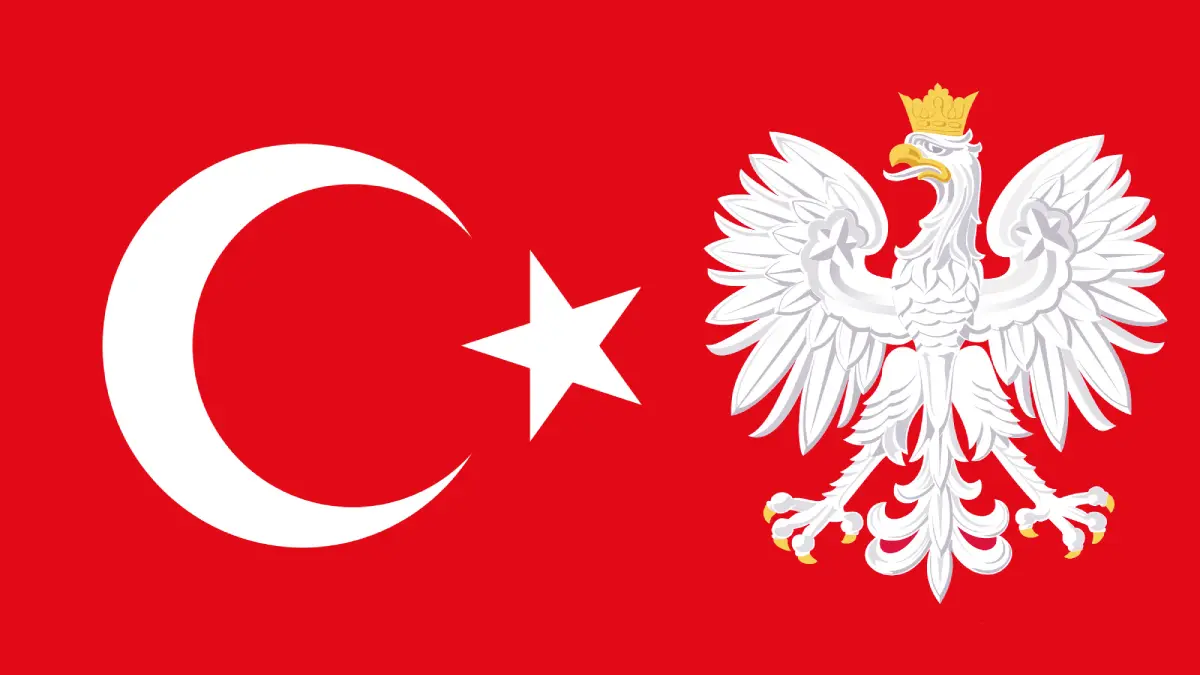
Türkiye and Poland moved to deepen defense and NATO cooperation in Ankara on Tuesday, as the European Union opened a new platform aimed at coordinating Middle Corridor transport, energy and digital projects through Türkiye and the South Caucasus.
President Recep Tayyip Erdoğan hosted Polish President Karol Nawrocki at the Presidential Complex on June 23, less than three weeks before Ankara is due to host the North Atlantic Treaty Organization (NATO) Summit on July 7-8.
Erdoğan said Türkiye and Poland were working to strengthen cooperation as two NATO allies with a place in European security and defense. He said strengthening NATO's European pillar and consolidating deterrence would be shared priorities at the Ankara summit, adding that European allies should assume greater responsibility as the transatlantic bond is reinforced.
The Turkish president also said the two countries had set a new bilateral trade target of $15 billion after reaching their previous goal of $10 billion. He identified transport and defense industry cooperation as two areas with room for expansion, pointing to the Three Seas Initiative and previous Turkish-Polish defense projects, including unmanned aerial vehicles.
Nawrocki said cooperation with Türkiye carried strategic value for Poland and NATO. According to Anadolu Agency, he said Polish soldiers use Bayraktar TB2 drones purchased from Türkiye and that Warsaw remained committed to maintaining and extending its military presence at İncirlik Air Base.
The visit moved from diplomacy to defense industry later the same day, when Nawrocki toured ASELSAN's Gölbaşı Technology Base in Ankara. He was accompanied by Türkiye's Defense Industries Secretary Haluk Görgün and ASELSAN Chief Executive Ahmet Akyol.
The Polish delegation was briefed on Türkiye's domestically developed defense technologies, including electronic warfare, radar, air defense, communications and electro-optical systems. ASELSAN said Nawrocki described defense industry cooperation between Türkiye and Poland as indispensable and expressed readiness to keep dialogue with the Turkish defense company.
Görgün said Türkiye had presented its national defense technologies, engineering capacity and high-tech production infrastructure to the Polish delegation. He said Turkish capabilities in defense electronics, radar, communications and electro-optical technologies could add weight to cooperation between the two NATO allies.
The ASELSAN stop gave the Ankara visit an industrial layer. Anadolu Agency reported that one of the latest steps in ASELSAN's cooperation with Poland was an export contract worth about $410 million for electronic warfare systems, signed in December 2025.
The Polish file unfolded as Brussels opened a separate connectivity track with direct relevance to Türkiye. The European Union (EU) launched a Connectivity Agenda Platform in Brussels on June 23 to coordinate transport, energy and digital infrastructure projects along the Middle Corridor, also known as the Trans-Caspian International Transport Route.
EU Enlargement Commissioner Marta Kos said the platform was intended to connect initiatives, identify gaps and build a shared investment pipeline across a corridor running from China through Kazakhstan, the South Caucasus and Türkiye into Europe. Anadolu Agency reported that the platform is designed to bring together governments, international financial institutions and private investors.
Kos also placed Türkiye directly inside the project's political map. Speaking before the Brussels event, she said a strong Middle Corridor and deeper digital, energy and trade links would be difficult to imagine without Türkiye's participation, according to Türkiye Today.
The EU's own February 2026 statement with Turkish Foreign Minister Hakan Fidan had already identified security and connectivity as areas where Türkiye-EU coordination carried strategic value. The statement referred to energy, transport, digitalization and trade links across the Black Sea, South Caucasus and Central Asia.
The timing gives the story a wider NATO frame. The Polish visit puts Türkiye's defense industry inside a European security conversation shaped by NATO's eastern flank, Russia's war against Ukraine and the alliance's burden-sharing debate. The EU platform places Türkiye inside Europe's search for transport and infrastructure alternatives across Eurasia.
Security, industry and connectivity are now moving through channels where Türkiye already has capabilities Europe needs, from NATO's eastern flank to the Middle Corridor.
Sources: Türkiye's Communications Directorate, Anadolu Agency, European Commission, Türkiye Today, Bosphorus News review and reporting.