
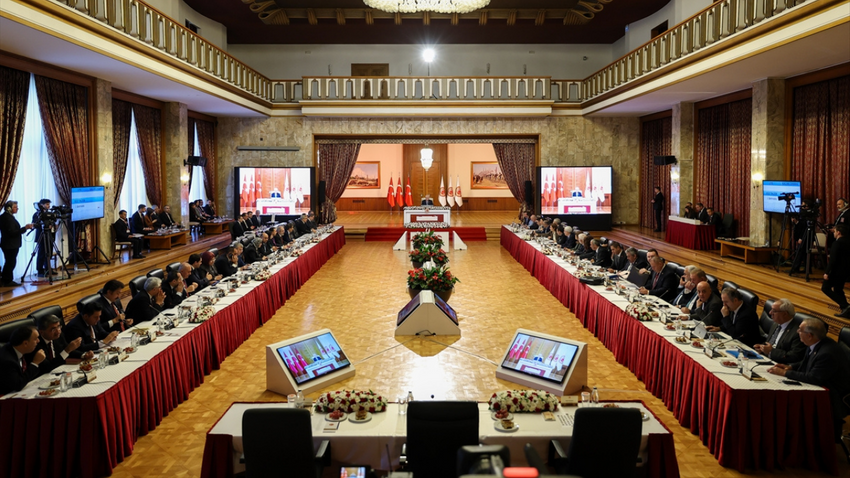
The National Solidarity, Brotherhood, and Democracy Commission of the Grand National Assembly of Türkiye (TBMM) has confirmed that its delegation's highly anticipated visit to İmralı High-Security Prison on the island of the same name was successfully completed, yielding "positive results". The outcome is seen as a major stride forward in the country's ongoing effort to resolve the protracted conflict with the PKK, designated a terrorist organization by Türkiye and its Western allies.
The visit comes in the wake of escalating political dialogue aimed at establishing a permanent legal framework for peace and disarmament, a period often referred to as the "Solution Process" or "Imralı Process."
A Pivotal Moment in Dialogue
The delegation, comprising members of the specialized TBMM commission, was granted special authorization to visit the isolated prison where Öcalan has been held since 1999. While the specific details of the discussions were not immediately released, the general positive tenor of the TBMM's subsequent statement confirms the high stakes and the constructive nature of the engagement.
The visit closely follows a major political development earlier this year—the February 28, 2015 Dolmabahçe Joint Declaration. This declaration saw pro-Kurdish representatives announce a 10-point plan for peace, which included a direct call from Öcalan for the PKK to hold an extraordinary congress to lay down arms and cease its armed struggle against Türkiye .
The commission's trip to İmralı is designed to cement political consensus and address the legislative requirements necessary to support the disarmament process, including mechanisms for fighters to return home.
President Erdoğan Voices Support for the Commission
The visit has received firm backing from the highest levels of government. President Recep Tayyip Erdoğan emphasized the strategic importance of the commission's work in accelerating the elimination of terrorism.
The President's statement underscored the view that political and legal steps are necessary complements to security efforts. He said:
"We consider the Commission's latest decision to be one that paves the way for the process, contributes to the process, and accelerates the elimination of terrorism."
Historical Context and Data
The current Solution Process, which began in earnest in 2013, aimed to move the conflict from a military confrontation toward a purely political solution. The conflict, which has lasted over 30 years, has resulted in an estimated 40,000 casualties and immense economic costs, estimated in the hundreds of billions of dollars.
Public support for a political resolution had been steadily growing, with polling data from the time suggesting that a significant majority of Türkiye citizens favored the peace process, viewing it as crucial for democratization and economic stability, particularly in the Kurdish-majority southeastern regions.
The success of the parliamentary delegation's visit is now viewed as the crucial political sign-off needed to initiate the next, most sensitive phase: the disarmament and withdrawal of PKK terrorists.