
By Bosphorus News Geopolitics Desk
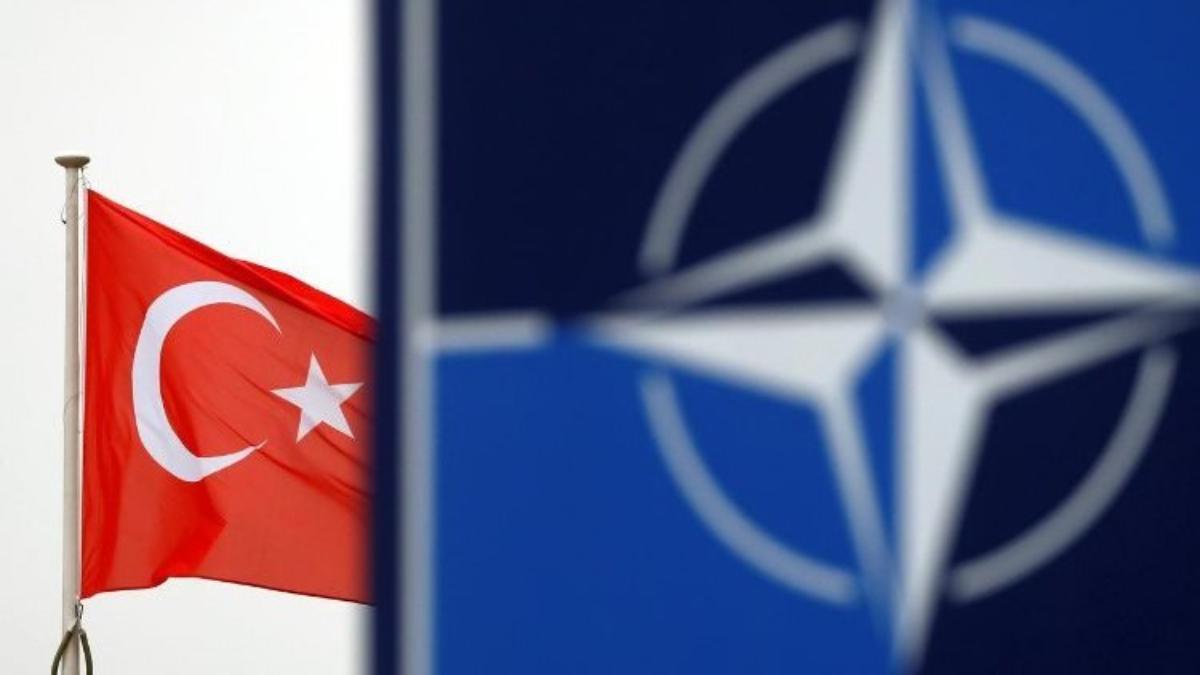
NATO's July summit in Ankara is turning into an early test of alliance unity as European governments try to keep the United States anchored inside the alliance under President Donald Trump.
The pressure sharpened after Reuters reported that Trump had ordered the withdrawal of 5,000 U.S. troops from Germany. The move exposed the limits of Europe's effort to hold Washington inside NATO's force posture and landed weeks before leaders are due to gather in Türkiye on July 7 and 8.
One European diplomat put the concern bluntly in comments reported by Reuters: "The longer game for NATO and European allies is getting through Ankara."
That sentence now defines the mood before the summit. European capitals are not preparing only for another NATO leaders' meeting. They are trying to reach Ankara without a deeper rupture over U.S. troops, defence spending, Iran policy or the future of American commitments to Europe.
NATO has confirmed that Türkiye will host the summit at the Beştepe Presidential Compound in Ankara. The meeting will be chaired by NATO Secretary General Mark Rutte and will take place as the alliance faces pressure across several fronts: Russia's war against Ukraine, instability in the Black Sea, the Iran conflict, shipping risks around Hormuz and Europe's limited ability to replace U.S. military weight.
Türkiye's role in that setting goes beyond protocol. Ankara is hosting from the southern edge of the alliance, where NATO's pressure points are active rather than theoretical. The Black Sea, the Aegean, the Eastern Mediterranean, Syria, Iraq, Iran and the Gulf all sit inside Türkiye's immediate strategic environment. That geography gives the summit a different weight from a routine leaders' meeting further from the alliance's fault lines.
Foreign Minister Hakan Fidan has already framed the Ankara summit as a chance to put NATO's relationship with the Trump administration on a more systematic footing. Reuters reported in April that Fidan saw the meeting as an opportunity to manage future U.S. engagement with the alliance and argued that any American withdrawal from certain NATO mechanisms should be handled through planning, sequencing and coordination.
That message places Türkiye between two concerns. Europe fears that Trump may weaken NATO's deterrence from inside the alliance. Ankara faces the risk that an unmanaged American pullback could expose critical security files across the southern flank, from the Black Sea and the Eastern Mediterranean to the Middle East.
The Germany decision gave those concerns a concrete form. Troop withdrawals are not campaign language. They affect force posture, deterrence planning and the confidence of allies that still rely on U.S. capacity for air defence, intelligence, logistics and nuclear reassurance.
The debate also touches Europe's deeper defence problem. NATO members have promised for years to carry more of the burden, but the alliance still depends heavily on the United States for high end capabilities. Trump's pressure is forcing Europe to accelerate that conversation before it has built the military capacity to match the rhetoric.
Türkiye sits at the centre of that imbalance. It fields one of NATO's largest militaries, controls access to the Black Sea under the Montreux Convention, borders the Middle East's most volatile conflicts and has built a defence industry increasingly relevant to allied production gaps. As Bosphorus News reported earlier, NATO's dependence on Turkish operational weight has become harder to separate from Europe's broader defence capacity problem.
That is where the NATO and EU debate collides. Brussels has tried to build a stronger European defence base, but Türkiye remains outside key EU defence funding structures despite its role in NATO. As Bosphorus News outlined in its coverage of the EU SAFE debate, the gap between Europe's need for military capacity and its political treatment of Türkiye has become one of the continent's clearest contradictions.
The Ankara summit will bring that contradiction closer to the surface. If Europe wants greater defence autonomy while the United States becomes less predictable, it cannot ignore the military and geographic value of a NATO ally positioned across the Black Sea, the Aegean, the Eastern Mediterranean and the Middle East. Ankara is likely to use the summit to underline that Türkiye's contribution should not be treated as an automatic asset while it remains marginalised in parts of Europe's defence architecture.
The Iran conflict adds another layer. The war has already tested Western coordination, regional basing politics and maritime security around the Gulf. Any further disruption around Hormuz would carry direct consequences for European energy flows and shipping routes. As Bosphorus News detailed in its report on Hormuz and Europe's corridor debate, Türkiye's role in overland connectivity and regional energy security becomes more visible whenever maritime chokepoints come under pressure.
That is why Ankara matters to more than summit logistics. Türkiye sits at the junction of several files NATO cannot separate: Russia in the Black Sea, tensions in the Aegean, military buildup in the Eastern Mediterranean, instability across the Middle East, European energy exposure, defence production shortages and the future of U.S. commitment to the alliance.
Trump's pressure may also change the tone of the summit itself. NATO gatherings usually end with carefully negotiated language on unity, deterrence and shared threats. Ankara may require more than a communiqué. Allies will need to show whether they can keep Washington engaged, reassure Europe's eastern flank, manage southern instability and stop the NATO and EU defence tracks from drifting further apart.
For Türkiye, the summit creates both visibility and exposure. Hosting NATO leaders at Beştepe gives Ankara a platform to underline its strategic weight. It also places Türkiye at the centre of a meeting likely to be shaped by crisis management, burden sharing and the question of how far the United States intends to remain bound to Europe's security.
The political symbolism is hard to miss. Türkiye hosted NATO's Istanbul summit in 2004, when enlargement and post 9/11 security debates shaped the alliance. The 2026 Ankara summit will take place in a harsher environment: a war strained Europe, an assertive Russia, an unstable Middle East, a more transactional United States and a Europe still searching for defence capacity.
That makes the summit a test of NATO's ability to adapt without fracturing. The alliance must keep the United States inside the security framework, give Europe a larger defence role, maintain deterrence against Russia and recognise that the southern flank is no longer secondary to the eastern front.
Ankara will be where those pressures meet. The summit will not be judged only by the language of its final statement. It will be judged by whether NATO can hold together under Trump's pressure while acknowledging Türkiye's weight at a moment when the alliance's fault lines run through the Black Sea, the Aegean, the Eastern Mediterranean and the Gulf.