
Bosphorus News Geopolitics Desk
Israel struck an apartment building in Choueifat, a southern suburb of Beirut near Lebanon's international airport, on Thursday afternoon, pulling the Lebanon front back toward the capital after weeks in which most of the fighting had been concentrated in the south.
The Israeli military said the target was a senior Hezbollah missile unit commander. Lebanon's state-run National News Agency said the strike hit the second floor of a building in the al-Ajniha al-Khamsa neighbourhood, between Choueifat and al-Amroussiyeh.
It was the first Israeli strike near Beirut in three weeks. The previous strike close to the capital came on 6 May, when Israel killed a Hezbollah Radwan Forces official.
Pentagon Talks Open as Strike Lands
The timing gave the Choueifat strike its wider significance. The fourth round of Israel-Lebanon security talks opened at the Pentagon in Washington on 28 May, according to the Washington Institute for Near East Policy.
The talks cover Israeli withdrawal from southern Lebanon, Hezbollah's military presence south of the Litani River, displaced populations, border demarcation and reconstruction. Lebanon wants a binding Israeli commitment to full withdrawal. Israel says it will not leave while Hezbollah retains operational capacity in the south.
The strike landed while that diplomatic track was already under pressure. It also put the Beirut airport corridor back inside the war's immediate geography, raising the risk that a conflict presented as a southern Lebanon front could again affect the country's main international access point.
Southern Lebanon, Same Day
The Beirut-area strike followed a heavier round of Israeli attacks across southern Lebanon earlier on Thursday.
Lebanon's Health Ministry, cited by AP, said Israeli strikes killed at least 11 people, including two children, and wounded 21 others. Israeli military Arabic spokesperson Avichay Adraee issued evacuation warnings for eight buildings in Tyre and nearby areas before the strikes.
In Sidon, farther north, an Israeli drone hit an apartment building sheltering displaced families, killing five people and wounding 21, including five children, according to Euronews.
Israel also widened its declared operational perimeter. Reuters reported that Israel had designated about 2,000 square kilometres south of the Zahrani River as a combat zone and ordered civilians to move north.
The Zahrani line matters because it pushes Israel's warning zone well beyond the Litani River, long used as the informal reference point for the southern front. A campaign that began around border villages is now being mapped across a much wider strip of Lebanon.
Ceasefire Under Strain
The US-brokered ceasefire framework has failed to stop the fighting. Israeli strikes have continued across southern Lebanon and the Bekaa Valley, while Hezbollah has kept firing drones and rockets into northern Israel.
Lebanon's casualty count since the current conflict phase began in March has exceeded 3,000, according to figures carried by AP and other outlets this week.
The Pentagon talks are therefore not taking place over a frozen front. They are taking place while Israel expands warning zones, Hezbollah keeps its northern Israel campaign active and the approaches to Beirut's airport return to the operational map.
Cyprus Risk, Türkiye Angle
The Choueifat strike also matters beyond Lebanon.
Beirut's international airport remains the main hub for humanitarian access, commercial flights and diplomatic movement in and out of the country. The airport road runs through the same southern belt where Thursday's strike took place.
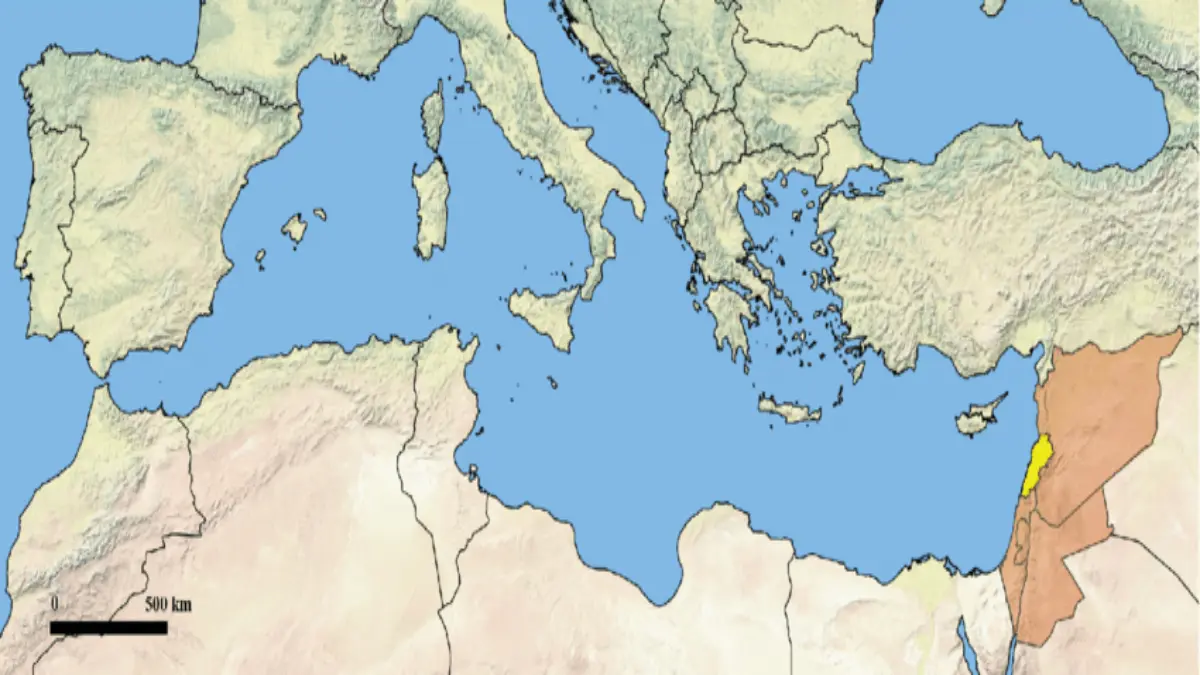
Any sustained disruption around that corridor would complicate evacuation planning and diplomatic logistics across the Eastern Mediterranean. Cyprus would be the immediate external pressure point, because the island has repeatedly functioned as a staging and contingency hub during Lebanon crises.
The escalation also matters for Türkiye, though not as a direct party to the Lebanon front. Ankara has positioned itself firmly against Israel's Gaza and Lebanon campaigns, while remaining central to NATO's southeastern air, maritime and logistics geography.
If the Beirut airport belt becomes less reliable, the pressure will not remain inside Lebanon. It will move into the same regional system that links Cyprus, British bases, allied evacuation planning, Türkiye's southern flank and the wider Eastern Mediterranean security architecture.
RAF Akrotiri, used by Britain and allied partners in the Eastern Mediterranean, adds another layer to that geography. The issue is not only whether Beirut airport remains open. It is whether the security environment around the airport stays stable enough for foreign missions, evacuation planning and regional contingency routes to function.
Türkiye is not a direct party to the Lebanon front, but the risk now sits closer to the regional chain in which Ankara already carries weight. Pressure on Beirut airport, Cyprus contingency routes and allied movement across the Eastern Mediterranean would touch the same southern flank shaped by Türkiye's air access, maritime geography and NATO logistics.
The Choueifat strike lands in a crowded regional map: Lebanon's capital edge, the Pentagon talks, the Zahrani warning zone, Cyprus and Türkiye's southern corridor are now closer to the same crisis than they were a day earlier.