
By Bosphorus News Geopolitics Desk
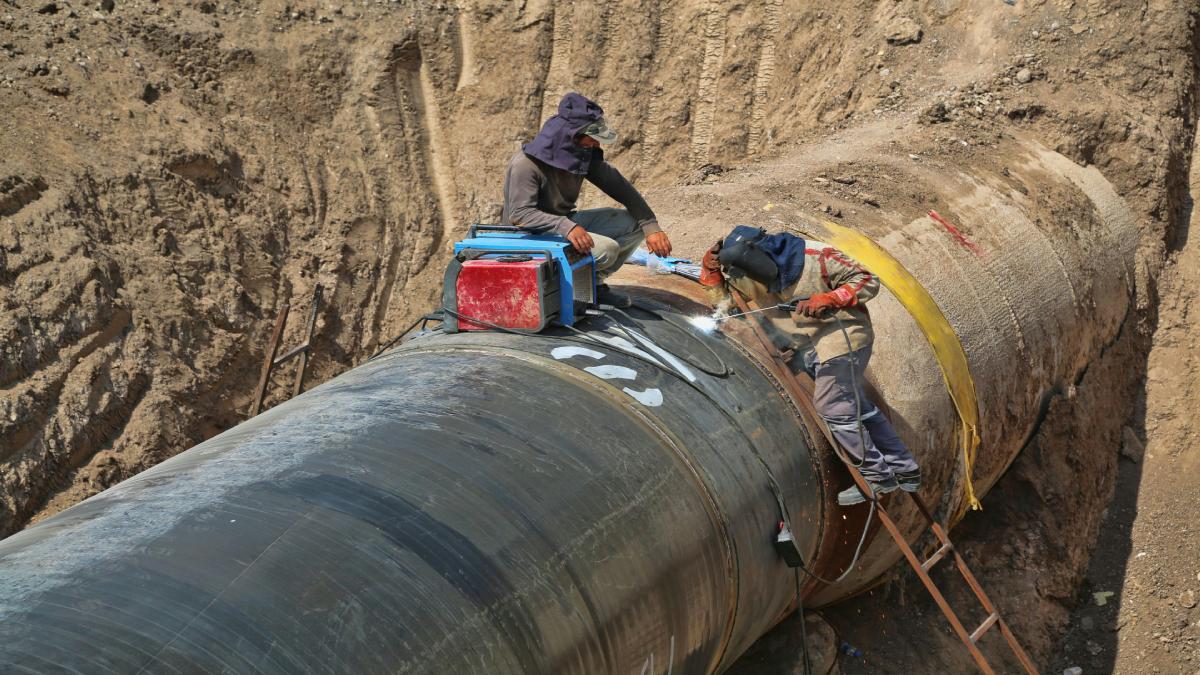
Iraq is trying to rebuild its oil export system through Türkiye after the Strait of Hormuz crisis disrupted its main southern routes, forcing Baghdad to rely on the Kirkuk–Ceyhan pipeline as a strategic outlet rather than a secondary option.
The shift did not begin with the latest disruption. Baghdad had already moved to reactivate the Iraq–Türkiye pipeline, as Bosphorus News reported. That effort turned into a decisive pivot in March, when exports resumed via the Kirkuk–Ceyhan pipeline, reopening a channel that had been largely offline since 2023.
Now the scale of that pivot is becoming clearer. Iraqi officials say combined federal and Kurdish exports could reach between 450,000 and 500,000 barrels per day through Ceyhan if international oil companies return to fields in the Kurdistan Region. Current output remains far below that level. Kurdish exports are estimated at roughly 30,000 barrels per day, reflecting the absence of operators and ongoing security concerns.
Before the 2023 suspension, the pipeline carried about 450,000 barrels per day. The infrastructure is still capable of handling those volumes. The constraint is not technical. It is operational and political.
The security environment in northern Iraq has become the decisive bottleneck. Since late February, the Kurdistan Region has faced sustained drone and missile attacks, despite not being a direct party to the broader regional conflict. Oil companies have scaled back or suspended operations, limiting production capacity and delaying any rapid return to pre-crisis export levels.
The disruption of Hormuz has amplified the importance of the northern route. Prior to the crisis, Iraq exported roughly 3.4 million barrels per day, mostly through southern Gulf terminals. The collapse of tanker traffic through the strait forced a sharp reduction in output and pushed Baghdad to search for alternative corridors.
That search is no longer limited to short-term fixes. Baghdad is exploring a broader network of export routes linking crude flows to Türkiye, Syria and Jordan, as Bosphorus News detailed in its report on Iraq's Baniyas transit push. The aim is to reduce structural dependence on Hormuz rather than simply bypass it during periods of crisis.
The northern pipeline is already carrying part of that burden. Iraq is exporting around 200,000 barrels per day via Ceyhan under current conditions, with officials indicating that output could increase if conditions stabilize.
The result is a three-tier reality. The pipeline has the capacity to move close to half a million barrels per day. Political agreements between Baghdad and Erbil have partially restored the framework for exports. But without a stable security environment, production cannot scale to match the system's technical limits.
For now, flows through Ceyhan remain well below potential, even as the route becomes strategically indispensable. Iraq is effectively turning to Türkiye as its most viable outlet during a regional energy shock, but the same crisis that makes the corridor essential is also preventing it from operating at full capacity.
The outcome will depend on whether security conditions in the Kurdistan Region improve enough to bring international operators back into the fields. Until that happens, Iraq's northern export strategy will remain constrained, even as it reshapes the country's long-term energy geography.