
By Bosphorus News Energy Desk
Iraq has begun sending fuel oil through Syrian territory toward the Mediterranean, reviving a westbound route that had long sat dormant and giving Baghdad a narrow alternative at a moment when pressure on Gulf exports has become harder to absorb.
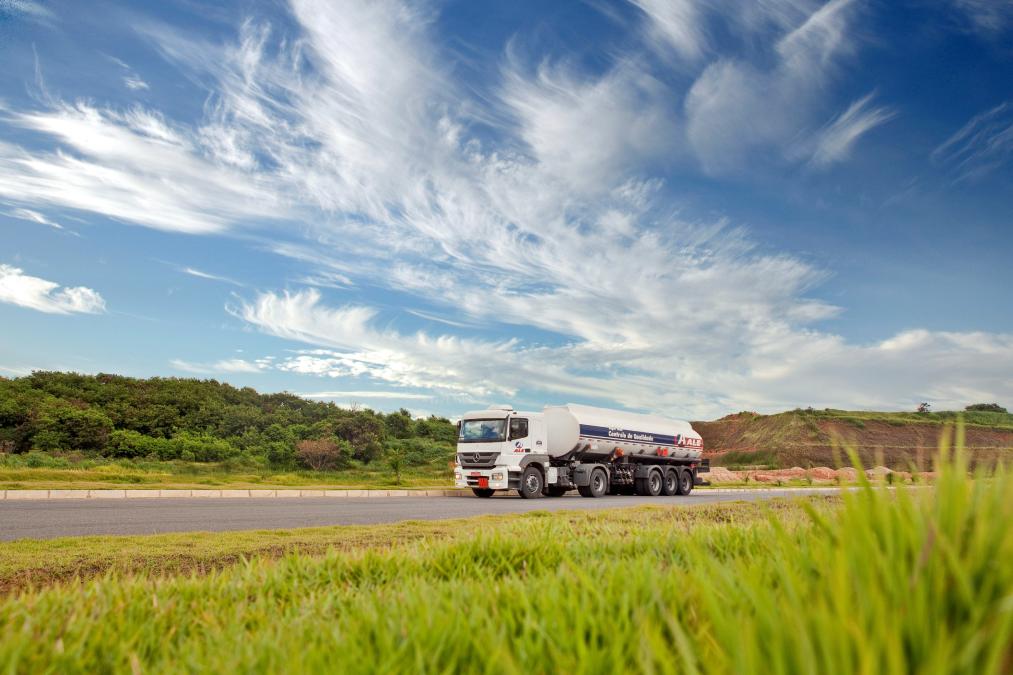
The clearest confirmation came from Iraq's Oil Ministry, which said on April 2 that fuel oil exports had started through Syria by tanker trucks after maritime exports were disrupted by the closure of the Strait of Hormuz. Syrian state media then reported that Iraqi fuel convoys had crossed into Syria through al-Tanf and were being directed toward Baniyas for export.
Syrian Arab News Agency, citing the Syrian Petroleum Company, said the convoys would be unloaded into storage facilities before transfer to the Baniyas terminal, where the fuel would be prepared for loading onto tankers. A separate Syrian report published on April 2 said the al-Tanf–al-Waleed crossing had been inaugurated by Syrian and Iraqi officials for trade transit, cargo movement and fuel tanker traffic, giving Damascus an official basis to present the corridor as an active commercial route rather than a one-off emergency passage.
The scale remains limited. The route now in use depends on road transport and storage capacity, not on a restored pipeline system. That point matters because the old Kirkuk-Baniyas line has returned to the conversation, but not to operation. Syrian state media reported that Syrian Energy Minister Mohammed al-Bashir and Iraqi Oil Minister Hayyan Abdul Ghani discussed rehabilitating oil pipelines, especially the Kirkuk-Baniyas route, which places the project firmly in the category of future repair and political coordination rather than current flow.
That leaves Baghdad with a channel that is narrower and more expensive than its normal export architecture, yet still useful under wartime pressure. Iraq is trying to push barrels west through Syria because the Gulf route is under strain. Damascus is using the same development to show that Syrian territory and the Baniyas terminal can again serve a regional transit function, even if the first step is modest in volume and operationally cumbersome.
The Syrian readout went further than a simple transit announcement. It said the two ministers also discussed broader energy cooperation, including the possibility of supplying domestic gas to Syria, and added that the first Iraqi fuel shipments had already reached storage tanks at the Baniyas refinery ahead of export to international markets. That gives the story a larger frame. What started as a limited fuel movement under export disruption is already being folded into a wider attempt to reopen economic links and infrastructure discussions between Baghdad and Damascus.
None of this suggests that Syria has suddenly re-emerged as a major oil artery for Iraq. The route is small, improvised and costly compared with Iraq's standard export system. Still, the political significance is real. Baghdad is once again moving oil west through Syrian territory, and Damascus is once again presenting Mediterranean facing energy transit as part of Syria's emerging regional role.