
By Bosphorus News Geopolitics Desk
Iranian outlets said Foreign Minister Abbas Araghchi held separate phone calls with Turkish Foreign Minister Hakan Fidan and Saudi Foreign Minister Faisal bin Farhan after US strikes pushed Gulf security back into regional diplomacy.
Tehran Times and Tasnim reported that Araghchi discussed regional security and recent developments with the Turkish and Saudi ministers. Iranian reports framed the calls around Iran's sovereignty and territorial integrity after the strikes, while presenting the talks as part of Tehran's effort to keep consultation channels open with two major regional actors.
The Turkish Foreign Ministry had not issued a separate public statement on the reported Fidan-Araghchi call at the time of writing. Saudi official channels also did not provide a clear separate confirmation in the first official scan available to Bosphorus News. The Turkish and Saudi legs of the story are therefore carried here through Iranian and Iran-focused reporting rather than direct Turkish or Saudi readouts.
The Saudi leg received stronger Iranian official treatment. Iran's Foreign Ministry said Araghchi and Faisal bin Farhan discussed regional developments in a phone call, giving Tehran's side of the exchange a formal diplomatic frame.
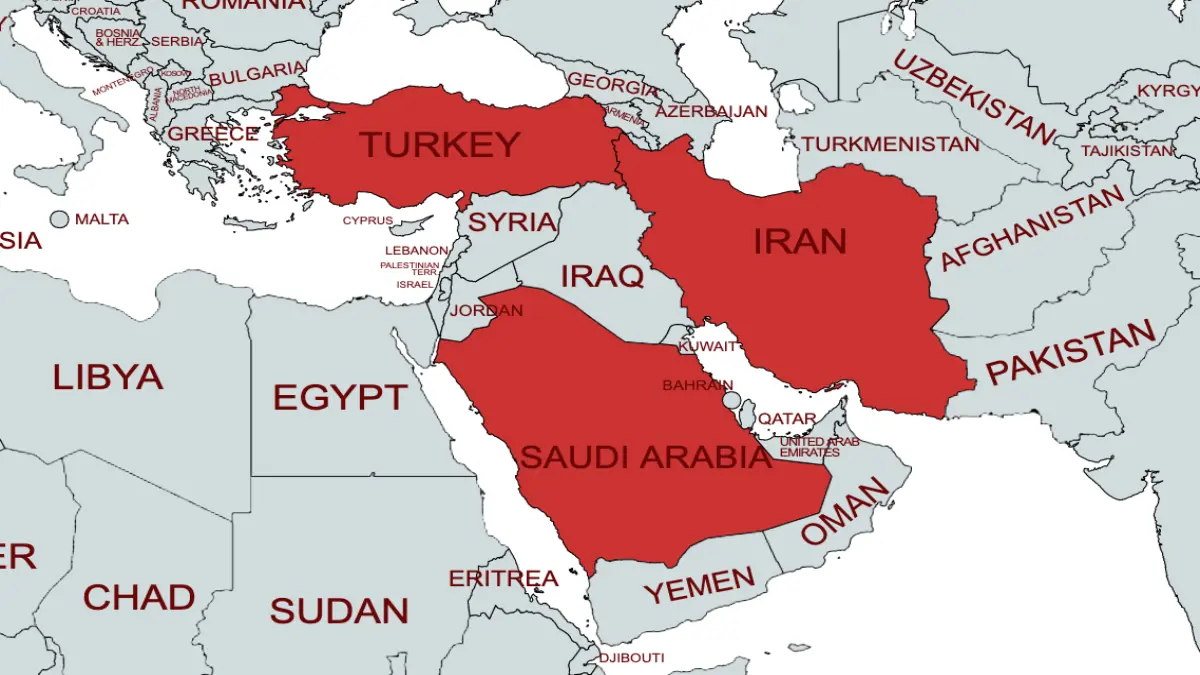
Türkiye and Saudi Arabia in the same crisis line
The reported calls are important because Iran placed Türkiye and Saudi Arabia in the same immediate consultation line as the Gulf crisis deepened.
Türkiye and Saudi Arabia occupy different positions in the regional security map, but both matter in any wider discussion on Gulf stability, energy flows and the political aftershocks of a renewed US-Iran confrontation. Saudi Arabia sits at the heart of Gulf security and oil diplomacy. Türkiye links the Gulf crisis to the Eastern Mediterranean, Iraq, Syria, Black Sea routes and energy prices.
The reported Araghchi calls therefore point to an Iranian attempt to widen the crisis conversation beyond Tehran's direct confrontation with Washington and bring regional capitals into a diplomatic holding pattern before the conflict spreads further.
Gulf pressure enters Türkiye's regional map
The reported talks also fit the wider picture Bosphorus News traced in its June 11 Eastern Mediterranean Strategic Brief, where the Gulf shock, Hürmüz risk, Türkiye's corridor diplomacy and the Eastern Mediterranean security file were already moving inside the same regional frame.
Pressure from the Gulf reaches beyond shipping routes. It touches energy costs, inflation expectations, transit corridors, Syria and Iraq calculations, and the search for alternative lines between the Gulf and Europe. Türkiye's role grows when maritime disruption, regional war risk and overland connectivity begin to overlap.
Tehran's outreach to Fidan, if confirmed later by the Turkish side, would fit that broader pattern of crisis diplomacy. Türkiye is treated in Iranian reporting as a necessary contact point, not only because it is a neighboring power, but because it sits across several regional files at once.
Tehran's message and its limits
Iranian reports said Araghchi stressed the importance of regional consultation after the attacks. The language used by Iranian outlets was strongly shaped by Tehran's own position, and Bosphorus News is not adopting that language as fact.
The diplomatic signal is still visible. Iran wants to show that it is speaking with Türkiye and Saudi Arabia while the crisis remains active. It also wants to present the issue as a regional security matter rather than a confrontation limited to Tehran and Washington.
That message has limits. Without Turkish and Saudi readouts, the content of the calls remains defined mainly by the Iranian side. The safest reading is narrow: Tehran says it consulted two key regional capitals as the Gulf crisis widened.
Türkiye's public line stays on diplomacy
The reported phone diplomacy came as Türkiye's defense establishment also called for restraint.
In its latest weekly briefing, the Turkish Ministry of National Defense said attacks should end, renewed clashes would benefit no side and diplomacy should remain the path for resolving the Iran-US/Israel crisis. Bosphorus News reported that the same briefing also carried wider Eastern Mediterranean messages through Denizkurdu-II, TCG Anadolu, the France-Cyprus military agreement and Greek airspace claims, placing Türkiye's regional security language across several fronts at once.
That context gives the Iran file a clearer place in Türkiye's public messaging. The ministry's line keeps Türkiye away from escalation language and places the emphasis on regional security, even as the surrounding map stretches from the Gulf to Cyprus, the Aegean and the Eastern Mediterranean.
Iran is trying to show that it has regional channels. Türkiye is calling for diplomacy while remaining active across connected security files. Saudi Arabia remains a key Gulf actor whose position carries weight in any effort to prevent a wider rupture.
The crisis is no longer confined to the military exchange itself. It is moving through diplomatic calls, energy calculations and corridor politics, with Türkiye and Saudi Arabia now visible in Tehran's regional security outreach.
***Sources: Tehran Times, Tasnim, Iranian Foreign Ministry, Iran International and Bosphorus News Reporting.