
By Bosphorus News Energy Desk
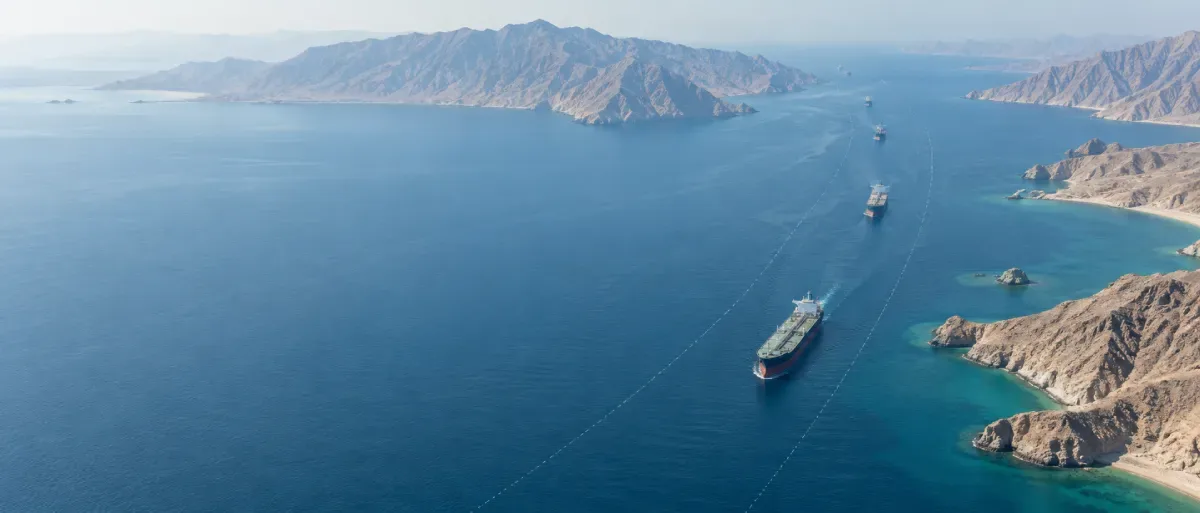
Iran is preparing a proposed maritime exclusion zone around the Strait of Hormuz and says it is close to signing a shipping corridor agreement with Oman as Tehran tightens controls on vessels using the waterway.
Commercial traffic through Hormuz has fallen sharply. Türkiye has also raised the oil-price and energy-import assumptions in its new economic programme, putting the 2026 energy bill at $71 billion.
Iran Expands an Existing Blacklist
Mohsen Rezaei, secretary of Iran's Supreme National Security Council, said vessels entering the proposed zone without coordination with Tehran would be placed on an Iranian sanctions list.
He said the area would begin at the perimeter of what Tehran describes as the US naval blockade, extend toward the Strait of Hormuz and continue into parts of the Gulf. Iran has not published coordinates, a map or detailed enforcement rules.
Iran was already blacklisting ships before Rezaei announced the proposed zone. The Persian Gulf Strait Authority had placed 56 vessels on its restricted list by September 2. Tehran says listed ships can face fines, detention or confiscation if they attempt to pass through Hormuz. Vessels dealing with them can also be listed.
Rezaei says Iran has effectively closed the strait. Commercial passage has not stopped, though volumes are far below normal levels. Shipping data showed seven commodity vessels crossing on Monday, after eight on Sunday. Ships travelling with automatic identification systems switched off may not appear in those figures.
The White House rejects Tehran's claim to control access and says Hormuz remains open. The US military says its blockade has redirected dozens of commercial vessels since the confrontation intensified.
Oman Has Not Confirmed Tehran's Terms
Rezaei said maps had been agreed for a new shipping corridor through Iranian and Omani waters and that an agreement would be signed within days. Iranian accounts of his remarks describe Iran as managing entry and exit through the route.
Oman has confirmed negotiations over a corridor, but not Rezaei's version of the agreement.
A joint Oman-Iran statement issued on August 25 described a phased process starting with a joint temporary navigational corridor and mine-clearing work. Technical talks would then cover a permanent corridor, traffic management, information sharing, navigational services and the future administration of passage through Hormuz.
The Omani statement describes a joint process and refers to applicable international law. It does not give Iran sole control of the route. Muscat has not said the maps are complete or that an agreement will be signed within days.
Shipowners and insurers are still without an agreed map, entry rules or published terms for the proposed corridor.
US-Iran Missile Exchange Raises Transit Risk
The announcement followed another round of direct US-Iran naval exchanges.
Iran said it fired a Qassem Basir ballistic missile at US warships over the weekend. US Central Command confirmed Iranian ballistic missile attacks against an aircraft carrier and a guided-missile destroyer, saying both ships evaded them and no personnel were injured.
US forces then struck three Iranian oil tankers. Bosphorus News covered the exchange in its September 6 strategic brief.
Rezaei linked access through Hormuz to the confrontation with Washington, saying Iran would commit to keeping the strait open if the United States stopped attacks, threats and what Tehran describes as sabotage.
Commercial vessels are operating between competing Iranian and US claims over passage, with route choice and previous dealings capable of drawing penalties or military attention.
Türkiye Raises Its Energy Assumptions
Türkiye published its 2027-2029 Medium-Term Programme as disruption in the Gulf intensified.
The programme puts average Brent crude at $88 a barrel for 2026, compared with $65 in the previous programme. The estimated energy import bill rises from $63 billion to $71 billion.
It also projects a $47.5 billion current-account deficit for 2026 and year-end inflation of 28.4 percent. The document identifies the US-Israel-Iran war and higher Middle Eastern tensions among the pressures on energy prices, transport costs and Türkiye's external balance.
Brent was trading near $97 a barrel on Tuesday morning, above the assumption built into the 2026 programme.
Türkiye has also cut its dependence on Russian diesel. Russia's share of Türkiye's diesel imports fell to about 20 percent in August, down from around 85 percent in 2025, as Turkish buyers increased purchases from India and the United States.
That diversification is taking place in a tighter market. Industry estimates point to roughly 2 million barrels per day of petroleum products missing from Russian supply and close to another 2 million barrels per day from the Middle East. Refinery disruptions, export restrictions and longer shipping routes are adding to the shortage.
Turkish buyers have reduced one concentration risk but are now sourcing replacement fuel from a smaller and more expensive market.
Ankara Keeps a Channel Open With Tehran
Türkiye was not among the mediators Rezaei named when he criticized efforts to implement the US-Iran memorandum. He referred specifically to Pakistan, Qatar and Oman.
Foreign Minister Hakan Fidan spoke with Iranian Foreign Minister Abbas Araghchi on September 5. Turkish diplomatic sources said they reviewed the latest state of the US-Iran negotiations. Earlier contacts between the two ministers also covered reopening Hormuz and maintaining the ceasefire.
Iran has yet to publish the boundaries of its proposed exclusion zone. Oman has confirmed corridor negotiations but not Tehran's account of the final arrangement.
Only seven commodity vessels crossed Hormuz on Monday. Türkiye, meanwhile, has raised its 2026 energy import estimate by $8 billion, to $71 billion.
Sources: Reuters, Associated Press, Oman Foreign Ministry, US Central Command, Türkiye's Presidency of Strategy and Budget, Anadolu Agency, Bosphorus News review and reporting.