
By Bosphorus News Economy Desk
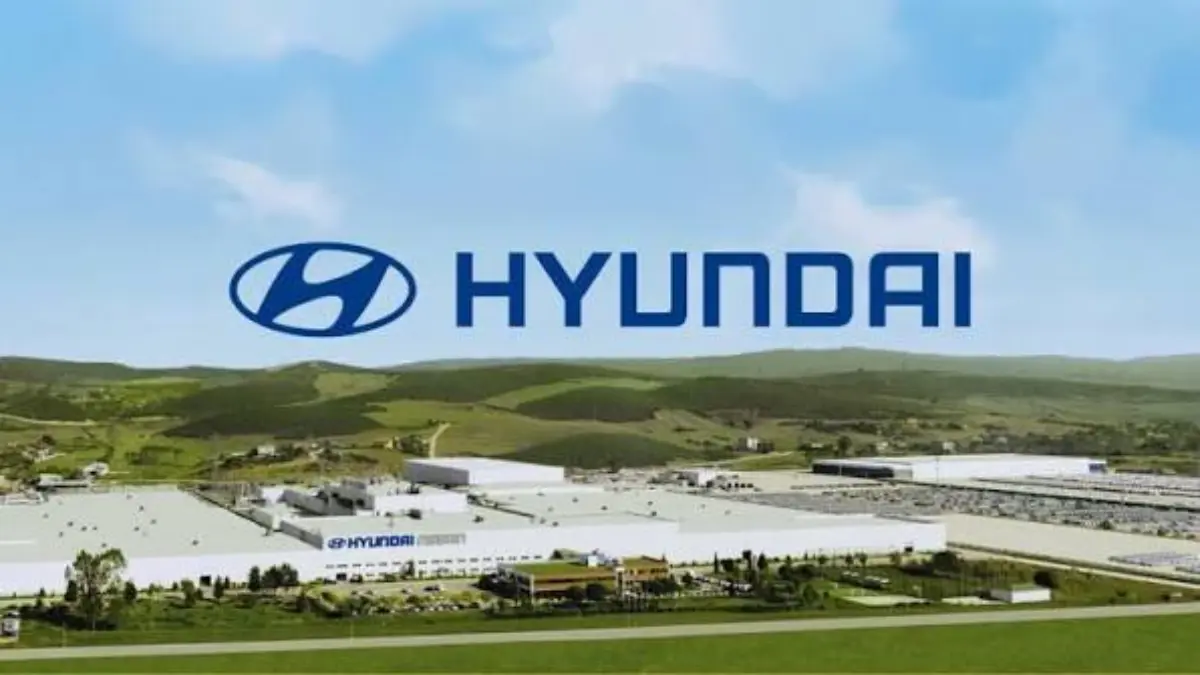
Hyundai Motor Türkiye is preparing battery-pack assembly for the IONIQ 3 at its İzmit plant, adding a new electric vehicle layer to the South Korean automaker's Türkiye production base for European markets.
The company's Türkiye operation is converting a large part of the İzmit factory for the new electric vehicle program, placing the plant inside Hyundai's European production network rather than treating it only as a regional assembly base. The shift comes as Türkiye tries to defend its role in automotive manufacturing while global carmakers reassess investment plans, production costs and European market access.
Hyundai's IONIQ 3 will be produced in İzmit for Europe, according to the company's global product communication. The model is expected to give Hyundai a smaller electric vehicle positioned below its larger IONIQ models, with Türkiye serving as the production base for the European rollout.
The battery plan requires a careful distinction. The investment is not a full cell-production project. Hyundai's Türkiye operation is preparing battery-pack assembly, with battery cells excluded from the local process. The distinction is central to the industrial value chain: İzmit is gaining a higher-value electric vehicle role, but Türkiye is not yet securing the most sensitive layer of battery manufacturing through this project.
Ekonomim columnist Vahap Munyar reported the figures after a June factory visit to Hyundai Motor Türkiye's İzmit plant. The report placed Hyundai Motor Türkiye's broader investment program at about $830 million, with $290 million linked to the IONIQ 3 program. Company executives cited in the report said Hyundai is targeting production of 28,760 IONIQ 3 vehicles in 2026, with almost the entire output planned for export. Domestic sales in Türkiye are expected to begin later in the year.
The move also lands in a wider Turkish automotive debate. BYD's previously announced Türkiye plant plan has slowed, making Hyundai's İzmit program more important as a concrete electric vehicle investment already tied to an existing production base. Toyota has separately argued in Brussels that Türkiye should be treated as part of Europe's automotive supply chain in future regulatory calculations, a position that fits the same industrial map.
Türkiye gains a stronger industrial argument from the Hyundai project: the country remains inside Europe's automotive production corridor despite pressure from Chinese electric vehicle competition, European Union rules and changing battery economics. Hyundai, in turn, keeps an established manufacturing site close to Europe, with customs and logistics advantages that still matter as automakers search for lower-cost EV production outside the European Union's core markets.
The next test is whether battery-pack assembly becomes a bridge to deeper supplier localization or remains a controlled production layer around imported cells. İzmit's role is expanding, but the higher-value battery chain will depend on whether Türkiye can attract cell, cathode, anode and battery-material investment beyond vehicle assembly.
Sources: Hyundai Motor Company, Ekonomim, Bosphorus News review and reporting.