
By Bosphorus News Geopolitics Desk
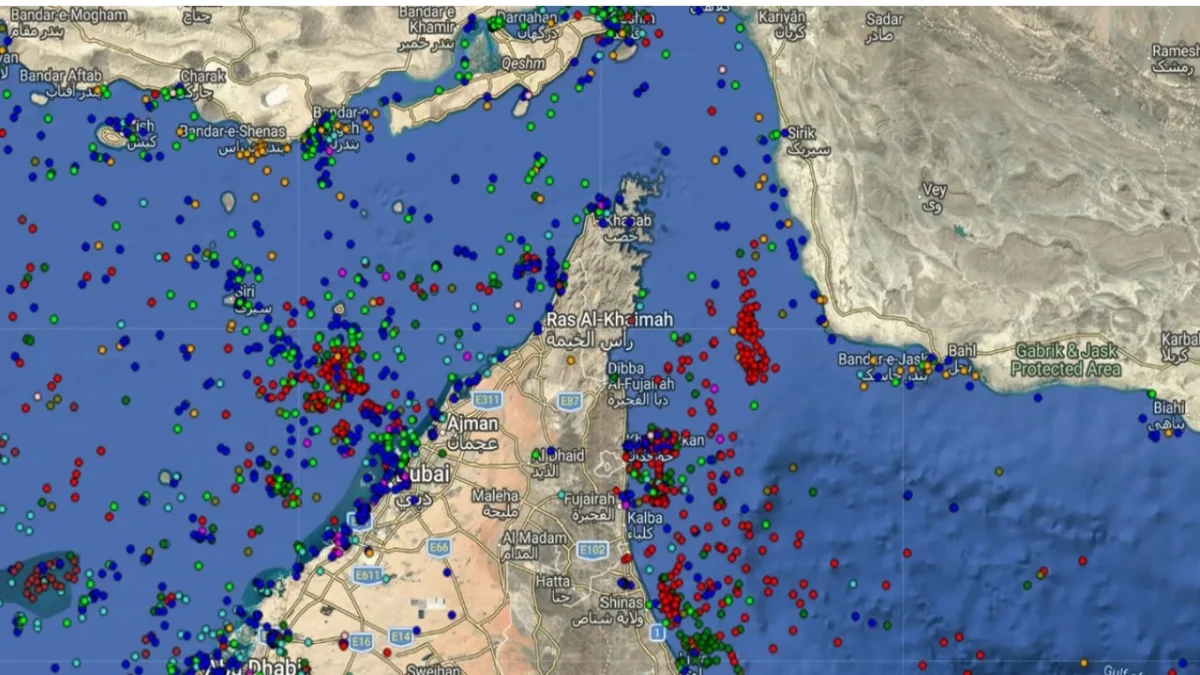
Europe's Hormuz problem has moved beyond oil prices, insurance costs and shipping delays. France's decision to send the Charles de Gaulle carrier strike group toward the Red Sea has turned the crisis into a test of Europe's ability to protect trade routes that carry direct consequences for its own economy.
The French carrier group was moved to the Red Sea and Gulf of Aden on May 6 as part of preparations for a possible multinational mission to help secure the Strait of Hormuz. Reuters said France and Britain have been developing the plan for weeks, with Italian and Dutch warships accompanying the French group and about a dozen countries showing interest in taking part. The mission, if activated, would aim to restore safe navigation after tensions ease enough for commercial shipping to return with confidence.
Paris is framing the move as defensive planning rather than entry into the war. The Associated Press said the mission would proceed only if the threat level falls and regional coordination, including with Iran, becomes possible. The aim is to reassure shipping and energy markets without turning a European maritime mission into another front in the Iran conflict.
The deployment still carries political weight. Europe is signalling that it wants a direct role in protecting the Gulf chokepoint through which a large share of global energy trade moves. It also exposes the limits of that ambition. A Hormuz mission would still depend on coalitions, allied navies, regional consent and the same Middle Eastern geography that Europe cannot manage from Brussels alone.
The Ankara track gives that debate a second layer.
European Commission Mediterranean Commissioner Dubravka Šuica was in Ankara on May 6 for talks on EU-Türkiye cooperation and shared interests in the wider Mediterranean. The European Union framed the visit around regional stability, connectivity, migration, energy and security, and described Türkiye as a key partner in the Mediterranean relationship the Commission wants to build.
Ankara used the meeting to raise the harder issue. Hürriyet Daily News, citing Turkish diplomatic sources, said Foreign Minister Hakan Fidan told Šuica the EU should include Türkiye in its defence and security programs for the sake of continental security. The same account said Fidan argued that EU-led initiatives should complement NATO and avoid excluding non-EU NATO allies.
Brussels is comfortable calling Türkiye central to Mediterranean stability, connectivity and crisis management. Ankara is pushing the conversation into a less comfortable place: defence access, institutional inclusion and the limits of EU security planning built around non-EU NATO allies. The same tension runs through Europe's energy debate, where projects framed around bypassing Türkiye keep resurfacing even as regional crises pull attention back to Turkish geography, a contradiction Bosphorus News examined in its coverage of the EastMed pipeline debate.
The next NATO summit gives that argument a stage. NATO says the 2026 summit will be held in Ankara on July 7 and 8 at the Beştepe Presidential Compound. Türkiye will host the alliance at a moment when Europe is debating how to take more responsibility for its own security while still depending on military geography that runs through Turkish territory, airspace and maritime access.
Hormuz sharpens the point because the crisis connects several theatres where Türkiye already matters. Gulf instability feeds energy markets, and Bosphorus News has examined how a Hormuz shock could push Europe toward corridors running through Türkiye. The Red Sea links into Mediterranean trade routes. Syria sits between Gulf connectivity projects and Europe. The Black Sea remains a separate security front where NATO relies heavily on Türkiye's geography, military presence and Montreux role.
Energy exposure adds another layer. As Bosphorus News detailed earlier, TurkStream has become Russia's last direct pipeline route to Europe as flows rise, making Türkiye-linked infrastructure harder to separate from Europe's broader energy security debate. A crisis around Hormuz does not replace the Black Sea route question. It widens the same argument over chokepoints, corridors and who controls the routes Europe may need in a prolonged disruption.
The two developments belong in the same frame. France is testing how far Europe can project naval power toward the Gulf. Brussels is asking Türkiye to help shape a wider Mediterranean agenda built around security, energy and connectivity. Ankara's answer is to push the conversation beyond consultation and into access.
That demand will not be settled by one commissioner's visit or one carrier deployment. It will return in every crisis that ties Europe's southern and eastern security environment to geography where Türkiye is already present. Hormuz is the latest case. Ankara's line heading into the NATO summit is clear: Europe cannot rely on Turkish geography while treating Turkish participation as a question to be negotiated after the architecture is already built.