
By Bosphorus News Energy Desk
Europe's renewed discussion of Eastern Mediterranean energy routes is not a formal relaunch of the EastMed pipeline, but the Hormuz crisis has altered the political value of a project that has remained embedded in the EU's infrastructure planning despite years of commercial stagnation.
At an informal summit held in Cyprus on April 23–24, EU leaders focused on the implications of the Strait of Hormuz disruption for European energy security. The European Commission had already moved a day earlier, presenting its AccelerateEU package as a response to the shock in global energy flows. The package does not revive EastMed by name, yet the project remains listed in official EU documents as a Project of Common Interest, preserving its place in the bloc's long-term infrastructure framework even in the absence of a final investment decision.
That institutional continuity matters because it separates EastMed's political relevance from its commercial reality. The pipeline has not advanced toward construction, but it has not been removed from the EU's strategic planning either, leaving it available as a reference point whenever energy security debates intensify.
The Hormuz disruption has done precisely that. By removing a significant share of global oil and LNG flows from circulation and exposing Europe's reliance on maritime transit routes, the crisis has shifted attention back toward supply corridors that reduce exposure to chokepoints. Eastern Mediterranean gas fits that requirement in a way that LNG imports from the Gulf do not, as pipeline routes from Israeli and Cypriot fields would avoid Hormuz, bypass the Suez Canal and deliver gas directly into the European system.
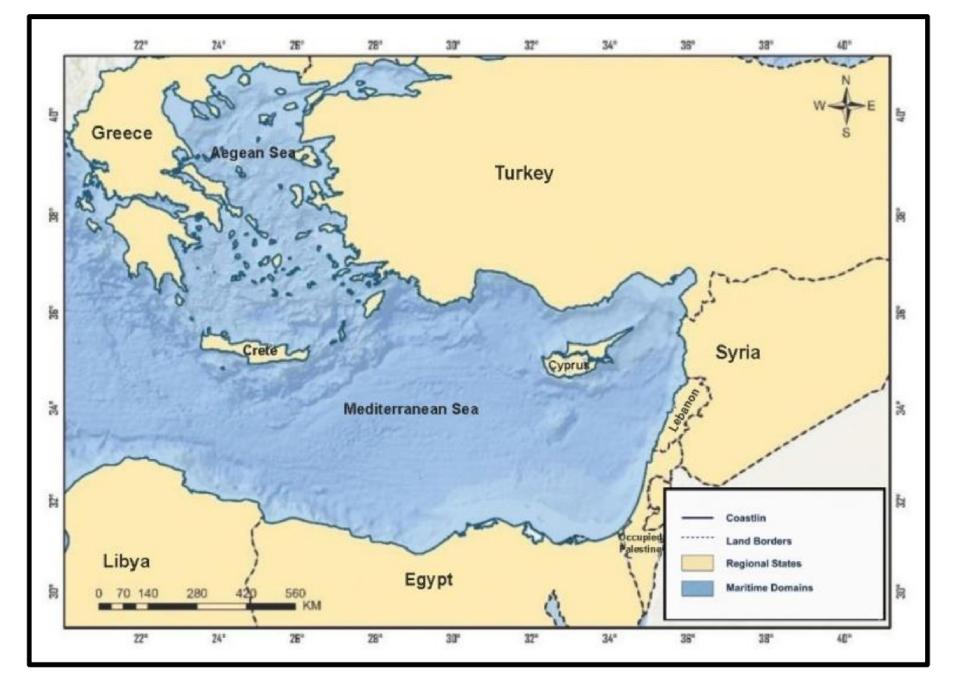
This is where the discussion intersects with geography. Any pipeline that follows that logic also bypasses Turkish territory, a factor that has shaped the EastMed debate from the outset. The project's route, as defined in the 2020 intergovernmental agreement between Greece, Cyprus and Israel, crosses maritime zones that Ankara does not recognise as belonging exclusively to those states, placing legal and political objections at the centre of the infrastructure question.
Türkiye has maintained a consistent position on this issue, arguing that both Ankara and Turkish Cypriots have rights over Eastern Mediterranean resources and rejecting unilateral delimitation claims that underpin the pipeline's projected route. The Türkiye–Libya maritime memorandum signed in 2019 was designed in part to contest that geometry, creating a legal counter-map that intersects with the planned EastMed corridor.
At the same time, Türkiye remains a key transit state in the Southern Gas Corridor, carrying Azerbaijani gas to Europe. Any infrastructure that delivers Eastern Mediterranean gas to European markets without crossing Turkish territory inevitably reduces Ankara's leverage as an energy hub, giving the bypass debate a structural dimension that extends beyond the pipeline itself.
The project's commercial constraints, however, have not changed. Deep-water engineering challenges continue to drive up costs, long-term gas purchase commitments remain uncertain in a market shaped by decarbonisation targets, and the absence of a final investment decision reflects the reluctance of private actors to commit to a project exposed to both market and political risk.
What has evolved instead is the way EastMed is being discussed. Rather than a single large-scale pipeline, the concept is increasingly reflected in a network of smaller infrastructure components, including LNG export arrangements through Egypt and electricity interconnectors linking Israel, Cyprus and Greece to the European grid. These projects replicate the strategic function of EastMed in distributed form, reducing reliance on a single investment decision while advancing the same objective of route diversification.
The result is a layered reality in which EastMed exists simultaneously as a dormant pipeline, an active policy reference and a broader architectural logic shaping regional energy cooperation. The Hormuz crisis has reinforced that logic by highlighting the risks associated with maritime dependency, but it has not resolved the underlying obstacles that have kept the pipeline from moving forward.
In that sense, the current moment does not mark a return of EastMed so much as a shift in how it is valued. A project once questioned on economic grounds is now being reconsidered in strategic terms, as Europe weighs the cost of infrastructure against the risks embedded in its existing energy map.