
By Bosphorus News Geopolitics Desk
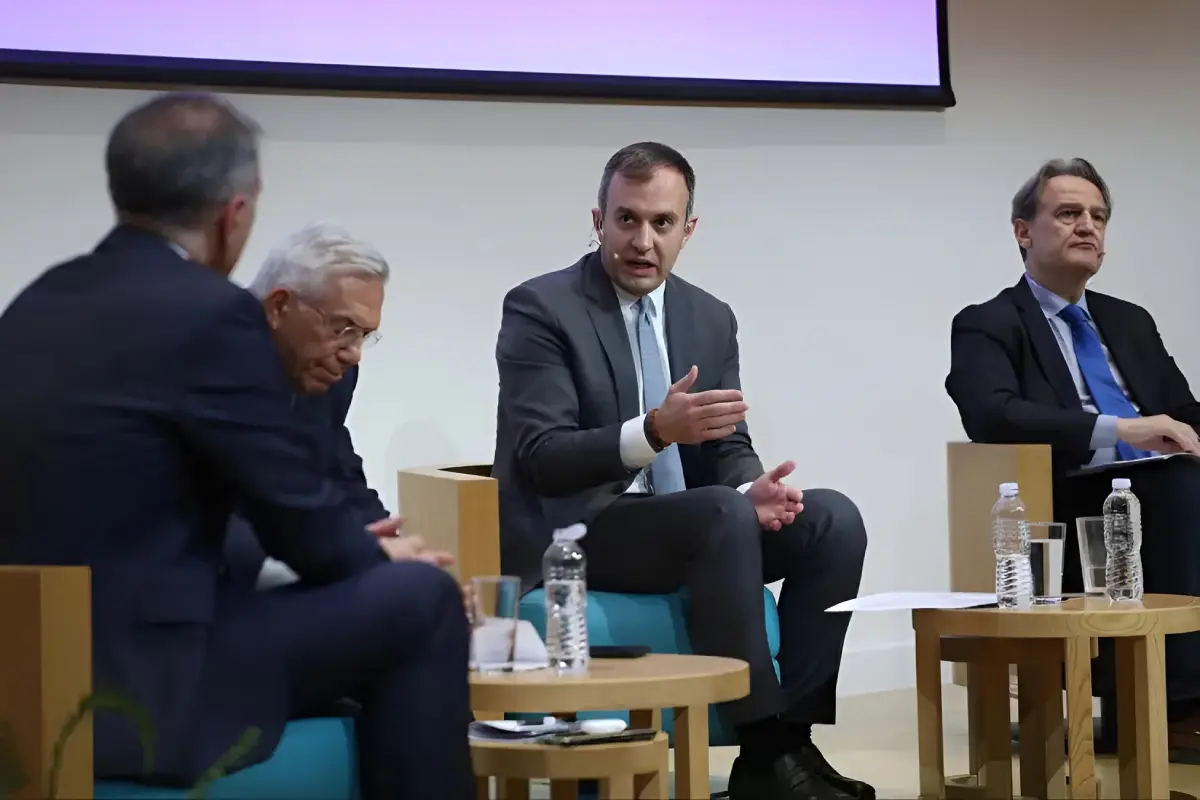
Greece has named Tasos Chatzivasileiou as deputy foreign minister for European affairs, placing a Türkiye-literate New Democracy lawmaker inside the Foreign Ministry's senior structure ahead of NATO's Ankara summit.
The appointment gives Athens a political figure with unusually direct Türkiye credentials at a sensitive moment for Greek-Turkish diplomacy. Chatzivasileiou's official parliamentary biography lists a degree in Turkish Studies - History & Politics from the University of Cyprus, Turkish among his foreign languages, and committee work covering European affairs, national defense, foreign affairs, armament programs and the Greece-Cyprus-Israel-United States 3+1 parliamentary cooperation group.
His official record lists Turkish among his languages, but the political relevance goes beyond a CV line. Chatzivasileiou has a near-native command of Turkish and is a rare senior Greek political figure able to engage Türkiye through its own language and political vocabulary.
The Greek government's current cabinet list places Chatzivasileiou in the Foreign Ministry under George Gerapetritis as deputy foreign minister for European affairs, with Haris Theocharis and Giannis Loverdos also listed as deputy ministers and Alexandra Papadopoulou listed separately as permanent service deputy minister.
The cabinet arrangement comes ahead of two timelines, NATO's Ankara summit and Greece's July-December 2027 presidency of the Council of the European Union. One places Türkiye-Greece files close to alliance diplomacy; the other gives Athens a larger EU platform for files where migration, defense coordination and the Eastern Mediterranean remain tied to Türkiye.
NATO's Ankara summit will be a transatlantic defense meeting, but it also arrives as several Türkiye-Greece issues sit near the diplomatic surface, including the postponed Blue Homeland bill in Türkiye, Aegean maritime and airspace disputes, Cyprus, Libya-linked maritime questions and the need for NATO allies to keep bilateral friction away from alliance business.
A Greek official with near-native Turkish who can read Türkiye in its own language, rather than through translation or stereotype, gives Athens a better channel with Ankara and gives the two NATO allies a more serious language for difficult files before the alliance meets in Türkiye.
Chatzivasileiou's appointment also lands inside Greece's longer EU calendar. The July-December 2027 presidency will give Athens a more visible place in EU institutional politics, including discussions where Türkiye, migration, defense cooperation and Eastern Mediterranean security remain difficult to separate.
Greek media have also read the appointment through the lens of domestic politics. Chatzivasileiou resigned from a previous Foreign Ministry post in June 2025 after his name appeared in the OPEKEPE file, a scandal involving EU agricultural subsidies and Greece's farm-payments agency. Greek reports later said prosecutors moved the relevant case file to the archive after finding insufficient indications linked to the alleged offence. The file explains part of the domestic reaction in Athens, but it should not define the regional meaning of the appointment.
The sharper signal is timing and competence. Greece is handing the European affairs portfolio to a politician whose record runs through Turkish studies, European institutions, defense-foreign policy work and party-level international relations before a NATO summit hosted by Türkiye.
The move does not soften the substance of hard disputes between Ankara and Athens. It does, however, improve the quality of the channel on the Greek side. In a period when Greek-Turkish tensions can move quickly from technical wording to sovereignty language, a senior official who understands Türkiye from inside the language gives Athens a sharper diplomatic instrument.
Before Ankara hosts NATO, Greece is putting its European affairs track in the hands of a politician who can hear Türkiye without waiting for translation. That may matter most when the hardest files move away from prepared statements into the room.
Sources: Greek government, Hellenic Parliament, Council of the European Union, SKAI, in.gr, achatzivasileiou.gr, Bosphorus News review and reporting.