
By Bosphorus News Geopolitics Desk
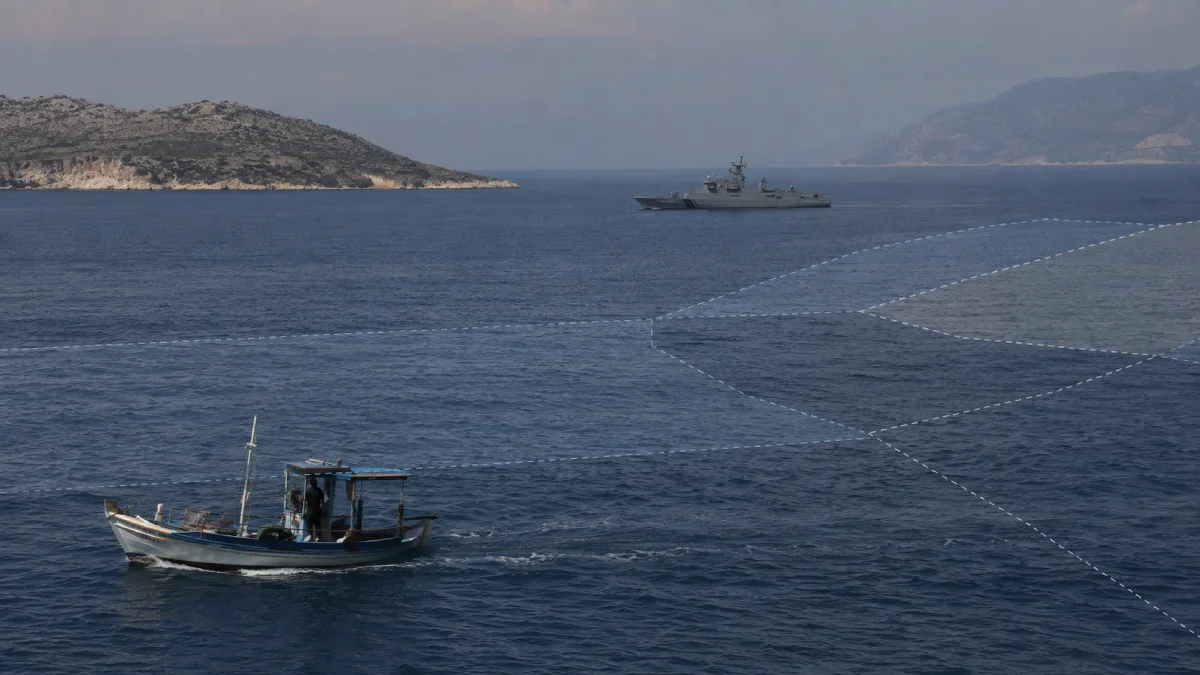
Greece has asked the European Union to step in over what Athens describes as unlawful fishing and violations of maritime law by Turkish vessels, turning a long-running Aegean dispute into a formal appeal for European involvement.
Greek Shipping and Island Policy Minister Vasilis Kikilias raised the issue with European Commissioner for Fisheries and Oceans Costas Kadis during a meeting in Athens on May 15, saying the matter concerned both Greek fishermen and Greek sovereign rights.
"I raised with the Commissioner a major issue for Greece regarding our fishermen and our fisheries and the provocative behaviour of our Turkish neighbours with regards to the unlawful fishing, the non-respect of the law of the sea, and the disputing of our sovereign rights," Kikilias said. "We ask the European Union to intervene."
The minister added that Greek sea borders were also Europe's borders, a line that places the bilateral fishing dispute inside a broader argument about EU frontier responsibility. Reuters said Turkish officials did not immediately respond to a request for comment.
A Dispute Built on Competing Maps
The appeal to Brussels did not arrive in isolation. It follows a year of escalating map-driven friction over who controls what in the Aegean.
Greece submitted a maritime spatial plan to the European Union in April 2025, defining zones for fishing, shipping, tourism, aquaculture and offshore energy in its maritime areas. Türkiye's Foreign Ministry rejected the plan, saying some designated areas fell within Turkish jurisdiction and calling Greece's maps invalid. Ankara then submitted its own maritime spatial plan to UNESCO in June 2025, claiming marine influence across a significant portion of the Aegean. Athens responded by saying Ankara's zones had no legal effect.
The dispute intensified in April 2026, when Greece's Fisheries Control Directorate published updated fishing restriction maps. Türkiye's Foreign Ministry responded on April 21, rejecting the maps outright.
"Maps that depict non-existent, imaginary maritime boundaries between Türkiye and Greece in the Aegean and the Mediterranean, and that violate Turkish maritime jurisdiction areas, have no legal validity," the ministry said.
Ankara added that it would not recognize fishing restrictions imposed beyond Greece's six nautical miles of territorial waters and would not accept unilateral measures affecting Turkish fishermen.
The legal divide remains familiar. Türkiye maintains a six-nautical-mile territorial waters limit in the Aegean and has warned for decades against any Greek extension to twelve nautical miles. Greece argues that UNCLOS gives it the right to extend its territorial waters, while Türkiye is not a party to the convention and disputes the way Athens applies island-generated maritime zones in the Aegean.
Imia and the Fishing Front
On May 14, the same week as the Kikilias-Kadis meeting, fishermen from Kalymnos reported that a Turkish coast guard crew member appeared to point a firearm toward their boat near the disputed Imia islets. A video released by the fishermen showed a Turkish patrol vessel approaching the boat, while Greek media reported that the Turkish vessel sounded its siren as a warning for the Greek boat to withdraw toward Kalymnos.
No formal Greek government or coast guard confirmation of the May 14 gun-pointing allegation was available at the time of publication.
Imia carries particular weight in Aegean disputes. In 1996, a military standoff between Greece and Türkiye over the uninhabited rocks brought the two NATO allies close to confrontation before US mediation helped de-escalate the crisis. The islets have remained a flashpoint for fishing incidents, patrol activity and coast guard friction ever since.
EU Mechanism and Its Limits
Kadis, a Cypriot official serving as European Commissioner for Fisheries and Oceans, outlined the European Commission's Ocean Pact and current marine resource management initiatives during the Athens meeting. He also reaffirmed Commission support for Greece's maritime and fisheries policies.
That support has limits. EU fisheries rules give Brussels tools on quotas, monitoring, illegal fishing designations, market access and inspection capacity, but coastal states remain central to enforcement at sea. The European Fisheries Control Agency, satellite monitoring and inspection mechanisms can support Greece, yet a formal EU procedure against Türkiye would carry political weight beyond fisheries.
Greece has an incentive to Europeanize the file. By presenting Turkish fishing activity as a challenge to European maritime borders, Athens is trying to move the issue away from isolated encounters between boats and into the institutional language of EU sovereignty, external borders and maritime law.
Inside a Wider Aegean Pattern
The fishing dispute now sits inside a sequence of Aegean confrontations that has accelerated in May 2026.
On May 13, a Turkish missile boat challenged the cable vessel Ocean Link by radio while the ship was laying EU-funded fiber-optic infrastructure between Astypalaia and Kos, asserting Turkish jurisdiction over the area, as Bosphorus News detailed in its report on the Turkish missile boat, OTE cable ship and Greek frigate episode.
The same day, the Hellenic National Defence General Staff recorded five Athens FIR infringements and two alleged Greek airspace violations by Turkish F-16s.
On May 14, Greek Defence Minister Nikos Dendias visited Agathonisi, a small eastern Aegean island close to the Turkish coast, where he warned against what Athens sees as escalating revisionist claims. Dendias said Greece would not accept challenges to sovereign rights that contradict international law and common sense.
The sequence also shaped the wider regional picture covered in the latest Eastern Mediterranean Strategic Brief, where Greece's EU appeal over Turkish fishing, the Blue Homeland debate and new Aegean maritime friction formed part of the same security track.
The legal backdrop is Türkiye's draft maritime jurisdiction bill, announced on May 12 through Ankara University's National Center for the Sea and Maritime Law and confirmed by a Turkish Ministry of National Defence spokesman on May 14. The bill is expected to give Türkiye's maritime jurisdiction claims in the Aegean, Black Sea and Eastern Mediterranean a clearer domestic legal framework, a move Bosphorus News examined in detail as Athens warned that the Blue Homeland draft would deepen Aegean and EastMed disputes.
Kikilias's decision to bring the fishing file to Brussels in the same week was not accidental. Athens is building a case that the Aegean dispute has moved beyond bilateral friction and now requires a European institutional response.
That does not mean Brussels will open a direct enforcement track against Türkiye. It does show where Greece wants to take the dispute next: away from scattered incidents at sea and toward an EU-level argument over borders, maps and maritime jurisdiction in the Aegean.
Reporting based on Reuters, Tovima, Athens-Times, Türkiye's Foreign Ministry official statements and European Commission documentation. The Imia gun-pointing allegation has not been formally confirmed by Greek authorities at the time of publication.