
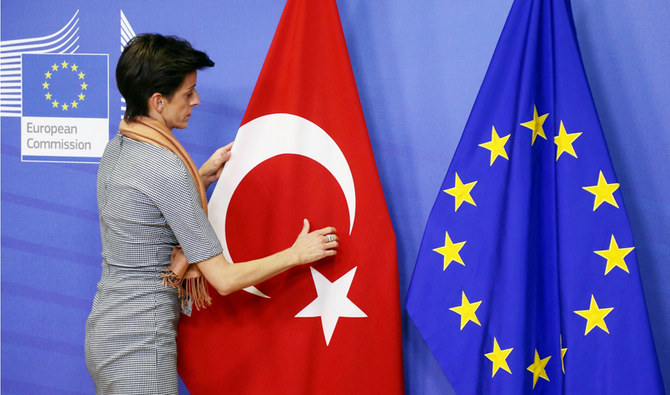
Brussels Signals a Strategic Recalibration in European Defence Thinking
A comprehensive report published in September 2025 by the GEO-POWER-EU Institute, a Horizon Europe research project led by a consortium of universities and think tanks, examines how European Union defence cooperation is being reshaped by intensifying geopolitical pressures. These pressures include Russia's war in Ukraine, instability across the EU's eastern and southern neighbourhoods, and growing uncertainty about the long-term sustainability of U.S. security guarantees.
The report argues that Europe's defence debate has entered a more consequential phase, where political declarations must translate into operational capability, industrial coordination, and strategic coherence. Crucially, it stresses that EU defence cooperation cannot be assessed in isolation from NATO structures and key non-EU actors — a category in which Türkiye occupies a central position.
Stress Lines Inside Europe's Defence Architecture According to the GEO-POWER-EU analysis, the EU's defence ambitions face several persistent constraints:
Diverging threat perceptions among member states continue to limit strategic convergence, particularly between eastern, southern, and western Europe. At the same time, sustained military and financial support for Ukraine has exposed the tension between short-term operational needs and long-term capability development. Fragmented procurement practices, uneven defence spending, and institutional overlap further complicate the EU's ability to act decisively under pressure.
These challenges have emerged alongside major initiatives such as the EU's long-term defence readiness agenda, which aims to strengthen joint procurement, defence industrial capacity, and military preparedness by the end of the decade. The report cautions that without political alignment and inclusive frameworks, such initiatives risk underperforming.
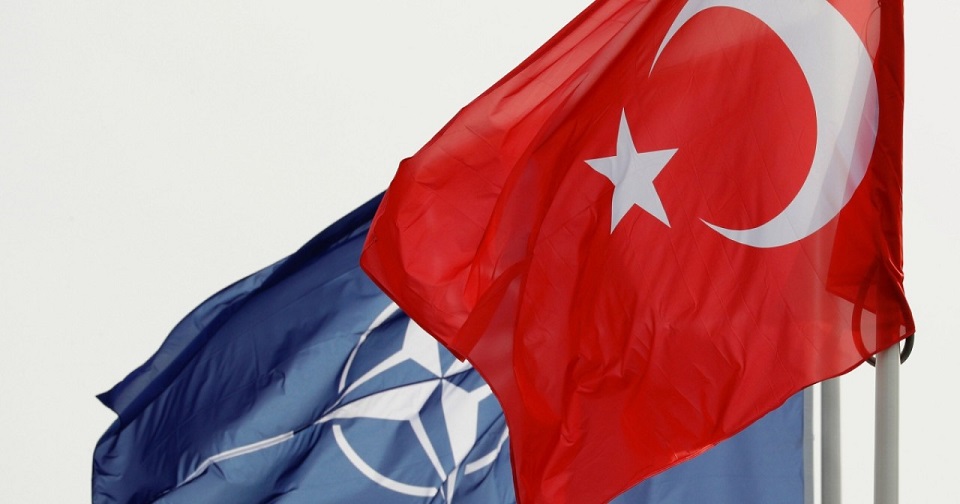
Türkiye's Strategic Weight: Beyond the EU's Institutional Borders
Although Türkiye is not part of the EU's formal defence mechanisms, the report's broader analytical framework highlights why Ankara remains structurally relevant to European security.
As one of NATO's most capable militaries, Türkiye plays a pivotal role in the Alliance's southern and southeastern posture, with direct exposure to the Black Sea, the Eastern Mediterranean, the Middle East, and the Caucasus. This geography gives Türkiye operational relevance that few European states can replicate.
The report also echoes a growing body of policy analysis suggesting that EU defence autonomy cannot be effective if it evolves in ways that marginalize key NATO allies. Türkiye's military experience, force projection capabilities, and expanding defence industry — particularly in unmanned systems and land platforms — position it as a potential contributor rather than an external bystander to Europe's security ecosystem.
At the same time, political frictions between Ankara and EU institutions, including stalled accession talks and disagreements over governance standards, continue to constrain deeper institutional cooperation. The report treats this not as a purely technical issue, but as a strategic contradiction that weakens Europe's overall security posture.
NATO, the EU, and the Risk of Strategic Fragmentation
A recurring concern identified in the report is the risk that EU defence initiatives could inadvertently create parallel or exclusionary structures that undermine NATO cohesion. European defence efforts that restrict industrial participation or operational coordination with non-EU allies risk duplicating capabilities rather than strengthening collective deterrence.
This debate is particularly relevant for Türkiye, whose security commitments are anchored in NATO but whose strategic environment overlaps directly with EU security priorities. The report underlines that Europe's defence credibility depends not only on spending levels, but on interoperability, inclusiveness, and strategic realism.
A Narrowing Window for Strategic Alignment
For Türkiye, the evolution of EU defence cooperation represents a narrowing window in which strategic relevance must be translated into structured engagement. Ankara's capacity to contribute to European security is evident, but the political frameworks required to operationalize that contribution remain underdeveloped.
The GEO-POWER-EU Institute's assessment ultimately calls for pragmatic cooperation models that can absorb geopolitical stress without deepening institutional fragmentation. In an era of accelerating security risks, the report implies that sidelining Türkiye — intentionally or by default — would weaken, rather than strengthen, Europe's collective defence ambitions.
***Full Report: https://geo-power.eu/wp-content/uploads/2025/09/EU-defence-cooperation-under-geopolitical-stress.pdf