
By Bosphorus News Geopolitics Desk
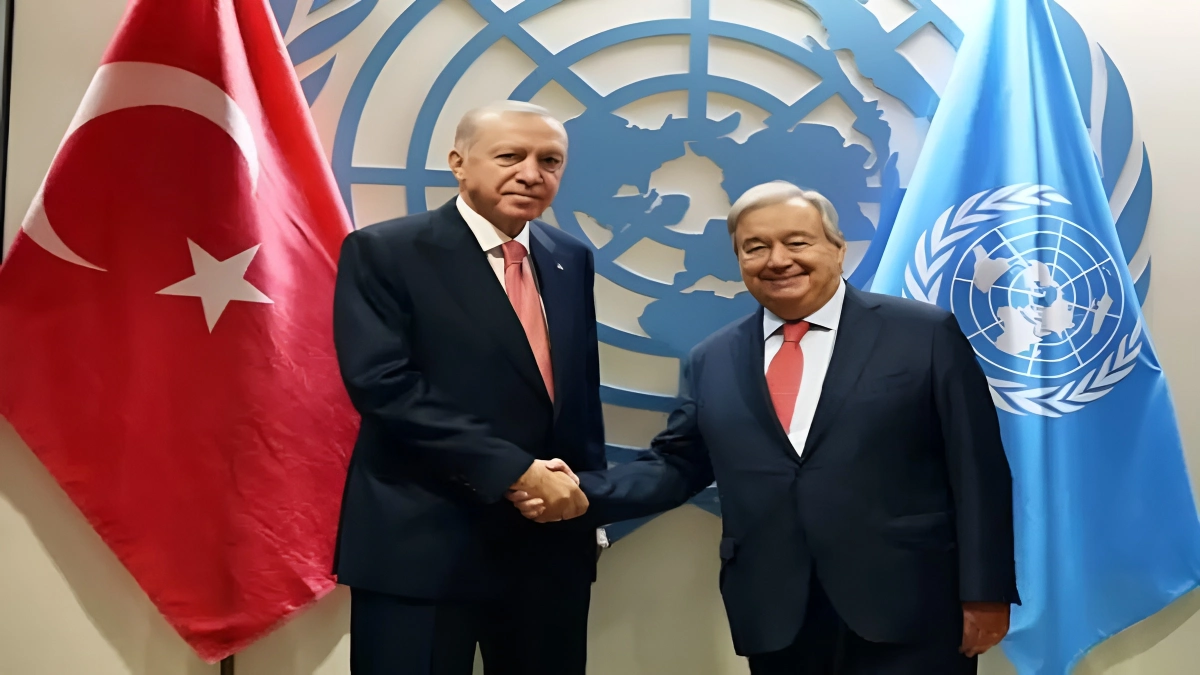
Cyprus settlement diplomacy is moving toward a possible summer 5+1 meeting after Greek Cypriot officials said UN Secretary-General António Guterres has a plan to break the deadlock, but the content of any formula remains less certain than the diplomatic process forming around it.
The Cyprus News Agency reported Sunday that Victor Papadopoulos, director of the Republic of Cyprus President's Press Office, said Guterres has a plan to overcome the deadlock and that the coming weeks will be decisive. The remark gave new weight to a UN-led effort already moving through Maria Angela Holguín Cuéllar's contacts with the two sides on the island, Türkiye, Greece and the European Union.
The more sensitive layer is now coming from local press reporting. Politis, the Greek Cypriot daily, reported that Holguín is preparing a new expanded 5+1 meeting for the Cyprus problem and that discussions include a looser solution model inside the European Union. The report described a structure with two constituent states and limited common powers, built around political equality and functionality.
That description is not an official UN document. It is a reported formula circulating around the envoy's contacts, and it should not be read as a confirmed Guterres proposal. Its political value is different. It shows how the latest UN push is being tested in local media through language that could be read differently by each side: Greek Cypriots could describe it as a federation, while Turkish Cypriots could see it as closer to a confederal arrangement.
The formula reported by Politis would move away from a heavy federal model and toward a more flexible EU-based structure. The report referred to possible constituent-state powers, limited shared ministries, a central council model, a transition period and direct trade, direct contact and direct flights as part of a wider package.
Those details remain unconfirmed. The stronger, publishable fact is that the Cyprus file has moved beyond meeting dates and into the shape of a possible negotiating frame. That is where the political risk begins.
Türkiye's public position has not shifted toward a federal settlement. Turkish Foreign Minister Hakan Fidan met Holguín in Ankara on June 15 and told her that Türkiye supports Guterres's efforts, while maintaining that the most realistic solution is the side-by-side existence of two states on the island. Turkish diplomatic sources also said approaches that do not acknowledge the sovereign equality and equal international status of the Turkish Cypriot people would not produce results.
The Turkish Cypriot side is putting another condition on the process. Turkish Cypriot leader Tufan Erhürman has backed the new UN initiative but warned that a 5+1 meeting should not be held only to keep the process alive. He said such a meeting would be meaningful only if it is prepared to produce concrete results.
Erhürman's line is not a rejection of talks. It is a demand for method. In recent remarks carried by Yenidüzen, he argued that negotiations should not be held for their own sake and that the content of a solution matters more than the label attached to it. He also called for the process to absorb the four-point methodology previously set out by the Turkish Cypriot side.
That methodology places political equality at the center, calls for a time-bound process, seeks to preserve previous convergences and rejects a return to the old status quo if the Greek Cypriot side leaves the table again. It also keeps confidence-building measures separate from what Erhürman sees as the proper purpose of a 5+1 meeting.
The Republic of Cyprus leadership, by contrast, is trying to anchor the new effort inside the European Union. President Nikos Christodoulides has repeatedly argued that the EU has a decisive role in any renewed Cyprus process. The Turkish Cypriot side accepts that EU law and support will matter in any settlement, but rejects the idea of the EU as a neutral mediator because the Republic of Cyprus is already an EU member.
That difference gives the latest press reports their political weight. A looser EU-based formula may sound flexible, but it enters a field where each actor is trying to protect a different principle: the Greek Cypriot side wants EU legality and continuity of the Republic of Cyprus, the Turkish Cypriot side wants political equality and protection against another failed process, and Türkiye wants the two-state line recognized as the baseline of any realistic settlement.
Holguín's immediate task is therefore not only to prepare a meeting. It is to find whether the language around a possible formula can survive first contact with the parties' red lines.
The coming 5+1 track will show whether Guterres's reported plan is a diplomatic bridge or another document trapped between incompatible readings. For now, the process is real, the plan claim is usable, and the detailed "loose solution" model remains a local press report rather than a confirmed UN proposal.
Sources: Cyprus News Agency, Politis, Yenidüzen, Anadolu Agency, Bosphorus News review and reporting.