
By Bosphorus News Geopolitics Desk
The Greek Cypriot administration hosted a Europol-backed Mediterranean police meeting in Larnaca on 4-5 June, placing migrant-smuggling routes by land and sea into an EU internal-security frame just days before migration ministers gather in Nicosia.
Cyprus Mail reported that senior police officials from Mediterranean countries met under the auspices of Europol to discuss cooperation against migrant-smuggling networks operating across land and maritime routes into the European Union. The meeting brought together Europol Deputy Executive Director for Operations Jean-Philippe Lecouffe and representatives from Cyprus, Greece, France, Italy, Malta and Spain.
Türkiye's absence from the listed participants gives the Larnaca meeting its sharper political edge. The forum was framed as a Mediterranean police response to migrant-smuggling routes by land and sea, yet it remained an EU-member-state format, with Cyprus, Greece, France, Italy, Malta and Spain at the table and Türkiye outside the announced list.
The timing makes the meeting more than a technical police exchange. The Greek Cypriot administration holds the rotating Presidency of the Council of the European Union in 2026, and migration management is one of the files moving through that presidency. EU ministers are due to meet in Nicosia on 11-12 June for an informal conference on the Migration and Asylum Pact, giving the Larnaca police meeting a direct place in the wider EU migration calendar.
Europol's role also gives the event a wider institutional frame. The agency launched its new European Centre Against Migrant Smuggling in March 2026, presenting migrant smuggling and trafficking networks as organized-crime threats requiring stronger intelligence sharing, operational coordination and cross-border policing. Larnaca fits into that shift, where migration management is increasingly being handled through law-enforcement structures rather than only humanitarian or asylum channels.
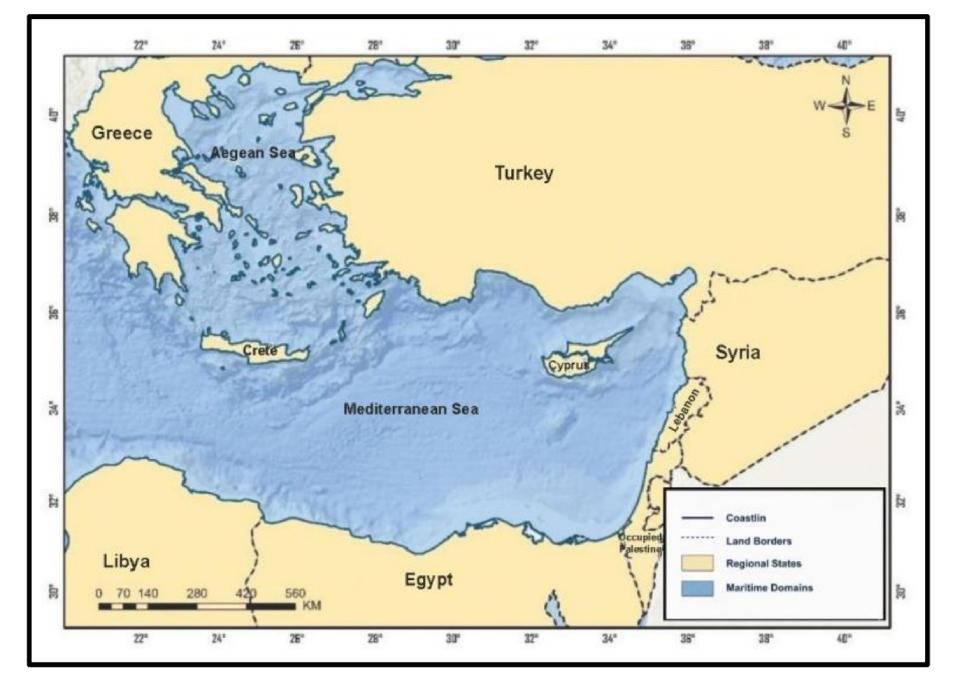
The Mediterranean route gives the issue its political sensitivity. Cyprus, Greece, Italy, Malta, France and Spain all sit inside the EU border and maritime-security debate, but the Eastern Mediterranean file cannot be fully separated from routes, policing channels and maritime geography around Türkiye, Syria, Lebanon and the wider Levant. By keeping the format inside an EU-member-state circle, the Larnaca meeting showed both the operational ambition of European coordination and the political boundary of that coordination.
The Greek Cypriot administration has a clear interest in pushing this file during its EU presidency. Nicosia wants migration pressure, returns, border management and smuggling networks treated as European security questions rather than local island problems. Hosting Europol and Mediterranean police officials in Larnaca allows the Greek Cypriot side to place itself at the center of an EU response to cross-Mediterranean smuggling activity.
The harder question is what such a format can do without Türkiye. Any serious Eastern Mediterranean migrant-smuggling file eventually touches Türkiye's maritime position, coastguard coordination, regional policing channels and the movement of people across routes linked to Syria and Lebanon. A meeting can remain institutionally EU-only, but the geography of the problem does not stop at the edge of that table.
The Larnaca meeting shows how the Greek Cypriot administration is using its EU presidency to move Mediterranean migration from humanitarian management into policing and internal-security coordination. It also shows the limit of that format: the Eastern Mediterranean route is being discussed through an EU table, while Türkiye remains outside the announced participants despite the geography no operational migration file can fully avoid.
***Sources: Cyprus Mail, Europol, European Commission, European Council / Cyprus Presidency calendar.