
By Bosphorus News Geopolitics Desk
The Summit Agenda and What Cyprus Is Pushing For
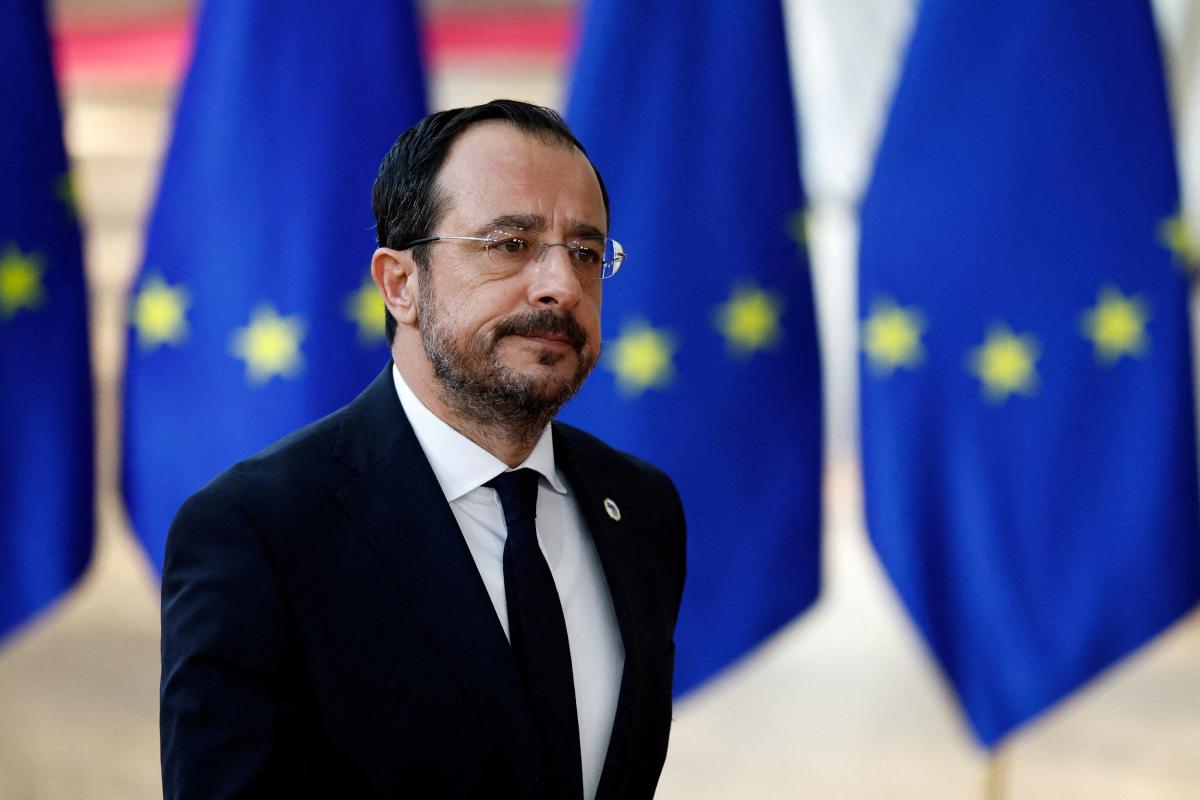
The European Union's informal summit opened in Nicosia on April 23, hosted by Cypriot President Nikos Christodoulides under Cyprus' rotating EU Council presidency. The two-day meeting brings together all 27 EU leaders alongside Ukrainian President Volodymyr Zelensky, who addressed the roundtable on the first evening.
The formal agenda covers the Iran and Middle East crisis, energy security and the EU's multiannual financial framework. Christodoulides has added a specific institutional demand. He confirmed that Article 42.7 of the Treaty on European Union will be on the table. The clause, introduced in 2009, obliges EU member states to assist another facing armed aggression on its territory. It has been invoked once, by France following the 2015 Paris attacks, without producing a structured response.
Christodoulides is not asking for a new commitment. He is asking for the existing one to be made functional. The question placed before EU leaders is what the bloc actually does when a member state triggers it.
The context matters. An Iranian drone struck RAF Akrotiri on March 1. Iranian-linked networks have been documented conducting surveillance on Cyprus' military infrastructure. The island is hosting an EU summit while sitting inside an active conflict zone.
Christodoulides and Michel
On April 22, the day before the summit opened, former European Council President Charles Michel posted on X that Türkiye is "a core NATO ally, a key migration partner, an energy corridor, a major defence actor on Europe's flank, and a serious regional power," warning against double standards. The post was a direct response to European Commission President Ursula von der Leyen's Hamburg remarks, which placed Türkiye alongside Russia and China as sources of influence Europe must guard against.
Christodoulides replied the same day: "Dear Charles, since you are talking about double standards, let me remind you that Turkey invaded Cyprus in 1974, and still occupies European territory."
The exchange landed the day before Nicosia hosted the EU summit. Erdoğan was not invited to the April 24 session with regional partners, despite Christodoulides having said as recently as November 2025 that Türkiye's president would be welcome. A Cyprus EU affairs minister attributed the absence to "geopolitical developments."
Erdoğan's Warning and the Ground Situation
Ankara's position on Cyprus has hardened in parallel with the summit preparations. On April 16, Erdoğan told TRNC President Tufan Erhürman in Ankara that Türkiye is ready to take "every step" to defend the TRNC and warned that foreign military deployments to the island under the pretext of the Iran conflict must not become permanent, as reported by Bosphorus News. The meeting was attended by intelligence chief İbrahim Kalın and senior presidential advisers.
On the ground, the United Nations stepped up patrols in the buffer zone in April following tensions near Pyla, one of the most sensitive points along the ceasefire line, as documented by Bosphorus News. UNFICYP said any unauthorised activity inside the buffer zone constitutes a violation of its mandate. Cypriot authorities described the developments as serious.
The Negotiation Track Running Separately
The Christodoulides-Erhurman dialogue is continuing on a separate track from the summit. The two leaders met on April 6 and reported cautious progress on confidence-building measures, while holding back specifics for a follow-up meeting, as covered by Bosphorus News. On April 22, their respective negotiators met to prepare the next leaders' meeting, with a date to be announced.
United Nations Secretary-General António Guterres has been exploring a new diplomatic framework around the points of convergence reached before the collapse of the 2017 Crans-Montana talks, as reported by Bosphorus News. No formal proposal has been announced. What is visible is diplomatic probing, not a defined process.
The summit in Nicosia does not include a formal session on the Cyprus problem. What it does is place the island at the centre of a debate about European security commitments at the moment those commitments are most contested. Christodoulides is hosting 27 EU leaders while managing buffer zone tensions, Erdoğan's warnings, and a bilateral negotiation track that has produced cautious movement but no announced agreement.
Article 42.7 asks what Europe does when a member state is attacked. For Cyprus, that is no longer a theoretical question.