
By Bosphorus News Geopolitics Desk
Jiang Signals New Phase
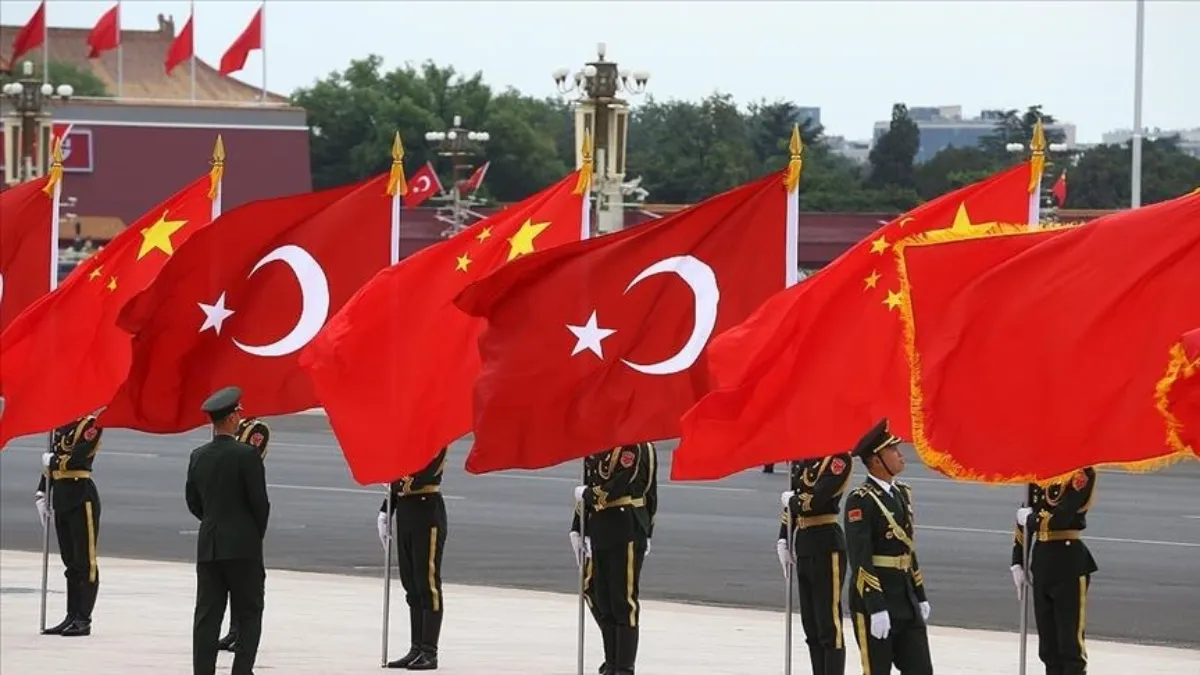
China's Ambassador to Ankara, Jiang Xuebin, said on Monday that bilateral relations have entered what he called "a strategic stage full of opportunities," citing the complementary trajectories of Beijing's national rejuvenation agenda and Türkiye's "Century of Türkiye" vision.
Speaking to Anadolu Agency, Jiang said political trust between the two countries has strengthened steadily since diplomatic relations were formally established in 1971 and elevated to a strategic cooperative relationship in 2010. The statement coincides with the 55th anniversary of those ties.
"China and Türkiye are pursuing complementary national visions," Jiang said. "China-Türkiye relations have entered a strategic stage full of opportunities."
Trade, Finance, Corridor
Bilateral trade reached approximately $53 billion in 2025. Jiang said cumulative Chinese direct investment in Türkiye has exceeded $3.2 billion, with Chinese companies active across energy, manufacturing, finance, and logistics.
On the financial side, the People's Bank of China and the Central Bank of the Republic of Türkiye renewed their currency swap agreement in June 2025, setting the ceiling at 35 billion yuan, equivalent to approximately $4.9 billion. The Industrial and Commercial Bank of China launched Türkiye's first renminbi clearing bank in Istanbul in November 2025, a step Jiang described as a milestone in bilateral financial ties.
The ambassador said Beijing is ready to deepen integration between the Belt and Road Initiative (BRI) and Türkiye's Middle Corridor, the trans-Caspian freight route stretching from China's Lianyungang province through Kazakhstan, Azerbaijan, Georgia, and into Türkiye. Container traffic along the corridor grew 37 percent in 2025 to 63,300 TEU, according to figures presented at the SEEFF European Congress in Bucharest in April 2026 by Azerbaijan Railways and the Eurasian Transport Route Association. The participating countries have set a target of tripling total annual freight volumes to 11 million tonnes by 2030.
Jiang also cited cooperation in emerging sectors, including new energy, 5G technology and biomedicine, as areas where Beijing is encouraging Chinese companies to expand their footprint in Türkiye.
Tourism and Visa Shift
Türkiye granted visa-free entry to Chinese citizens holding ordinary passports on 2 January 2026, allowing stays of up to 90 days within any 180-day period, as Bosphorus News reported. Chinese tourist arrivals reached approximately 410,000 in 2024, a 65.1 percent year-on-year increase according to official Turkish data. Industry projections estimate the figure could reach one million by the end of 2026.
Jiang welcomed the visa decision and noted that Chinese tourists now rank among the highest-spending long-haul visitor segments in Türkiye.
SAIC Selects Spain, Türkiye Talks Stall
The ambassador's optimistic framing arrives as SAIC Motor, the Shanghai-based state-controlled automaker that owns the MG brand, formally submitted its application to establish its first European electric vehicle factory in Galicia, Spain. The facility, planned for the Ferrol and As Pontes corridor in the A Coruña province, carries an initial investment of 200 million euros in its first phase, with an annual production capacity of 120,000 vehicles and an expected 2,300 direct jobs. Construction is expected to begin in 2027, with full operations targeted before the end of 2028.
MG closed 2025 with more than 300,000 registrations across Europe, making it the best-selling Chinese-owned brand on the continent. Production in Spain allows SAIC to bypass the EU's 35.3 percent tariff on Chinese-made electric vehicles, the highest rate applied to any Chinese manufacturer under Brussels' 2024 measures.
Türkiye had been in active talks with SAIC for more than 18 months. Doğan Trend Automotive, SAIC's Turkish distributor, confirmed in January 2025 that its CEO was travelling to Shanghai at SAIC's invitation to advance the project to its "next phase." Industry and Technology Minister Mehmet Fatih Kacır said at the time that talks with SAIC were ongoing alongside separate discussions with BYD and Chery.
BYD's $1 billion Manisa factory, announced in July 2024 with a planned annual capacity of 150,000 vehicles, has yet to break ground. The Ministry of Industry and Technology said in late 2025 that the process is proceeding as planned, but no production start date has been confirmed and no groundbreaking ceremony has taken place. Independent observers noted in January 2026 that the original end-of-2026 production target looks difficult to meet.
SAIC's selection of Spain marks the second significant Chinese automotive investment that has not materialised in Türkiye, alongside the stalled BYD timeline, testing the government's ambition to position the country as a Chinese EV production hub for European markets.
***Sources: Anadolu Agency; Sabah; BurgosConecta; La Tribuna de Automoción; Türkiye Today; Turkish Minute; Railway News; Xinhua; Bosphorus News reporting. SAIC was not available for comment.