
By Bosphorus News Geopolitics Desk
On April 7, the United States and Israel issued separate statements thanking Türkiye following the attack near the Israeli Consulate area in Istanbul, marking a same day convergence in messaging by two actors operating in the same theatre.
The statements did not reference each other. The timing did.
The same day messages came after the April 7 attack near the Israeli Consulate area in Istanbul, where three assailants were neutralized and two police officers were wounded. As reported earlier by Bosphorus News, the incident triggered an immediate security response and parallel diplomatic statements from both Israeli and US officials.
In a statement, Israel's Foreign Ministry said it "strongly condemns the terrorist attack that took place today near the Israeli Consulate in Istanbul," adding that it is "confident that the Turkish authorities will continue to take all necessary measures to protect Israeli representatives and Israeli citizens."
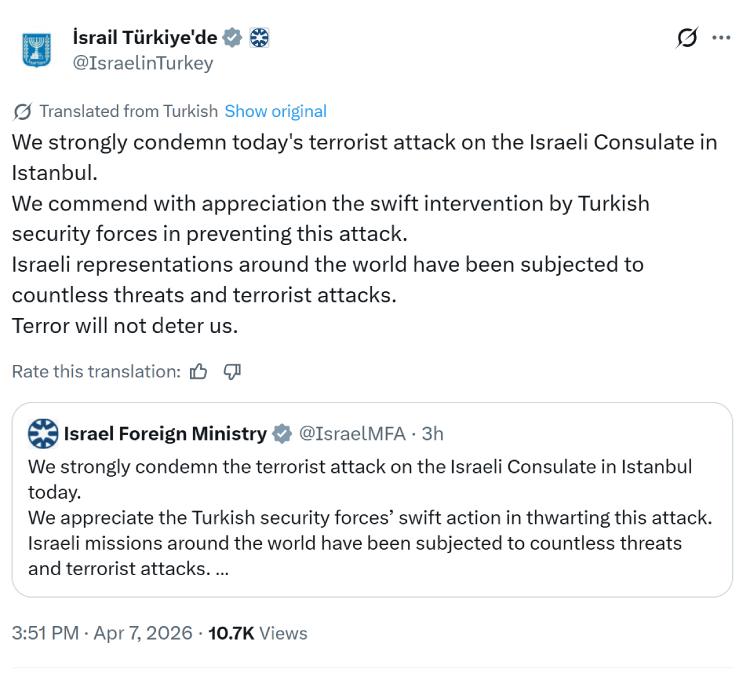
The ministry also thanked Turkish authorities, stating: "We thank the Turkish authorities and the security forces for their swift and effective action."
US Ambassador to Türkiye Tom Barrack issued a separate statement condemning the attack and linking it to wider diplomatic norms.
"I strongly condemn today's attack near the Israeli Consulate in Istanbul," Barrack said. "Attacks on diplomatic missions threaten the foundation of international order."
He added that the United States stands with Türkiye in confronting security threats and thanked Turkish authorities for their response.
The two statements moved through separate channels and did not cite one another, yet delivered nearly identical messages on both condemnation and appreciation of Türkiye's response.
That is what gives the episode its significance. Washington and Tel Aviv reacted to the same incident by publicly crediting Türkiye on the same day, placing Ankara at the centre of the immediate security response rather than at the outer edge of the diplomatic fallout.