
By Bosphorus News Defense Desk
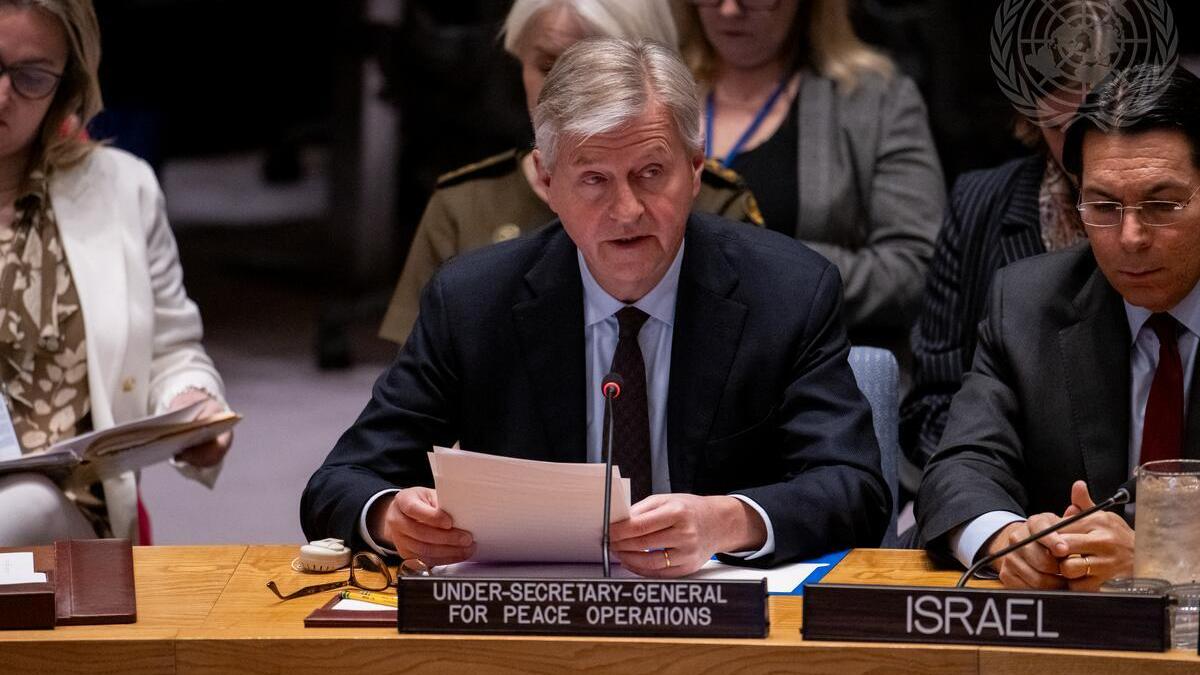
United Nations Under-Secretary-General for Peace Operations Jean-Pierre Lacroix said the UN wants to expand cooperation with Türkiye in peacekeeping, placing training, police capacity, technology and field support at the center of a deeper partnership.
Lacroix made the remarks during a visit to Türkiye this week, where he met Turkish officials and toured the Turkish National Police Academy, an institution he described as a potential partner for broader peacekeeping training cooperation.
"We have a very strong and very longstanding cooperation with Türkiye in the field of peacekeeping operations," Lacroix told Anadolu Agency. "We very much look forward to not only continuing but increasing our cooperation with Türkiye."
The message gives Türkiye a new opening in UN security diplomacy at a time when Ankara's profile is also rising in NATO-led stabilisation missions, including Kosovo. But the UN file should be read carefully. Türkiye is not one of the largest troop contributors to UN peacekeeping by numbers. Its current contribution is more limited than those of major personnel-sending states, while its value lies increasingly in training, police expertise, technology, logistics and specialised support.
Türkiye's Foreign Ministry says the country contributes to seven UN peacekeeping operations: MINUSCA in the Central African Republic, MONUSCO in the Democratic Republic of Congo, UNIFIL in Lebanon, UNISFA in Abyei, UNMIK in Kosovo, UNMISS in South Sudan and UNTMISS. The ministry says Türkiye's participation includes military personnel, police and experts, alongside financial support for UN peacebuilding efforts.
Lacroix pointed to Turkish military and police personnel serving under the UN flag as a basis for deeper cooperation. He said their performance had been marked by professionalism and commitment, while acknowledging that the UN's own financial constraints remain a challenge for future peacekeeping deployments.
The visit to the Turkish National Police Academy showed where that cooperation could expand. Lacroix said Türkiye had significant capacity in peacekeeping training, an area that matters as UN missions face more complex operating environments, urban security risks, disinformation campaigns and threats from non-state armed groups.
The technology dimension is also growing. Lacroix identified training, equipping peacekeepers, digital tools and countering disinformation as areas where Türkiye's expertise could support UN operations. That framing moves the relationship beyond the simple question of how many troops Ankara sends and toward what kind of operational capacity it can provide.
UNIFIL remains one of Türkiye's most visible UN peacekeeping roles. Turkish naval elements have served in the UNIFIL Maritime Task Force, supporting the Lebanese Navy in monitoring territorial waters and helping secure the coastline. The mission has become more sensitive as Israel-Lebanon tensions and attacks near peacekeeping positions have raised new questions about the safety of UN personnel.
Lacroix used strong language on that issue, warning that the protection of peacekeepers is a legal obligation for parties to conflict.
"The responsibility for protecting the safety and security of peacekeepers is a responsibility of the parties to a conflict, and those obligations have to be reaffirmed, as well as the fact that crimes against peacekeepers may also constitute war crimes," he said.
Kosovo gives Türkiye another bridge between UN and NATO security work. KFOR is not a UN mission. It is the NATO-led Kosovo Force, operating under the mandate of United Nations Security Council Resolution 1244. UNMIK remains the UN mission in Kosovo. Lacroix referred to cooperation around Kosovo, including interaction with KFOR and UNMIK, as part of the wider peace and security environment.
That distinction matters for Türkiye. Ankara is a contributor to KFOR and currently has a Turkish general, Major General Özkan Ulutaş, commanding the NATO-led mission. The Kosovo file recently highlighted Türkiye's visible Balkan security role after a Turkish KFOR commander kept the Serbian military channel open on Kosovo security, even as Ankara's defence support for Pristina has drawn criticism from Belgrade.
The UN visit also follows Secretary-General António Guterres' March 2026 trip to Türkiye, where he met President Recep Tayyip Erdoğan and Foreign Minister Hakan Fidan. That visit covered Middle East developments, the Cyprus file and Türkiye's preparations to host COP31, while Guterres received the Atatürk International Peace Award from Erdoğan.
The broader UN-Türkiye relationship has also been formalised through the Sustainable Development Cooperation Framework for 2026 to 2030, signed in Ankara in November 2025. The framework creates a five-year structure for cooperation across development, humanitarian and peace-related tracks.
For Ankara, the opportunity is clear. Türkiye can present itself not only as a troop contributor, but as a peacekeeping capacity provider with police training, maritime security experience, digital tools, defence industry capabilities and operational experience in NATO missions.
The practical test will be whether the UN and Türkiye can turn Lacroix's message into specific programs. More Turkish personnel in UN missions would be one measure. Larger training packages, police deployments, technology support and stronger links between UN peacebuilding work and NATO-led stabilisation experience may prove just as important.
***Sources: Anadolu Agency, United Nations, Türkiye Foreign Ministry, UN Peacekeeping, KFOR and Bosphorus News reporting.