
By Bosphorus News Defense Desk
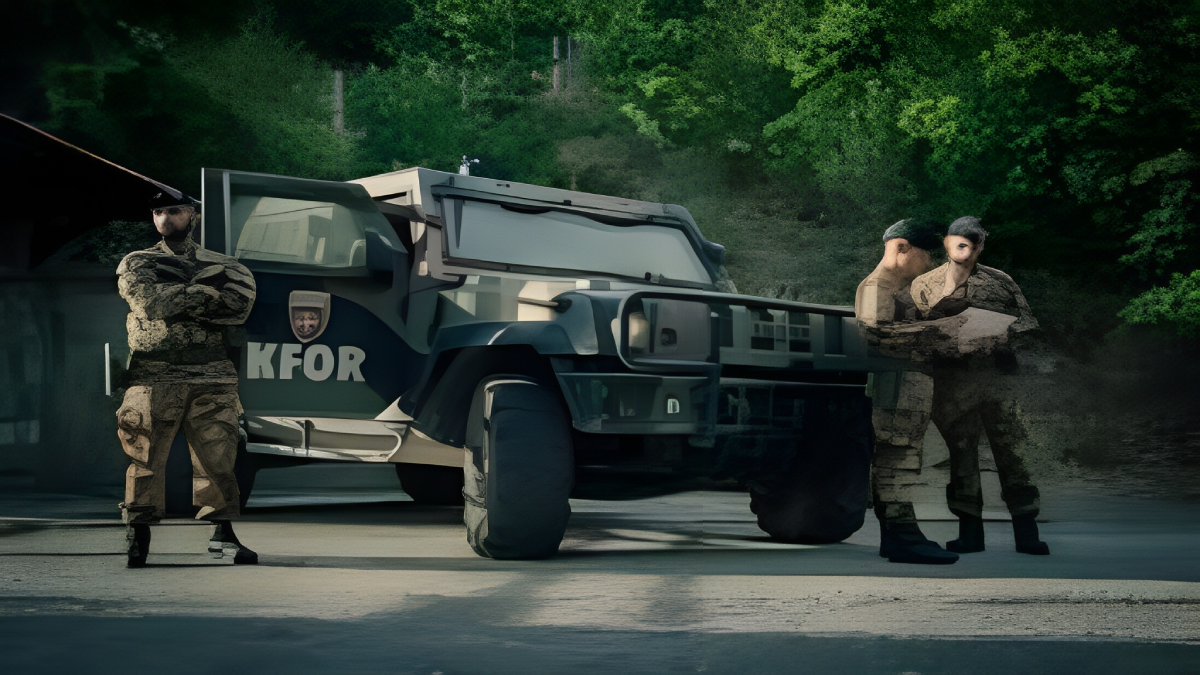
The Turkish commander of the NATO-led Kosovo Force, known as KFOR, met Serbia's military chief in Belgrade on May 8, keeping open a sensitive security channel as Kosovo remains a fragile security file and Türkiye's role in the issue becomes more visible.
Major General Özkan Ulutaş, commander of KFOR, met Serbian Armed Forces Chief of General Staff Milan Mojsilović as part of regular contacts between the NATO mission and Serbia's military leadership.
"The meeting was part of regular communications and interactions between KFOR and the Serbian Armed Forces," KFOR said, adding that such contacts were intended to preserve mutual understanding, transparency and cooperation in support of regional stability.
The May 8 meeting was not an isolated contact. Ulutaş and Mojsilović also met in Belgrade in March, when KFOR described the channel as part of regular and transparent communications with the Serbian Armed Forces.
That direct military line matters because northern Kosovo remains one of the most sensitive security files in the Western Balkans. KFOR has kept its public language cautious, describing the situation as stable but fragile, while warning that the unresolved position of Serb-majority municipalities in northern Kosovo can still produce new tensions.
The KFOR Serbia channel also sits beside another sensitive track: a planned NATO Serbia exercise in May. KFOR said in March that Ulutaş welcomed the exercise, while stressing that KFOR would have no role in it and that it would be conducted in full respect of Serbia's declared military neutrality.
Belgrade has continued to frame KFOR as the central security actor in Kosovo. Serbian officials have argued that KFOR should remain the only legitimate armed formation in Kosovo, while objecting to the strengthening of the Kosovo Security Force and accusing Pristina of unilateral steps that they say undermine security.
That position sits uneasily beside Türkiye's own bilateral role with Kosovo. The Belgrade meeting came after Türkiye's defence support for Kosovo added a bilateral layer to Ankara's Balkan security role, including recent military cooperation steps that drew criticism from Serbia.
In October 2025, Serbian President Aleksandar Vučić sharply criticised Türkiye after Kosovo received Turkish-made drones. Vučić accused Ankara of destabilising the Western Balkans and said Türkiye was "dreaming of the restoration of the Ottoman Empire," comments that reflected Belgrade's anger over Turkish defence support to Pristina.
The same broader file now places a Turkish general at the head of NATO's security contact channel with Serbia. That does not make KFOR a Turkish instrument. The mission operates under NATO command and under the mandate of United Nations Security Council Resolution 1244. It does underline Türkiye's unusual position in the Kosovo file.
Ankara is a defence partner for Kosovo, a major contributor to KFOR and a NATO actor capable of maintaining a military dialogue with Belgrade. Ulutaş has previously said Türkiye is among the leading contributors to the Kosovo mission, with Turkish personnel serving at several operational levels.
The meeting also fits a wider NATO EU effort to keep the Western Balkans under coordinated security watch. Recent visits by senior NATO and EU military officials to Pristina and Sarajevo showed that NATO and EU military chiefs have framed the Western Balkans as a single security front, with Kosovo and Bosnia increasingly treated as linked stability files rather than separate local crises.
KFOR is tasked with maintaining a safe and secure environment and freedom of movement in Kosovo, while supporting dialogue channels with both Pristina and Belgrade. The mission has been reinforced since the 2023 violence in northern Kosovo, including clashes that injured NATO peacekeepers and the Banjska attack, which hardened Western concerns over the risk of renewed confrontation.
The May 8 meeting did not resolve the core dispute between Serbia and Kosovo. It showed that the military communication channel remains open as every actor in the file manages overlapping pressures: Kosovo's internal political tensions, Serbia's objections to the Kosovo Security Force, NATO's stabilisation mandate and Türkiye's growing visibility as both a Balkan defence supplier and KFOR contributor.
Belgrade objects to Türkiye's defence relationship with Kosovo, yet continues to speak with KFOR under a Turkish commander. Ankara backs Kosovo's defence capacity, yet remains inside NATO's neutral peacekeeping framework. In the Western Balkans, that layered position is becoming part of Türkiye's strategic weight.
***Sources: KFOR, NATO Joint Force Command Naples, Anadolu Agency, Kosovo Online, Balkan Insight, Associated Press, Reuters, European External Action Service.