
By Bosphorus News Energy Desk
Ukraine's repeated drone strikes on Tuapse have turned Russia's Black Sea oil infrastructure into a sustained pressure point, bringing refinery damage, port disruption and environmental fallout into a maritime theatre where Türkiye has spent the war trying to contain escalation without abandoning its support for Ukraine's sovereignty.
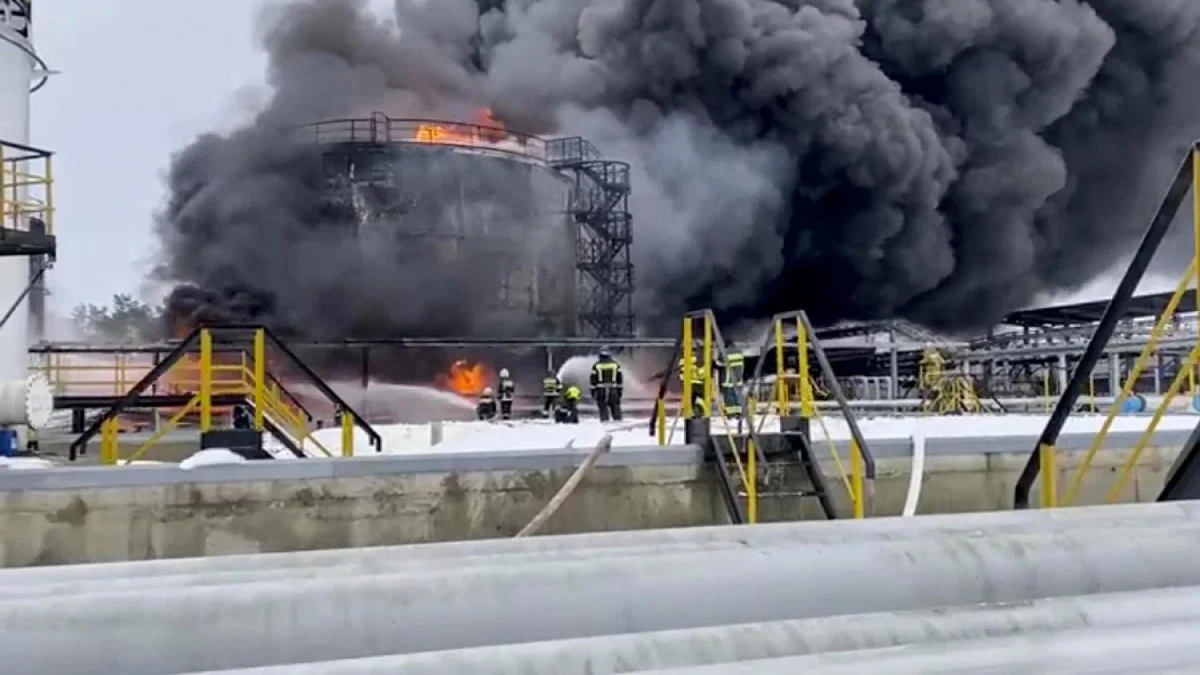
Reuters reported that Ukrainian drones hit Russia's Black Sea port and refinery complex at Tuapse four times in 16 days, with the latest attacks triggering fires around oil infrastructure and forcing local authorities to deal with smoke, pollution and public safety concerns. Ukrainian security sources described Tuapse as an important node for Russian oil exports, while Russian regional officials confirmed emergency responses around port and refinery facilities.
Tuapse is not a symbolic target. The city sits on Russia's Black Sea coast and connects refinery operations, oil product handling, port infrastructure and maritime export logistics in a region already shaped by naval restrictions, drone warfare, sanctions pressure and the vulnerability of coastal energy systems.
The environmental dimension has made the attacks more difficult to contain politically. Reports from Tuapse described toxic smoke, oil contamination and local warnings after fires around refinery and port infrastructure, raising questions about the consequences of repeated strikes on energy facilities close to rivers, coastal waters and civilian neighbourhoods.
Ankara's concern sits in the categories now moving together in the Black Sea: safe navigation, port security, energy flows, tanker movement, environmental exposure and the legal balance maintained under the Montreux Convention. The issue is not a public comment on each Ukrainian strike against Russian infrastructure. It is the steady movement of the war into the maritime systems Türkiye has tried to keep manageable since 2022.
President Recep Tayyip Erdoğan has already warned that the Black Sea should not be treated as a zone of confrontation, tying safe navigation and regional stability to Türkiye's broader security posture, as Bosphorus News reported after his Ashgabat remarks.
Foreign Minister Hakan Fidan has made the same point from a different angle, warning that Black Sea instability cannot be contained as a local issue and linking disruptions there to European security, energy flows and commercial shipping, as Bosphorus News reported in its earlier Black Sea coverage.
The pressure on Tuapse also fits the wider Black Sea security burden that Bosphorus News has tracked around Türkiye's northern maritime perimeter, where drones, energy routes, mined waters, port infrastructure and commercial shipping increasingly sit inside the same risk map.
Russia has tried to absorb the pressure by shifting volumes between ports and routes, although the wider trend is becoming harder to dismiss. Reuters reported that Russian seaborne oil product exports fell in April as drone attacks disrupted refining capacity, even as flows through some Black Sea and Azov ports rose because Moscow redirected shipments. That mix points to strain rather than collapse: Russian oil logistics remain adaptive, but the system is being forced to work around more frequent shocks.
Novorossiysk adds another layer to the same picture. The port, one of Russia's main Black Sea export outlets, has faced drone-related disruption this year, forcing partial pauses and rerouting decisions. Reuters reported in April that crude supplies were redirected after disruption at Novorossiysk, showing how pressure on one point of the system can push volume, repair work and security exposure toward another.
The "shadow fleet" dimension needs careful treatment. Ukrainian naval drone attacks on sanctioned tankers heading toward Novorossiysk were reported in late 2025, not as a confirmed April 2026 incident. They still belong in the background because they show how the Black Sea oil war has already moved beyond fixed infrastructure into tanker traffic, insurance exposure and sanctions-era shipping networks, but they should not be folded into the Tuapse timeline as a fresh April event.
The geography is unforgiving. Tuapse, Novorossiysk, the Bosphorus and the Turkish Straits are not one battlefield, yet crude, refined products, tanker routing, insurance exposure and environmental spillover bind them inside the same maritime system. A fire at a Russian refinery or port does not automatically create a crisis for Türkiye, but repeated strikes around Black Sea oil infrastructure add pressure to the sea Ankara has tried to keep away from direct NATO-Russia confrontation.
Montreux remains the legal instrument Ankara has used most effectively to limit the naval escalation space since the start of the war. The convention restricts warship movement through the Turkish Straits and has helped Türkiye avoid becoming a direct party to the conflict while keeping a recognised legal framework in place.
Tuapse shows where that framework faces a different kind of pressure. Montreux can regulate warship passage, but the current danger is moving through refineries, berths, storage tanks, port logistics and tanker routes, areas where drone warfare, energy exports and environmental risk sit outside the classic question of naval access to the Black Sea.
That shift does not reduce the importance of Montreux. It shows how much of the war's maritime risk now sits beyond the part of the conflict Ankara can manage through the Straits regime. Türkiye can keep warships under a legal ceiling; it cannot use the same instrument to contain refinery fires, port disruption, tanker risk or pollution along the wider Black Sea rim.
Ukraine has clear military and economic reasons to keep pressure on Russia's oil system. Each strike on refining and export infrastructure can reduce available fuel, force repairs, stretch air defence and complicate Moscow's routing decisions, while fires and pollution around civilian areas make the cost of the war more visible inside Russia.
The regional risk grows because the consequences do not stay neatly inside the target list. A refinery fire can become a coastal pollution problem; a port disruption can move into shipping schedules, insurance calculations and tanker routing; an attack on oil logistics can affect countries that are not part of the strike but still depend on the Black Sea remaining commercially usable.
Ankara's position remains narrow by design, with Türkiye trying to protect Ukraine's sovereignty, prevent a wider Russian escalation, keep NATO away from direct naval confrontation in the Black Sea and preserve commercial navigation through the Turkish Straits. Each new strike on oil infrastructure makes that balance more demanding because it pushes the war into facilities, routes and environmental risks that sit beyond the reach of diplomatic restraint alone.
Tuapse does not force a new Turkish policy, yet it adds pressure exactly where Ankara has tried to keep the war controlled: around ports, tankers, pollution risk, energy flows and the Montreux balance that still limits warships but cannot insulate the wider Black Sea from a campaign against oil infrastructure.