
By Bosphorus News Geopolitics Desk
Security talks held in Istanbul in early April between Türkiye and Ukraine have pushed the Black Sea back up the agenda, but the bigger point is no longer just maritime safety or the protection of trade routes. As risks spread from military targets to commercial shipping and energy infrastructure, the burden of keeping the Black Sea stable is becoming too heavy to be carried by Türkiye alone.
That wider pressure was visible in the language used after the meeting. Both sides stressed the importance of stability in the Black Sea and tied it directly to energy flows and trade routes, reflecting a security environment in which the line between battlefield exposure and civilian economic activity is becoming harder to maintain.
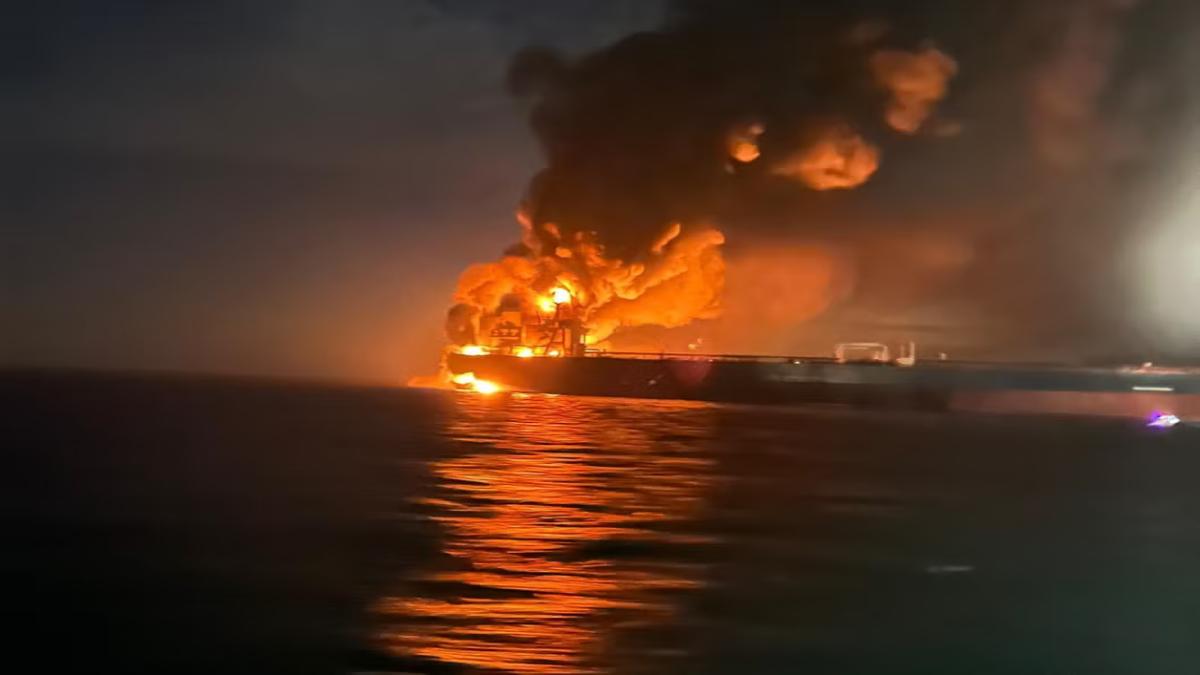
Recent incidents show why. In late March, a commercial tanker operated by a Turkish company was struck by a maritime drone near Türkiye's coastline in the Black Sea. The crew was reported safe, but the incident showed how quickly the effects of the war can reach civilian shipping and how narrow the margin has become around routes still treated as commercially active.
The same pressure is visible around energy infrastructure. As Bosphorus News reported earlier, Russia said Ukraine had attempted to target the Russkaya compressor station that feeds gas into the TurkStream pipeline. No independent confirmation of damage emerged, but the claim itself was enough to put attention back on infrastructure tied to Türkiye's energy corridor and the wider Black Sea system.
This is where the story moves beyond a sequence of isolated alerts. Türkiye sits on one of the region's main trade and transit corridors, but the Black Sea system it helps anchor is now carrying a level of strategic strain that no single coastal state can realistically absorb on its own. Grain, energy and commercial traffic still move through these waters, yet each new incident adds pressure to a route map that has become more exposed, more expensive to secure and more vulnerable to political and military spillover.
Ankara has been warning about that trajectory for months. As outlined in earlier Bosphorus News reporting, Foreign Minister Hakan Fidan said instability in the Black Sea could spill over into Europe through security, trade and energy channels.
President Recep Tayyip Erdoğan has made the same argument in different terms, warning that the Black Sea should not become a zone of confrontation and linking that warning directly to maritime trade and regional stability.
Their warnings now sit alongside a growing number of incidents and signals from the field, pointing in the same direction. The Black Sea remains open, but the conditions shaping that openness are becoming more fragile, more contested and more closely tied to the conflict around it. The burden of keeping that space stable is now too heavy to be carried by Türkiye alone.