
By Bosphorus News Geopolitics Desk
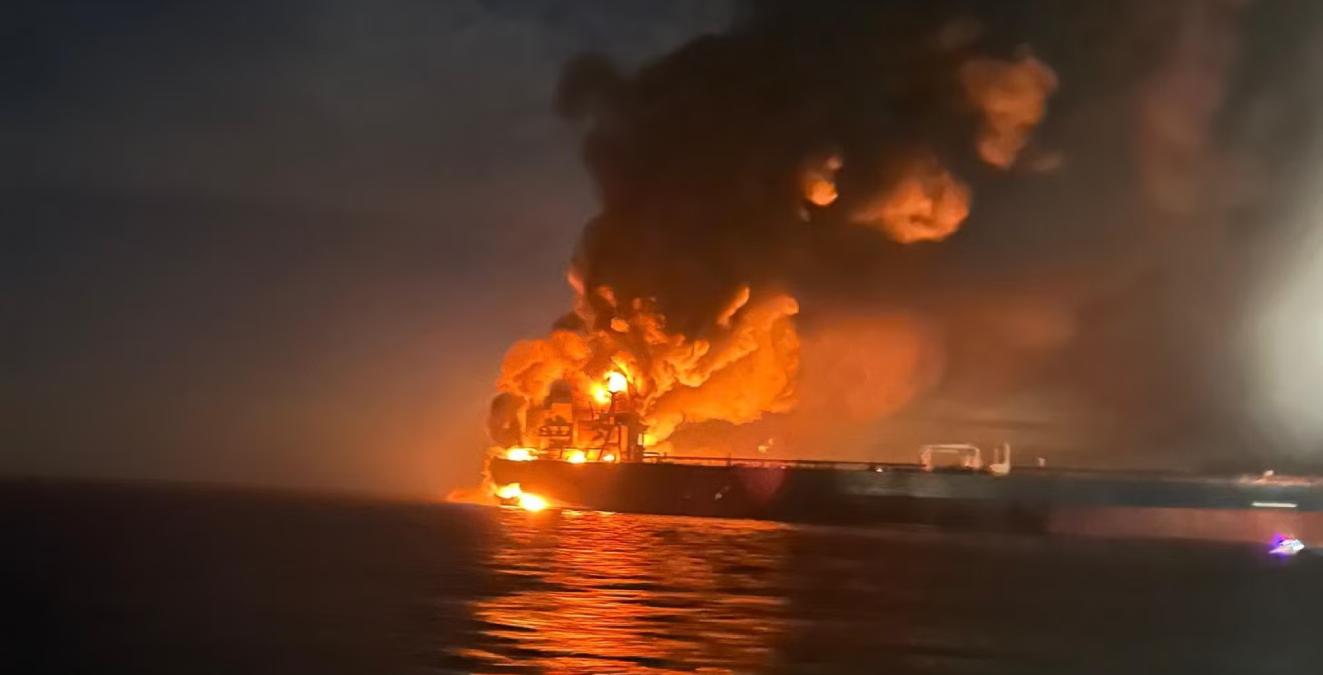
Ukraine has claimed it struck two tankers linked to Russia's so-called shadow fleet at the entrance to the port of Novorossiysk, expanding its campaign against Moscow's energy flows into the maritime domain.
President Volodymyr Zelenskyy said on May 3 that Ukrainian forces had hit the vessels, adding that "these tankers can no longer transport oil" and stressing that Kyiv would continue to develop its capabilities across land, air and sea. The claim, carried by regional media citing his Telegram statement, could not be independently verified.
The reported strike stands out because it targets not refineries, storage depots or export terminals, but the ships that carry Russian crude to global markets. Novorossiysk is Russia's primary oil export hub on the Black Sea, which makes any disruption at its approaches strategically sensitive.
The development follows earlier incidents that had already brought the war's energy dimension closer to open sea routes. As Bosphorus News reported after Black Sea tanker attacks near Türkiye, vessels linked to Russia's shadow fleet were previously struck by Ukrainian sea drones, raising direct concerns in Ankara over navigation safety, environmental risk and the security of maritime traffic.
Those incidents were not isolated. As Bosphorus News has detailed in its coverage of foreign drone incidents around Türkiye, repeated aerial and maritime drone activity has increased the level of risk across Türkiye's surrounding waters, reinforcing concerns about spillover effects from the war.
The shadow fleet itself has become central to Russia's ability to sustain oil exports under Western sanctions. These vessels, often operating under foreign flags and opaque ownership structures, allow Moscow to continue moving crude despite multiple rounds of restrictions targeting its energy sector.
The European Union's latest sanctions package, adopted on April 23, added dozens of vessels to its blacklist, bringing the total number of designated ships into the hundreds. Ukraine has also imposed its own sanctions on a separate list of tankers involved in transporting Russian oil from ports including Novorossiysk, Ust-Luga and Primorsk.
Despite these measures, enforcement remains uneven, with many vessels continuing to operate across the Black Sea and beyond. Kyiv has increasingly paired financial pressure with direct action at sea, extending the reach of the conflict into commercial shipping lanes.
Türkiye and other Black Sea states now face risks beyond the immediate military dimension. The expansion of strikes against oil tankers raises the risk of environmental damage, shipping disruption and unintended escalation in a semi-enclosed sea marked by dense traffic and sensitive legal arrangements.
That concern fits a broader warning from Turkish Foreign Minister Hakan Fidan, who has said Black Sea tensions risk "spilling over into Europe," as Bosphorus News reported.
The reported strike near Novorossiysk therefore matters beyond Ukraine's campaign against Russian oil revenue. It brings the shadow fleet fight deeper into the Black Sea, closer to the maritime environment Türkiye is trying to keep navigable, contained and outside a wider European escalation. Ankara now faces a more direct question: how far the war at sea can spread before commercial traffic, environmental security and regional stability are pulled into the same conflict.