
Bosphorus News Defence Desk
The war in Ukraine is influencing defence planning beyond its immediate geography through technical validation rather than political alignment. Systems that remain operational under sustained electronic warfare conditions are being reassessed elsewhere, shaping procurement discussions in the Aegean and the Eastern Mediterranean, where unmanned platforms are already embedded in maritime monitoring and island security calculations.
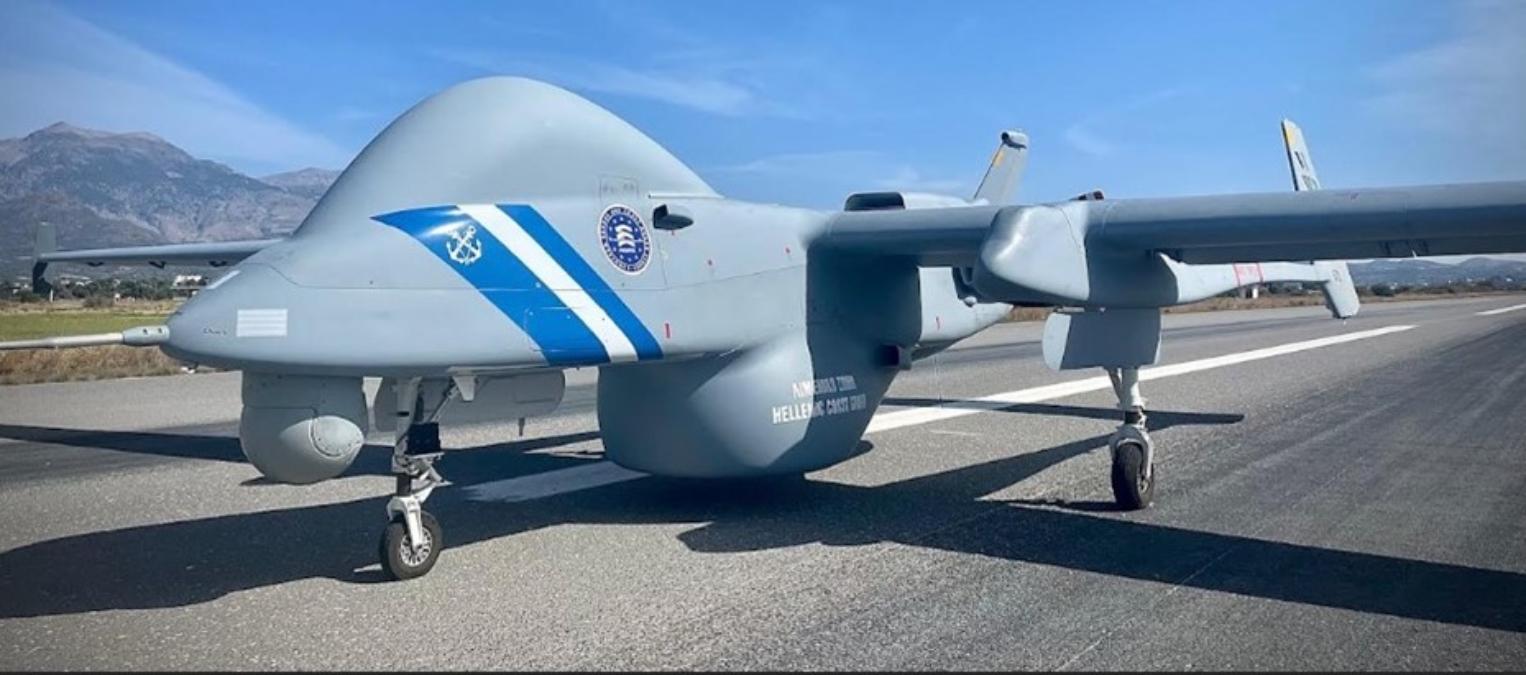
Recent developments in Cyprus and Greece reflect this shift in evaluation standards. The Greek Cypriot National Guard's induction of the locally produced Poseidon H10, alongside reports that Athens is expanding its fleet with Shield AI's V BAT systems, indicates that operational exposure in Ukraine now carries weight in judging reliability. Durability under signal disruption and performance in contested spectrum environments are treated as measurable criteria rather than abstract claims.
Across the Aegean and the Eastern Mediterranean, unmanned aerial systems have moved into routine defence infrastructure. Persistent surveillance coverage, runway independent deployment and resistance to electronic interference are factored into baseline planning. The maritime density of the Aegean and the dispersed geography of the Eastern Mediterranean increase the value of platforms capable of sustained observation without fixed infrastructure or predictable communications patterns.
Türkiye's earlier role in Ukraine's unmanned ecosystem forms part of this background. As previously examined in Bosphorus News in The Drone Boomerang, Turkish produced Bayraktar TB2 platforms were among the most visible systems in the opening phase of the war, contributing to Ukraine's initial defensive posture. As the conflict evolved under sustained electronic warfare pressure, Ukrainian operators adapted signal management practices, counter jamming methods and integration models between ISR and artillery.
There is no indication that protected Turkish technologies have been transferred to regional competitors. Operational experience accumulated through years of combat, however, does not remain confined to its original context. Personnel rotate, partnerships expand and industrial cooperation deepens. Practices shaped in one theatre can inform planning in another, including in the Aegean and the Eastern Mediterranean.
Türkiye's established production capacity and operational use of unmanned systems also shape the environment in which these adjustments unfold. Over the past decade, domestic development and deployment experience have altered expectations regarding cost effective surveillance and precision support across both theatres. That shift has influenced how neighbouring actors define minimum operational thresholds, even when procurement paths differ in origin and scale.
Recent acquisitions in Greece and Cyprus reflect procurement standards shaped by sustained electronic warfare exposure. Platforms that remain functional under disruption are gaining consideration in planning discussions extending beyond the Ukrainian battlefield. In the Aegean and the Eastern Mediterranean, where compressed maritime space and island networks demand continuous situational awareness, that experience is feeding into gradual adjustments in surveillance architecture across the region.