
By Bosphorus News Staff
Reports that the United Kingdom declined to authorize the use of certain Royal Air Force facilities for a potential United States operation against Iran have prompted speculation about a broader transatlantic rift. The evidence points to a legally bounded decision tied to a single operational contingency.
British officials are reported to have assessed that participation in a pre-emptive strike scenario could create liabilities under international law. This is not a suspension of defence cooperation with Washington. It is a case-specific legal calculation.
Royal Air Force Fairford and Diego Garcia remain integral to United States force projection. The defence relationship between Washington and London extends far beyond individual installations. Nuclear coordination, intelligence integration within the Five Eyes alliance comprising the United States, the United Kingdom, Canada, Australia and New Zealand, NATO command structures and long-standing interoperability form the structural backbone of the partnership. There is no verified indication that these foundations are being dismantled.
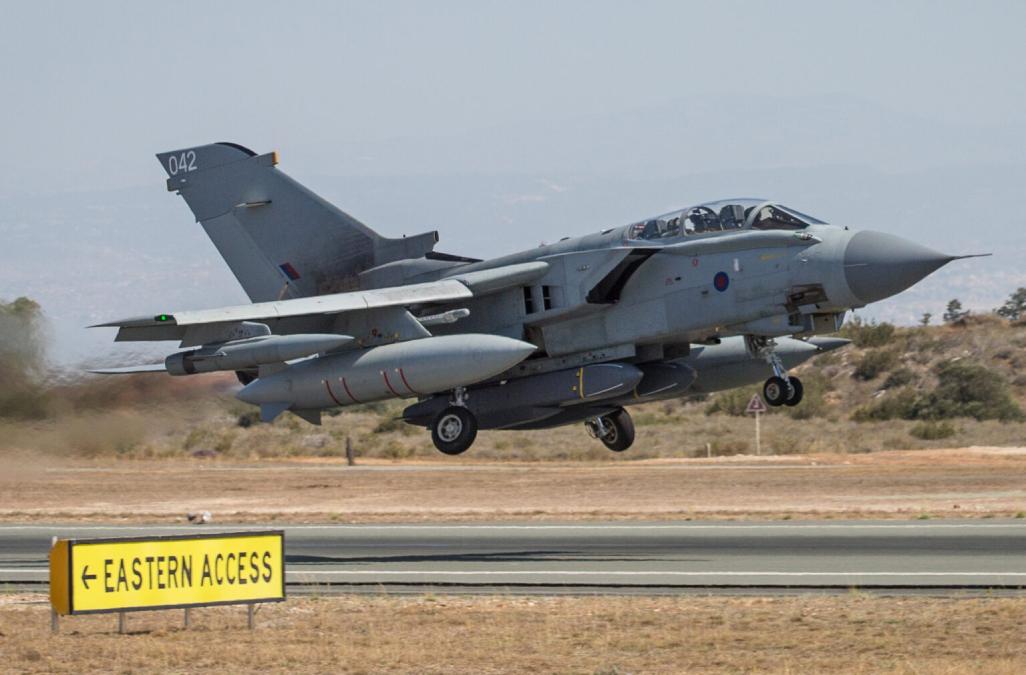
Speculation that Washington could shift operational weight from the United Kingdom to Greece over Iran is not supported by available reporting. The United Kingdom maintains Sovereign Base Areas in Cyprus, namely Royal Air Force Akrotiri and British Forces Cyprus at Dhekelia, territories under full British sovereignty and outside the jurisdiction of the Republic of Cyprus. These installations provide established forward-operating capacity in the Eastern Mediterranean and remain embedded in allied planning.
Greece enters the debate through its existing defence arrangements with the United States. Under the Mutual Defense Cooperation Agreement, Athens provides structured access to American forces. Facilities such as Souda Bay in Crete have long served as strategic hubs for United States and NATO activity in the region. Claims circulating in parts of the Greek press and on social media about a large-scale new United States buildup, including claims of forward deployment of A-10 Thunderbolt II aircraft, have not been independently confirmed by major international outlets. In periods of heightened tension, forward deployment narratives often gain traction in domestic political debates and strategic signaling cycles. For now, these reports remain unverified.
In Ankara, defence cooperation patterns in the Eastern Mediterranean are assessed within a broader strategic framework. Turkish officials have repeatedly warned against security arrangements that could marginalize Türkiye's maritime claims or recalibrate the regional balance of power. Within this framework, defence cooperation among third parties is evaluated through the lens of maritime jurisdiction and deterrence equilibrium.
There is no confirmed evidence of a systemic rupture between Washington and London or of a large-scale operational transfer to Greece. What is visible is risk management within an established alliance structure. The institutional architecture of the transatlantic defence system remains intact.