
By Bosphorus News Geopolitics Desk
Türkiye's special envoy for normalization with Armenia said the long closed border is almost ready to open, placing one of the South Caucasus' most sensitive diplomatic files into a technical and administrative phase after more than three decades of closure.
Speaking at the Yerevan Dialogue Forum on May 6, Ambassador Serdar Kılıç said the political will behind normalization now has to be matched by infrastructure, customs capacity and security staffing at the crossing points.
"The border is almost ready to open, but certain technical and administrative steps must be completed," Kılıç said, according to Hürriyet Daily News. "You cannot simply declare the border open overnight. Infrastructure, from fiber optic systems to customs and security staffing, must be in place to handle crossings properly."
The statement marks one of the clearest Turkish signals yet that the normalization track with Armenia has moved beyond diplomatic messaging. Türkiye and Armenia still have no diplomatic relations, and the land border has been closed since 1993. The latest contacts show a process increasingly focused on the mechanics of reopening.
Kılıç also met Armenia's special envoy Ruben Rubinyan on the sidelines of the forum, keeping the bilateral channel active as both sides work through the remaining procedural steps.
The momentum follows Turkish Vice President Cevdet Yılmaz's visit to Yerevan for the 8th European Political Community Summit, where he met Armenian Prime Minister Nikol Pashinyan. Türkiye's participation at that level marked its highest representation in Armenia since 2008.
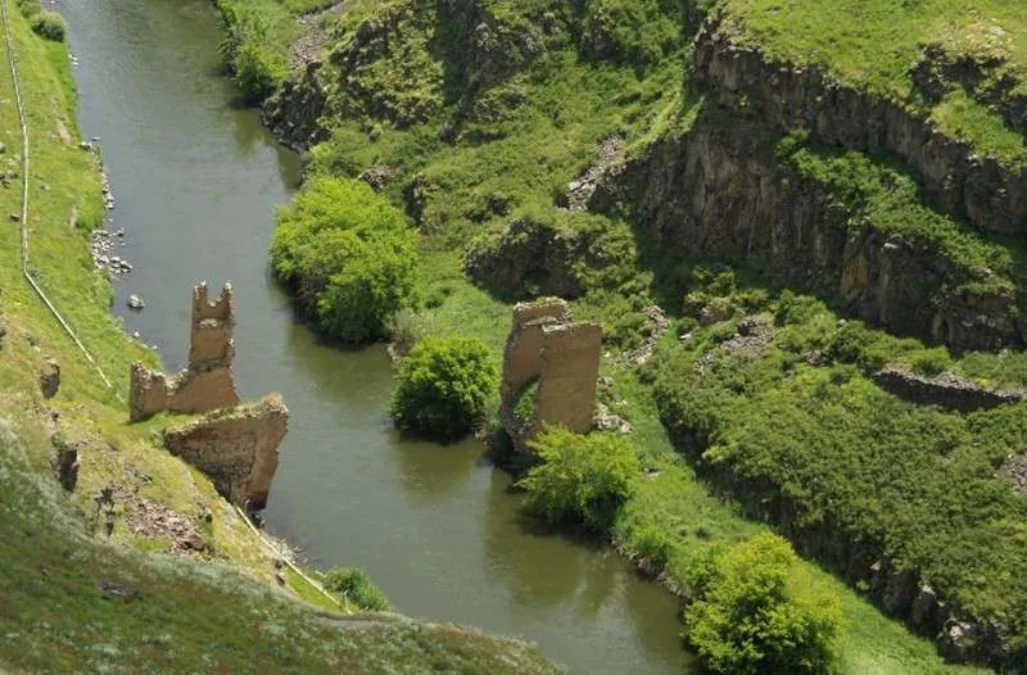
The visit produced a memorandum of understanding to jointly restore the historic Ani Bridge, an 11th century crossing point on the Türkiye-Armenia border. The project carries symbolic weight, but its timing also matters. Ankara and Yerevan are trying to turn a fragile political thaw into work that can be measured at the border.
Yılmaz framed the process as a regional opening rather than a narrow bilateral gesture. "We believe that as peace and normalization achieved in South Caucasus, first and foremost, everyone living in this region will benefit," he said, according to Anadolu Agency.
Rail connectivity is the harder test. Officials from both countries met in Kars on April 28 to discuss the rehabilitation and reactivation of the Kars-Gyumri railway, which has been unused for 33 years. A reopened line would reconnect two neighbouring cities and give landlocked Armenia a direct rail link into Türkiye's transport network.
That is why the current phase matters. Border opening is now tied to customs preparation, railway rehabilitation and the restoration of a historic crossing point. The file is moving from statements of intent into the practical work needed to make crossings, trade and movement possible.
The process also carries a generational meaning in Armenia. Anadolu interviewed young people in Yerevan's Republic Square and Abovyan Street, where several linked normalization with Türkiye to security, mobility and the possibility of a less isolated future.
"We have big hopes about the peace, because we didn't have peace for around 30 years," Aprin, 32, told Anadolu. "I was born in 1994 and we always had strikes and war, little wars, big wars. So it's actually very fantastic for us, not realistic so much. We have huge hopes for the future, that the peace will really happen, and we will have maybe open borders with our neighbors."
Another woman in her twenties described the same issue in more direct terms. "I live here, and every day I think, what if tomorrow will start a war, and that's not cool," she said. "I see the future of Armenia will be safer than now."
Those expectations do not remove the political constraints around the file. The normalization process relaunched in 2021 after decades of closed borders, historical disputes and the wider Armenia-Azerbaijan conflict. The pace remains tied to South Caucasus diplomacy, including the Armenia-Azerbaijan peace track and the post-Karabakh regional order. As Bosphorus News examined in its coverage of the Baku factor in Türkiye-Armenia normalization, Ankara's opening toward Yerevan still moves inside a triangle shaped by Armenia, Azerbaijan and Türkiye.
Türkiye has welcomed progress between Armenia and Azerbaijan while keeping its own channel with Yerevan active. That balance remains central to Ankara's approach. A border opening with Armenia would reshape trade and mobility in the South Caucasus, but it would also have to fit into a regional order still being negotiated after years of war, blockade and broken transport links.
The latest signals show a narrower but more concrete reality. No final opening date has been announced. The political breakthrough has not yet been completed. The work, however, has moved to the border itself: customs systems, security staffing, rail rehabilitation and a bridge that has become a symbol of what Ankara and Yerevan are trying to test after more than three decades of closure.