
By Murat YILDIZ
Murat YILDIZ is an investigative journalist and Editor-in-Chief at Bosphorus News. The author covers Eastern Mediterranean geopolitics, security, defense and energy.
On April 24, Turkish Foreign Minister Hakan Fidan warned in London that Israel's regional posture had moved beyond a local issue, describing it as "a direct threat to global security." His remarks land inside a widening Red Sea contest where Somalia's sovereignty dispute, Somaliland's recognition push and the Bab el-Mandeb chokepoint are increasingly being pulled into the same set of maritime and strategic calculations.
As Bosphorus News reported in its coverage of Türkiye's possible Hormuz demining role, Ankara is already positioning itself for a post-agreement operational role in one of the world's most critical maritime chokepoints. The Iran war has made that positioning more relevant to the Horn of Africa, where alternative routes linking the Gulf, the Red Sea and the Eastern Mediterranean are gaining strategic weight.
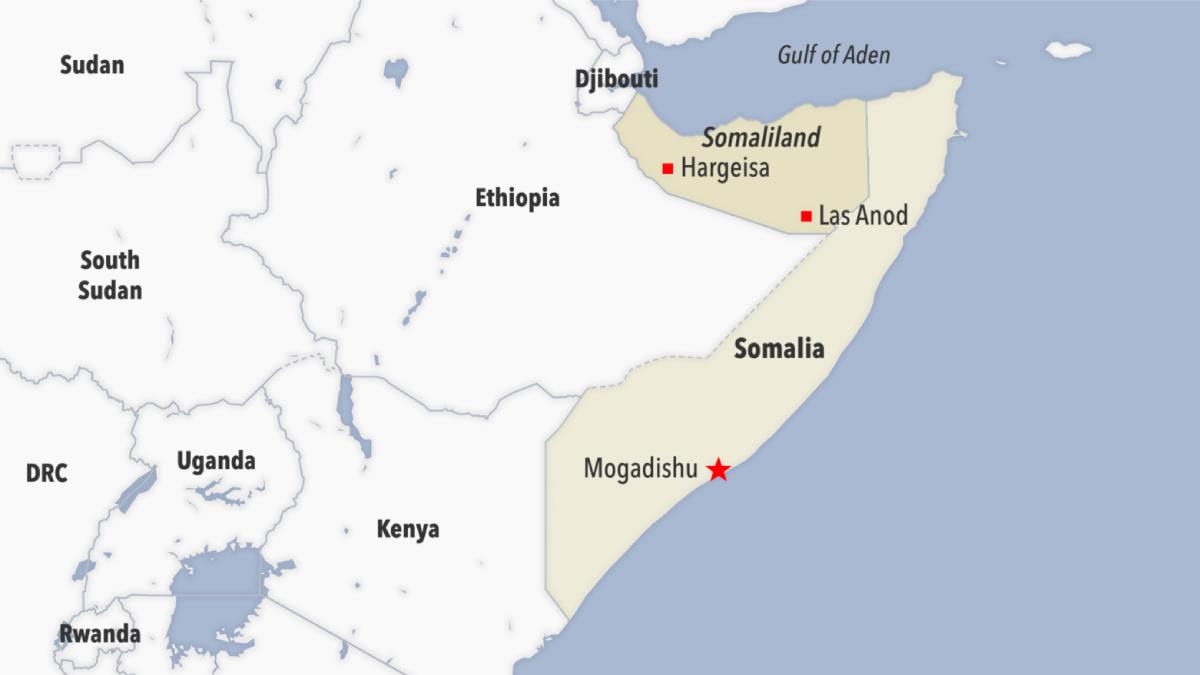
The Somalia–Somaliland dispute is no longer confined to diplomatic recognition. Somaliland's position near Bab el-Mandeb gives any recognition move a direct maritime security meaning, while Türkiye's backing for Mogadishu ties the issue to sovereignty and access across the Red Sea.
Two approaches are now visible. Türkiye is expanding its role in Somalia through security cooperation, maritime protection and state capacity building, reinforcing Mogadishu's authority over the whole country. As Bosphorus News reported when Türkiye condemned Israel's recognition of Somaliland, Ankara has framed the issue around Somalia's territorial integrity. Israel is moving through Somaliland, using recognition dynamics to open a pathway to strategic access near one of the world's most sensitive shipping lanes.
This is not a response to Israel's Somaliland move. It is a standing policy line. Türkiye's position reflects a consistent foreign policy principle applied across multiple theatres, from Iraq and Syria to Ukraine and Georgia. Territorial integrity and state sovereignty are not situational tools in Ankara's approach; they are baseline conditions. In Somalia, as in those cases, Türkiye is not adjusting to recognition politics but rejecting it.
Egypt adds pressure to the same picture. Cairo has signed a defence agreement with Mogadishu, deployed troops to Somalia and aligned with Türkiye and Saudi Arabia against Israel's Somaliland move, while continuing to compete with Ankara in Libya and the Eastern Mediterranean gas architecture. This places Egypt across multiple layers of the emerging security environment.
The contest is tightening. The next shift is unlikely to take the form of open confrontation. A port contract, a basing arrangement, a naval security agreement or another recognition decision could alter access without a shot being fired. In a setting shaped by shipping routes, energy flows and military positioning, legal status and infrastructure control are becoming decisive instruments.
Bab el-Mandeb defines the stakes. The strait links the Red Sea to the Gulf of Aden and sits on one of the world's busiest trade and energy routes toward Europe. Disruption here feeds directly into supply chains, insurance costs, energy pricing and naval deployments well beyond the Horn of Africa.
Türkiye's presence in Somalia now extends beyond bilateral cooperation. It intersects with maritime security, energy transit and regional stabilisation. Ankara is positioning itself as a security provider in a zone where ports, sea lanes and political recognition are becoming harder strategic assets.
Israel's move toward Somaliland fits the same pressure field. It is not about immediate dominance, but about securing foothold options in a maritime environment that is becoming more contested as the Gulf and Red Sea gain strategic weight.
France's growing engagement in the Eastern Mediterranean, particularly its coordination with Greece and Cyprus, also forms part of this wider picture. As Bosphorus News noted in its summary of IBNAEU's analysis on the Greece–France partnership, the Athens–Paris axis is increasingly being framed as part of Europe's defense autonomy debate, with Cyprus and the Eastern Mediterranean at the center of that shift. European security planning is now extending toward routes that connect energy, trade and naval access across the wider region.
The Horn of Africa is no longer peripheral. It is becoming a junction where maritime routes, energy flows, recognition politics and military access converge.
In that sense, what is unfolding in Somalia and Somaliland is not separate from the wider maritime picture described above. It is part of the same pressure building from the Eastern Mediterranean to the Red Sea under the strain of the Iran war, where access, sovereignty and external positioning are beginning to intersect in more direct ways. Reading it only as a Türkiye–Israel conflict would miss how developments along these sea lanes are tied to the wider region's long-term strategic interests and security calculations.