
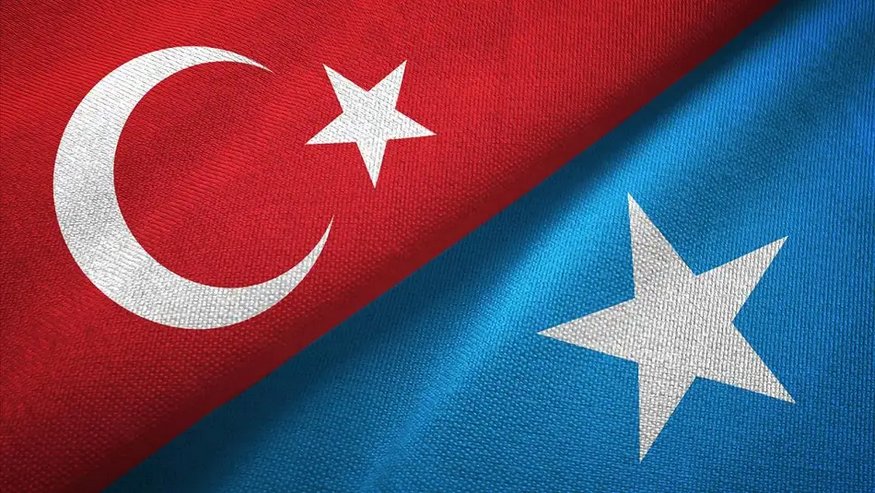
Türkiye has issued a strong diplomatic response to Israel's decision to recognize Somaliland, a self-declared breakaway region of Somalia, aligning itself with a broad international consensus that rejects unilateral steps threatening established borders and regional stability.
In a formal statement, Turkish Foreign Ministry Spokesperson Öncü Keçeli underscored Ankara's position in unequivocal terms, stressing that the decision contradicts international law and long-standing United Nations principles.
"We strongly condemn Israel's decision to recognize the so-called independence of Somaliland. This step constitutes a clear violation of international law, the United Nations Charter, and relevant UN Security Council and General Assembly resolutions. Türkiye firmly supports the sovereignty, unity, and territorial integrity of Somalia. Such unilateral moves risk undermining peace, stability, and security in the Horn of Africa, a region already facing serious humanitarian and political challenges."
Regional and International Reactions
Türkiye's position is shared by several regional and international actors. Egypt and the African Union have both reiterated their commitment to Somalia's territorial integrity, warning that recognition of Somaliland could set a destabilizing precedent across Africa.
The African Union, which considers Somalia's borders inviolable under its founding principles, has consistently opposed any recognition of Somaliland absent a negotiated settlement between Mogadishu and Hargeisa. Egypt, for its part, has framed the issue within a broader concern over regional security and respect for sovereignty.
Türkiye's Longstanding Somalia Policy
Türkiye has been one of Somalia's most active international partners over the past decade, with deep engagement spanning humanitarian aid, development assistance, security cooperation, and diplomatic support. Ankara has repeatedly emphasized that Somalia's political future must be determined through inclusive dialogue and internationally recognized mechanisms—not unilateral external decisions.
Turkish officials view stability in Somalia as integral to the wider Horn of Africa, a region critical for Red Sea security, global trade routes, and migration dynamics.

Diplomatic Context
Israel's recognition of Somaliland has drawn criticism for bypassing multilateral frameworks and ignoring ongoing regional mediation efforts. Somaliland declared independence from Somalia in 1991 but has not been recognized by the United Nations or any major international body. While it maintains de facto administrative control over its territory, its status remains unresolved under international law.
For Ankara, the issue extends beyond Somalia itself. Officials caution that selective recognition of breakaway regions risks normalizing fragmentation and weakening the rules-based international order—particularly sensitive for regions already grappling with conflict and fragile state structures.
A Measured but Firm Message
Türkiye's statement stops short of escalation but delivers a clear diplomatic message: recognition of Somaliland is viewed in Ankara as legally invalid, politically unhelpful, and strategically risky. Turkish policymakers continue to call for restraint, dialogue, and adherence to international norms as the only viable path toward lasting stability in Somalia and the wider region.
As debates intensify, Türkiye is expected to raise the issue in multilateral forums, reinforcing its position that Africa's security challenges require cooperation and respect for sovereignty—not unilateral recognition moves that could deepen existing fault lines.