
By Bosphorus News Staff
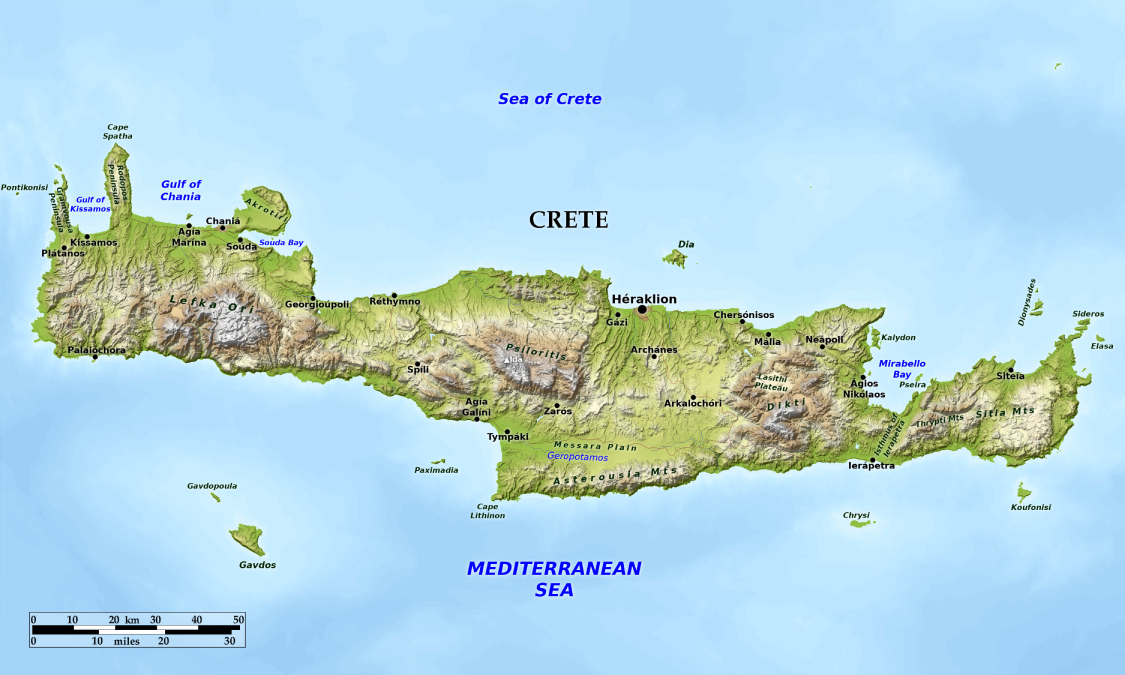
Türkiye has formally objected to Greece's new hydrocarbon exploration agreement south of Crete, arguing that the initiative conflicts with international law and maritime boundaries defined under the 2019 Türkiye–Libya maritime memorandum.
The reaction follows Greece's agreement with U.S. energy major Chevron to conduct hydrocarbon exploration in offshore blocks south of Crete and the Peloponnese, according to Greek and international media reports.
In its weekly press briefing on February 18, 2026, the Ministry of National Defense of the Republic of Türkiye addressed the development directly.
Rear Admiral Zeki Aktürk, Press and Public Relations Counselor of the Ministry, stated:
"Greece's unilateral activities conducted with international companies in hydrocarbon fields south of Crete, although not directly affecting our country's maritime jurisdiction areas, constitute a violation of international law and good neighborly relations. We oppose this unlawful activity, which is being pursued contrary to the 2019 Memorandum of Understanding on the Delimitation of Maritime Jurisdiction Areas between our country and Libya, as well as Libya's maritime jurisdiction areas notified to the United Nations on May 27, 2025. We will continue to provide the necessary support for Libyan authorities to take initiatives against Greece's unilateral and unlawful activities."
The Turkish statement refers to the November 27, 2019 Memorandum of Understanding on the Delimitation of Maritime Jurisdiction Areas between Türkiye and Libya's then Government of National Accord. Ankara maintains that the agreement constitutes a legally valid maritime delimitation arrangement deposited with the United Nations. Greece rejects the MoU, arguing that it disregards the maritime entitlements of Greek islands, particularly Crete.
The Defense Ministry also cited Libya's maritime coordinates submitted to the United Nations on May 27, 2025, reinforcing Tripoli's alignment with the 2019 delimitation line.
Greek media reports indicate that Athens has proceeded with hydrocarbon licensing and exploration agreements involving Chevron in blocks south of Crete and the Peloponnese. The move forms part of Greece's broader offshore energy expansion strategy amid European diversification efforts.
The dispute unfolds against a backdrop of accelerating upstream energy activity across the Eastern Mediterranean. Earlier in February, Bosphorus News reported that Türkiye Petrolleri A.O. signed framework memoranda with bp, ExxonMobil and Chevron, while Chevron advanced expansion plans at Israel's Leviathan field and ExxonMobil engaged in offshore talks in Cyprus. That assessment noted that rapid commercialization in an unresolved maritime environment increases the likelihood of renewed diplomatic and naval friction if memoranda evolve into active drilling.
The current disagreement south of Crete reflects that dynamic. Energy agreements are expanding across rival jurisdictions while underlying sovereignty disputes remain unsettled. As commercial momentum builds, legal interpretations and strategic positioning move in parallel.
While the Turkish Defense Ministry noted that the Greek activities "do not directly affect" Türkiye's maritime jurisdiction areas, it nonetheless described them as inconsistent with international law and good neighborly relations.
The development adds another layer to an increasingly active energy map in the Eastern Mediterranean, where commercial initiatives and maritime disputes continue to intersect.