
By Bosphorus News Türkiye Desk
Turkey's renewed Kurdish peace process has slowed sharply despite the PKK's 2025 decision to dissolve and end its armed struggle, as Ankara waits for verified disarmament and Kurdish political actors press for legal guarantees, prisoner-related steps and a defined role for Abdullah Öcalan.
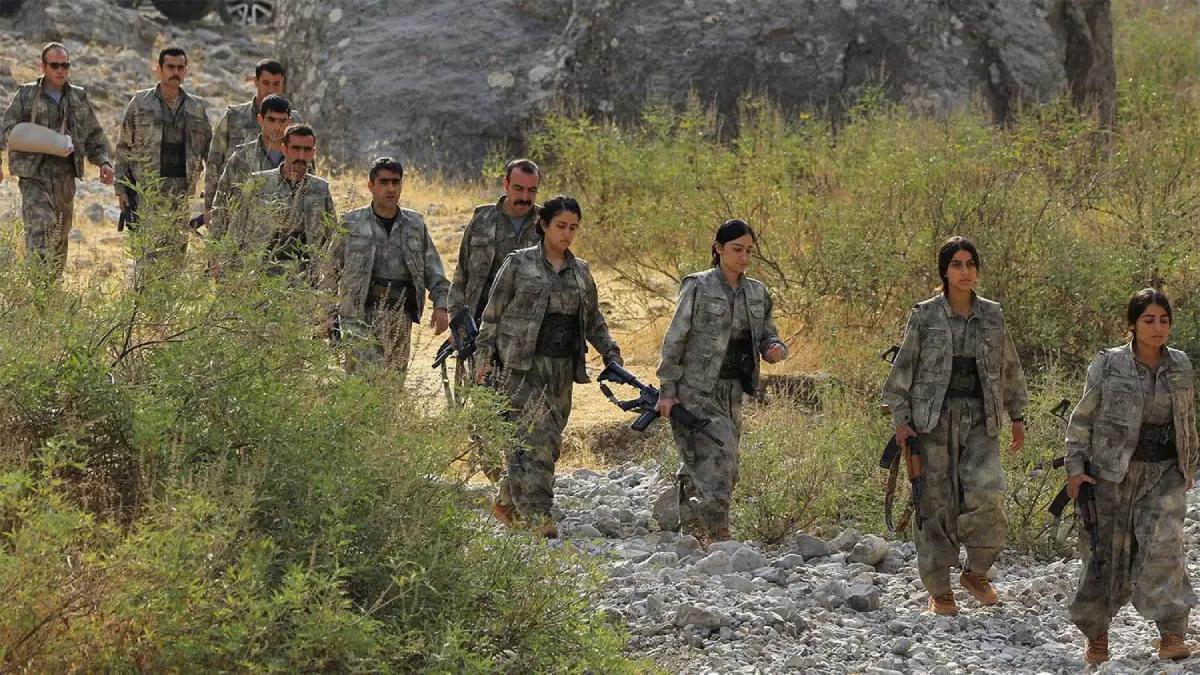
The process has not formally collapsed. President Recep Tayyip Erdoğan says it is moving forward. Parliament has approved a reform roadmap. The PKK has declared a ceasefire, announced its dissolution and staged a symbolic disarmament ceremony in northern Iraq.
The problem is what comes next. Ankara wants full disarmament verified by state security institutions before legal steps advance. PKK-linked actors say further moves require guarantees that would protect militants who leave the armed struggle and define how reintegration would work.
Reuters reported on May 13 that the Iran war has pushed the process toward a near standstill, adding new security concerns around Kurdish armed groups in Iran and Iraq. The regional shock has made an already difficult sequencing dispute harder to manage.
The peace effort began to take shape after Nationalist Movement Party leader Devlet Bahçeli opened the door in October 2024 to a new track involving Öcalan, the jailed PKK leader. Öcalan later called on the group to disarm and dissolve. The PKK declared a ceasefire, then announced in May 2025 that it would dissolve and end its armed struggle.
In July 2025, PKK members burned weapons in a symbolic ceremony near Sulaimaniya in northern Iraq. The images gave the process its strongest visual moment, but the ceremony did not settle the central question of how disarmament, legal guarantees, reintegration and political reform would be sequenced.
Parliament's National Solidarity, Brotherhood and Democracy Commission approved a report in February 2026 recommending legal steps linked to the peace process. The Associated Press reported that the commission backed measures related to reintegration, broader freedom of expression, improvements in some prison conditions and changes to the practice of replacing elected Kurdish mayors with state-appointed trustees. It also stressed that legal measures should be tied to the state verifying that the PKK had surrendered its weapons.
The commission's work followed earlier debate over how Ankara could build a legal framework for disarmament and reintegration. Bosphorus News reported on the emerging law and reintegration plan, including the central question of how former PKK members could leave the armed track without creating a perception of blanket amnesty.
That condition remains the main fault line. Kurdish actors argue that the absence of legal guarantees has frozen the process. Ankara argues that reforms cannot move ahead before disarmament is complete and verifiable.
Erdoğan rejected criticism of delays in late April, saying there was a "positive atmosphere" and that the process was progressing "as it should." He said pessimistic assessments were based on illusion rather than facts, while also acknowledging that the commission report had brought the process to a stage that required careful management.
One day later, Murat Karayılan, one of the PKK's most senior figures, said in an interview with the PKK-linked ANF news agency that the process had been "frozen." He argued that the group had carried out its responsibilities and that the government had failed to move on the next stage.
The gap between those two readings now defines the political picture. The government says the process is alive and moving carefully. PKK-linked figures and Kurdish political actors say the absence of legislation, prisoner-related measures and changes to Öcalan's status has turned the process into a holding pattern.
Bahçeli's May proposal to give Öcalan a formal role as a "peace process and transition to politics coordinator" showed how sensitive the next stage has become. DEM Party figures welcomed the idea as a possible way to structure implementation, while nationalist opposition parties attacked it as legitimising the PKK.
The Syrian file adds another layer. Earlier arrangements between Damascus and Kurdish-led forces had appeared to reduce one of Ankara's stated security concerns, but the Iran war has shifted Turkish attention back toward the possibility of Kurdish armed mobilisation across the wider region. Reuters reported that Ankara is monitoring Kurdish groups in Iran and Iraq more closely after the outbreak of the war.
That regional pressure narrows the room for domestic political risk. Public opinion remains difficult for any government move involving Öcalan or the PKK, while Erdoğan's ruling bloc also faces the calculation of how Kurdish voters, nationalist voters and opposition parties respond to each step.
The result is a peace process that still exists in official language but has lost momentum in implementation. The PKK has taken symbolic and declaratory steps. Parliament has produced a roadmap. Erdoğan says the process continues. Yet the legal framework that would turn disarmament into a durable political settlement has not materialised.
The next phase will depend on whether Ankara and Kurdish actors can break the sequencing deadlock. Without verified disarmament, the government is unlikely to move quickly on reforms. Without legal guarantees, the PKK side is unlikely to treat disarmament as safe enough to complete. The Iran war has made that narrow space even smaller.
***Sources: Reuters, Iran war brings Turkey-PKK peace process to near standstill, May 13, 2026. Reuters, What's at stake in Turkey's bid to end conflict with PKK militants, May 13, 2026. Associated Press, Turkish lawmakers back PKK peace reforms but tie steps to disarmament, February 18, 2026. Reuters, Erdogan rejects criticism of Turkey's peace efforts with Kurdish militants, April 29, 2026. Associated Press, Kurdish militants say Turkey stalls peace talks, April 30, 2026. Reuters, Turkey's approval of peace roadmap is important step, PKK source says, February 19, 2026 and Bosphorus News reporting.